Chinatown Milan Free Things To Do: A Free Walk Through Via Paolo Sarpi
Milan's Chinatown costs nothing to enjoy. Here is how to walk Via Paolo Sarpi, browse its food shops and stalls, and string it together with the free parks, castle courtyards and pay-what-you-want walking tours around it.
Short answer
Milan's Chinatown sits along Via Paolo Sarpi, a free public street you can walk any time, with market stalls, Chinese grocers and bakeries to browse at no cost. Nearby free sights include Parco Sempione, Castello Sforzesco's courtyards and Arco della Pace. Free pay-what-you-want walks, like Fabrice's 1H45 Best-Tips Walk rated 9.4 out of 10, cover the surrounding centre.
What Can You Do For Free In Milan's Chinatown?
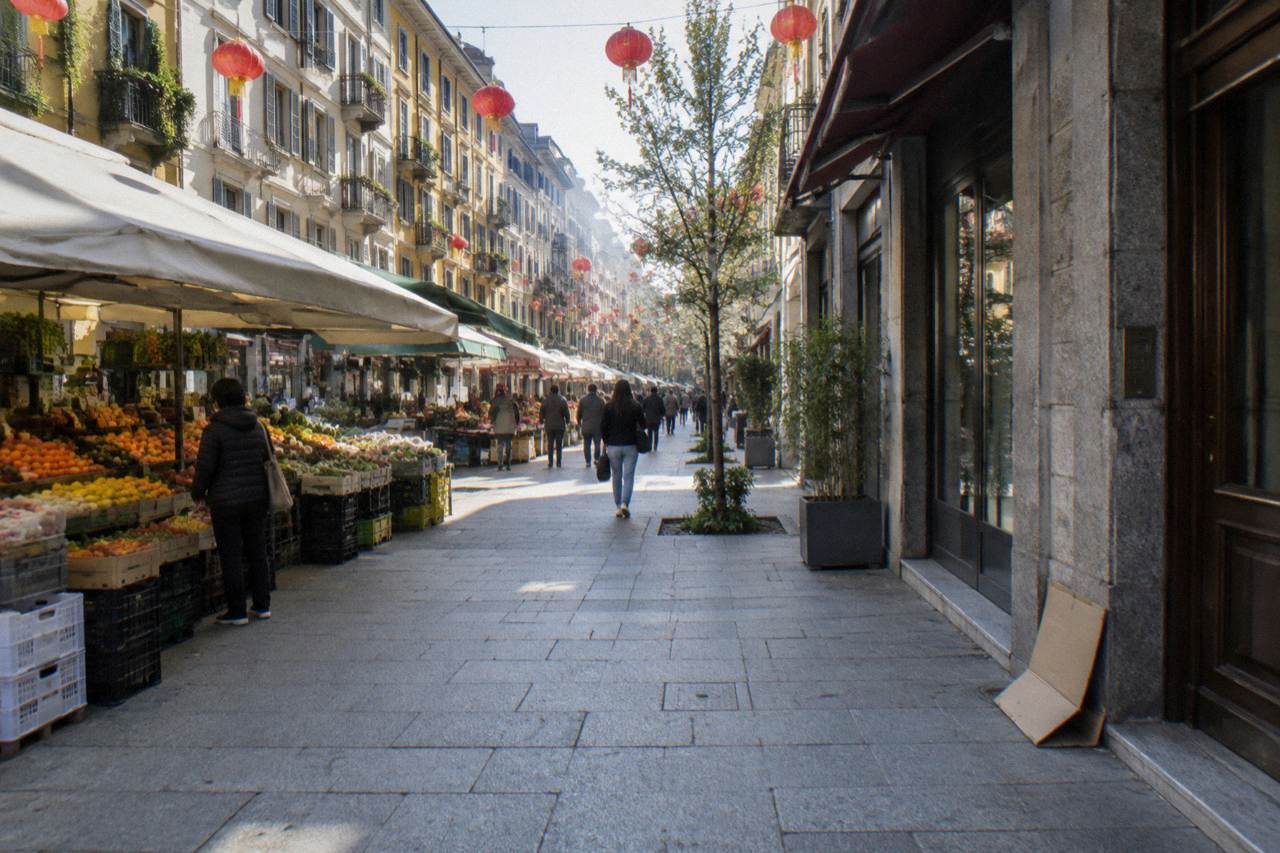
Milan's Chinatown is one of the few central districts where every single thing worth doing is free to enter. Via Paolo Sarpi, its main street, is a free public road lined with Chinese bakeries, grocers and market stalls you can browse without spending a cent. The surrounding blocks add Parco Sempione, Castello Sforzesco's courtyards and Arco della Pace, all free, plus pay-what-you-want walking tours that tie the area together.
Chinatown Milan is not a themed attraction with a gate and a ticket booth. It is a working neighbourhood, mostly pedestrianised along Via Paolo Sarpi, where a long-established Chinese community trades to this day. That history matters: this is one of Europe's older Chinatowns, older than most people expect, and it grew out of small workshops and merchants rather than restaurants built for tourists.
Nothing in the district charges admission. You walk it, you look, you smell the bakeries, you browse the supermarket aisles of Via Paolo Sarpi, and if you want to spend, street food and dumplings are there at pocket-money prices. But spending is optional at every step. This guide from Free Things To Do In Milan covers the whole district on that basis: what to see, where to walk, and how the free walking tours connect it to the rest of the centre.
The neighbourhood also sits in one of the most generous free-sight corridors in the city. Within fifteen minutes on foot you reach the Sforza Castle courtyards, which are free every day, and the park behind them. Very few European capitals give you a Chinatown, a castle and a major park in one free loop.
Where Is Chinatown In Milan And How Do You Reach It?
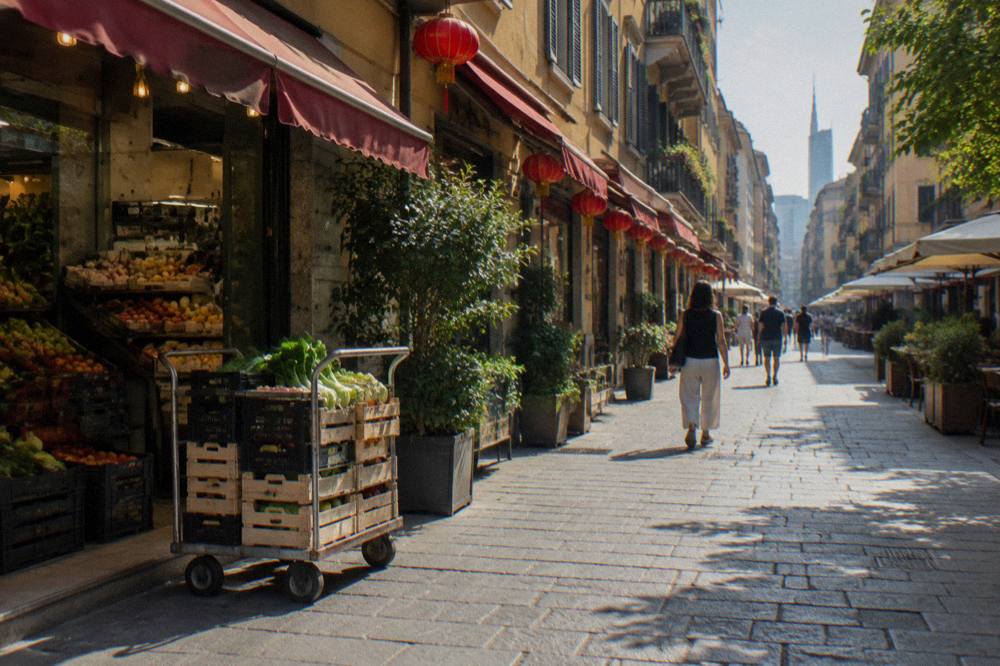
Chinatown stretches along Via Paolo Sarpi, running northwest from the corner of Via Canonica towards Porta Volta, about a fifteen-minute walk from the Duomo and ten minutes from Castello Sforzesco. The closest metro stops are Moscova on the M2 green line and Turati on the M3 yellow line, each a short stroll from the street's southern end. The street itself is free to walk at any hour.
The geography is simple and it is the reason this district pairs so well with a free day. Via Paolo Sarpi starts practically at the edge of the Sforza Castle grounds. Walk out of the castle's rear towards Corso Sempione, cut left, and you are in Chinatown within minutes. This makes it a natural extension of the classic free loop: Piazza del Duomo, the Galleria Vittorio Emanuele II, the castle courtyards, then Chinatown.
Trams also serve the area well, and Milan's tram rides through Porta Volta and Corso Sempione give you a cheap sightseeing option if your legs tire. But on foot is how this neighbourhood is meant to be seen. Via Paolo Sarpi was pedestrianised precisely so people could wander between the shops and stalls without traffic.
If you are building a whole day around free Milan, the walk from the centre through Chinatown and onwards to Porta Nuova's free public spaces, Piazza Gae Aulenti and the Biblioteca degli Alberi park, is one of the city's best no-cost routes. Our free one day Milan itinerary strings these together stop by stop.
A pay-what-you-want walking tour is the other way to anchor the district in a bigger picture, and three of the best free walks in the city pass through or start near this side of the centre.
What Should You Actually See On Via Paolo Sarpi?
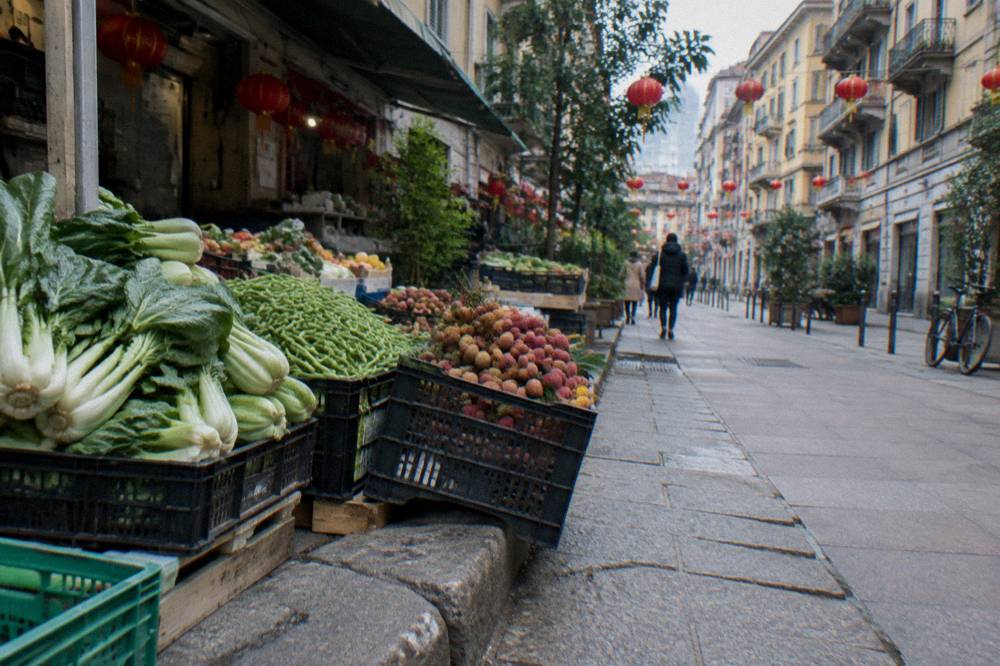
The street itself is the sight: a largely pedestrianised strip of Chinese grocers, bakeries, herbalist shops and street stalls running the length of Via Paolo Sarpi. Browsing costs nothing, the shopfronts and awnings are photogenic, and the Saturday market stalls spill out along the pavement. There is no admission anywhere, no ticket desk, and no attraction that charges, only shops you can enter or ignore.
Start at the southern end near Via Canonica and walk northwest. The first blocks are the densest: butchers roasting ducks behind glass, bakeries with trays of char siu bao and egg tarts, and grocery stores with whole aisles of noodles, sauces and packaged snacks from across Asia. Even if you buy nothing, these shops are genuinely interesting to browse, and nobody minds a slow lap of the aisles.
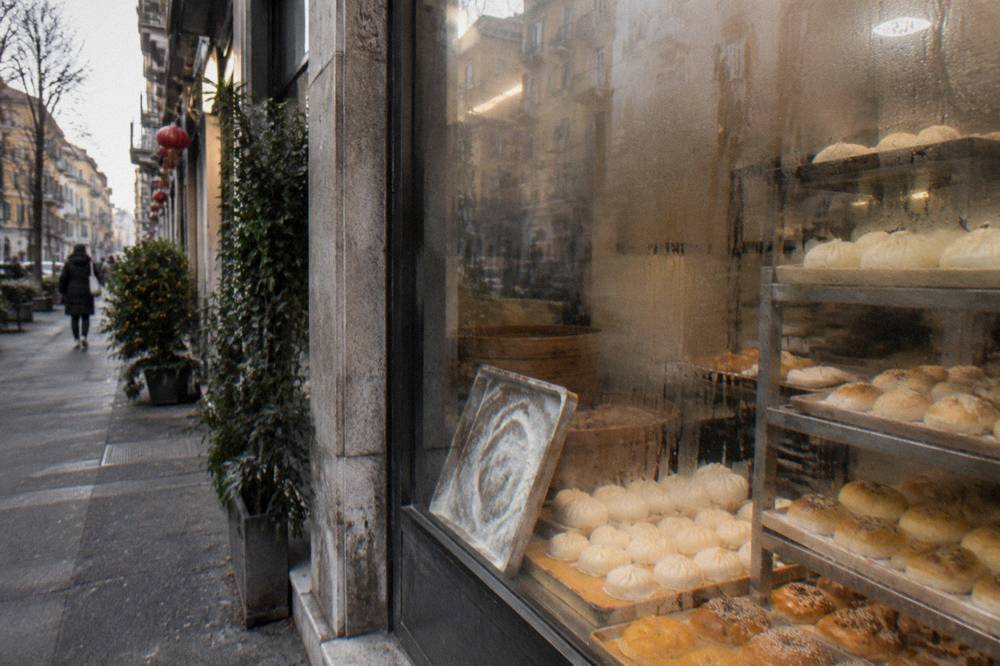
The street food browsing is the headline for most visitors. Fresh dumplings, filled buns and bubble teas are sold at prices far below central Milan's restaurant rates, and the window displays alone are worth the walk. If you want to keep the day at literally zero spend, browsing is the activity: the displays are elaborate, the aromas are free, and the people-watching on a Saturday afternoon is some of the best in the city.
Midway along, look for the small side streets. Vicolo and cross-lanes off Paolo Sarpi hold quieter family shops and a few of the neighbourhood's older facades, a reminder that this community predates the pedestrianisation and the Instagram attention. The contrast between the polished new Porta Volta towers at the top of the street and the old trading shops at the bottom tells the district's whole story in a single walk.
| What | Where on Via Paolo Sarpi | Cost |
|---|---|---|
| Browsing the Chinese grocers | Along the whole street, densest near Via Canonica | Free to browse |
| Bakery window displays | Southern and middle blocks | Free to look |
| Saturday market stalls | Pavements along the street | Free to browse |
| Side-street facades and old shopfronts | Cross-lanes off the main strip | Free |
| Porta Volta towers view | Northwest end of the street | Free |
Which Free Walking Tours Cover Chinatown And The Surrounding Centre?
Several pay-what-you-want walks start within easy reach of Via Paolo Sarpi. Fabrice's 1H45 Best-Tips Walk, rated 9.4 out of 10 across 562 freetour.com reviews, meets at Palazzo Morando on Via Sant'Andrea and covers central Milan's landmarks and local tips. The 2H45 Wonders Walk, rated 4.9 out of 5 across 2,916 GuruWalk reviews, meets at Piazza del Duomo and takes in the Duomo, the Galleria and the castle.
Fabrice's Best-Tips free tour is the one most worth pairing with a Chinatown visit, because it is built around practical local knowledge rather than a fixed monument list. It runs on freetour.com, lasts 1 hour and 45 minutes, is offered in English and German, and you pay nothing upfront, the guide is compensated by whatever you choose to give at the end. Its meeting point at Palazzo Morando, Via Sant'Andrea 6, sits in the fashion district, from which Chinatown is a straightforward walk.
The Wonders Walk, run by CITYWALKERS on GuruWalk, is the heavyweight option: 2 hours and 45 minutes in English or Spanish, rated 4.9 out of 5 across 2,916 GuruWalk reviews, the largest review pool of any free walk in the city. It starts at Piazza del Duomo and its route through the Galleria and up to the Sforza Castle area finishes within walking distance of Via Paolo Sarpi, so it slots naturally before an afternoon of market browsing. You can read more in our guide to free walking tours in Milan.
A shorter option is the 1H30 On-Foot Walk by Fadia, rated 4.93 out of 5 across 40 GuruWalk reviews. With a small review pool, that figure comes from fewer travellers than the big walks, but the near-perfect score and the compact hour-and-a-half format make it a good fit if you want a guided introduction without committing half a day. It meets at Largo Ildefonso Schuster, south of the centre, and covers the essential core.
What Free Sights Sit On Chinatown's Doorstep?
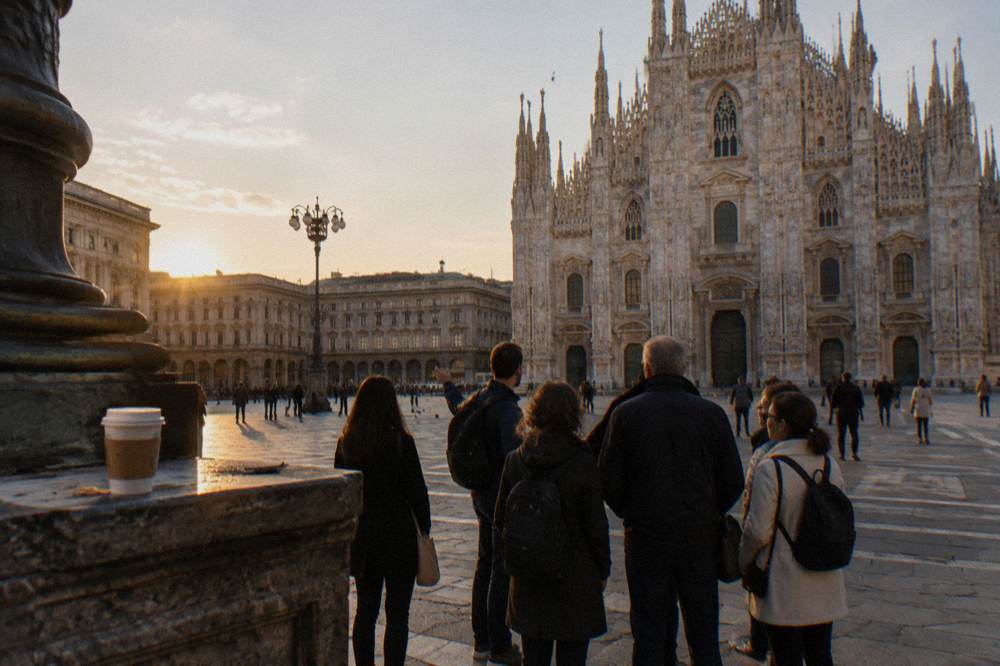
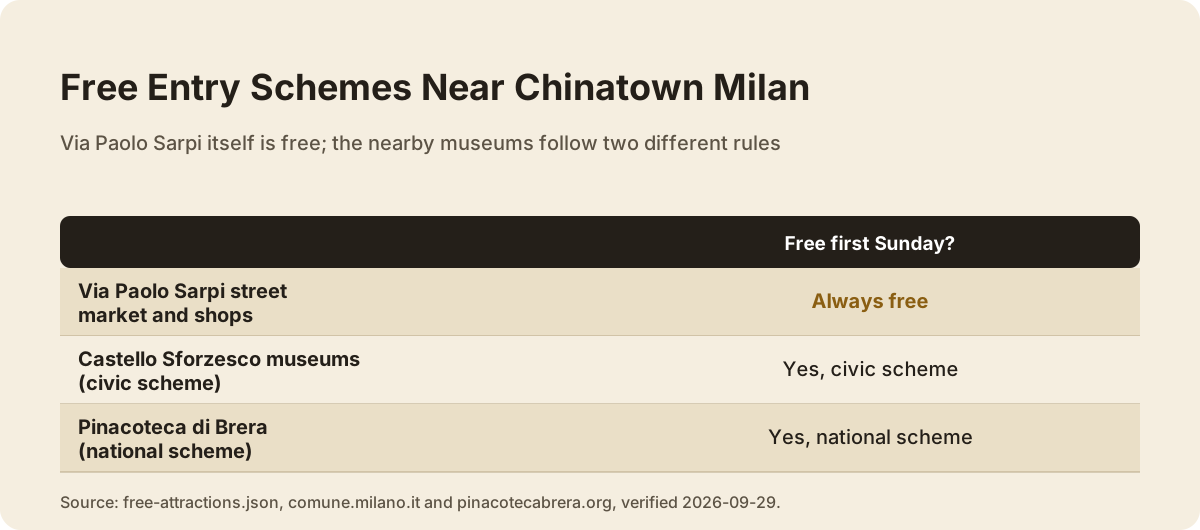
Within a fifteen-minute walk of Via Paolo Sarpi you can reach Castello Sforzesco's courtyards and grounds, free and open daily, Parco Sempione, the Arco della Pace, and the Corso Como strip. None of these charges admission. The castle's interior museums are the one exception nearby, and even those open free to everyone on the first Sunday of the month under Milan's civic museums scheme.
The castle is the anchor. Its outer courtyards and grounds cost nothing and are open daily, roughly 7:00 to 19:30, per the castle's own visitor pages at milanocastello.it. You can walk through the archway, cross the central courtyard and exit into the park behind without a ticket. Only the museums inside the castle buildings are paid, and they are covered by the civic scheme, not the national one.
Parco Sempione follows immediately: a free public park that stretches from the castle's rear to the Arco della Pace, Milan's triumphal arch, which is likewise free to view at any time. On a sunny afternoon this green corridor is where half the city seems to picnic, and it costs exactly nothing to join them.
The civic museums scheme is worth understanding before you assume anything near Chinatown is paid. It applies to the Comune di Milano's own venues, including the castle's museums, and offers free entry for everyone on the first Sunday of the month plus free entry for visitors up to 25 on the second Tuesday. The details are published on the comune.milano.it ticketing pages. This is separate from the national Domenica al Museo scheme, which covers state museums like the Pinacoteca di Brera, and the two should never be conflated.
| Free sight | Walk from Via Paolo Sarpi | Notes |
|---|---|---|
| Castello Sforzesco courtyards | About 10 minutes | Grounds free daily, museums paid |
| Parco Sempione | About 12 minutes | Free public park |
| Arco della Pace | About 20 minutes | Free monument at the park's far end |
| Corso Como | About 15 minutes | Free public street |
| Piazza Gae Aulenti and Biblioteca degli Alberi | About 25 minutes | Free public spaces at Porta Nuova |
How Do You Eat And Browse In Chinatown On A Zero Budget?
Browsing is free everywhere on Via Paolo Sarpi: the grocers, bakery windows and market stalls welcome lookers, and the Saturday stalls turn the pavement into a free show. If you do spend, dumplings and filled buns run at street-food prices well below central Milan's restaurants. But nothing requires a purchase, and a no-spend walk loses nothing of the district's atmosphere.
The zero-spend version of Chinatown is genuinely satisfying, which is not true of every food district. The bakeries arrange their steamed buns and pastries in the windows where passers-by can see them, the roast ducks hang in plain view, and the grocers' displays of packaged snacks and teas are closer to a museum of Asian food culture than a shop. Walk slowly, look closely, and you get the district's character without opening your wallet.
If you want to spend a little, the street food is the efficient choice. Fresh dumplings and filled buns from the bakeries cost a few euros, far below what a sit-down meal in the Brera or Duomo areas would run, and you eat them walking. Our guide to Milan aperitivo on a budget covers the same logic for the evening, where the city's aperitivo tradition can stretch a single drink into an evening's food.
Two practical notes. First, Saturday is the busiest and best day for the market stalls, but also the most crowded; weekday mornings give you the same street with more room. Second, the shops are real businesses serving a real community, so a slow browse and a friendly greeting go further than a camera thrust at a counter. The neighbourhood rewards politeness with warmth, a trade that costs nothing on either side.
Can You Combine Chinatown With Other Free Neighbourhood Walks?
Yes, and the geography makes it easy. Chinatown links north to the free Porta Nuova spaces and the Isola district, south to the castle and the Duomo, and it sits on the natural walking line between them. A free loop from the Duomo through the castle grounds, up Via Paolo Sarpi and across to Piazza Gae Aulenti covers the city's best no-cost sights in a single afternoon.
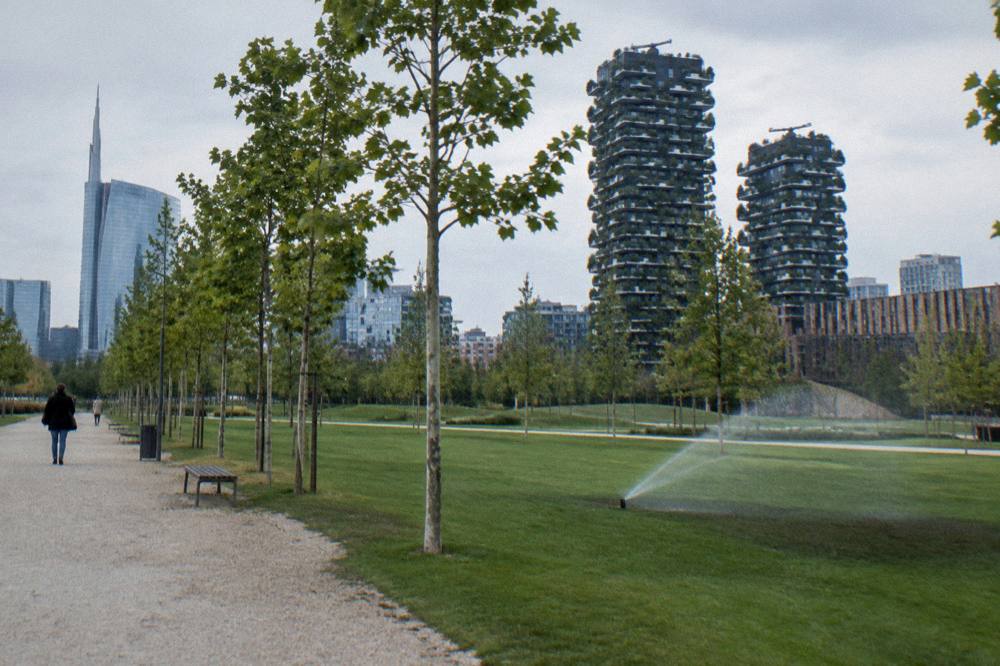
The northern extension is the most underrated. From the top of Via Paolo Sarpi, the Porta Volta towers mark the way into Milan's newest skyline, and from there Piazza Gae Aulenti and the Biblioteca degli Alberi park are free public spaces that feel like the city's modern showroom. The Isola district beyond them is a free neighbourhood of street art and small independent shops, covered in full in our Isola Milan free neighbourhood guide.
The southern extension needs no introduction: the castle courtyards lead back towards the Duomo through the free Galleria Vittorio Emanuele II and Piazza del Duomo. That corridor is the spine of free Milan, and Chinatown is the organ attached to it that most visitors skip.
For evening planning, the Navigli canal district is a tram ride or a longer walk south, free to wander and at its best at aperitivo hour. Our Navigli free canal district guide covers the canals, the Vicolo dei Lavandai and the Darsena, all free public spaces.
The common thread is that Milan's free surface area is unusually large and unusually connected. Chinatown is not an outlier you detour to, it is a link in a chain of free districts that runs from the Duomo to the Isola bridges without a single ticket booth in between.
When Is The Best Time To Walk Chinatown?
Saturday afternoon is the liveliest time, when the market stalls are out and the street is at full bustle, but it is also the most crowded. Weekday mornings give you the same shops and bakeries with far more room to browse, and the street is walkable and free year-round at any hour. The surrounding park and castle courtyards are best in the late afternoon light.
Timing here is about crowds, not access. Via Paolo Sarpi never closes, because it is a public street, and the shops keep their own hours, typically through the middle of the day and into the early evening. If market stalls are your priority, aim for a Saturday; if browsing the grocers calmly is the goal, a weekday morning wins easily.
Seasonally, spring and autumn are the sweet spot, because you will want to extend the walk into Parco Sempione, and summer afternoons can be heavy. Winter works too, since the bakery windows are arguably at their most inviting when the street is cold, and the castle courtyards are quiet.
One planning note that saves confusion: the first Sunday of the month is free-entry day at both the state museums and Milan's civic museums, so if your Chinatown walk falls on one, it is the day to add a museum stop near the castle. The national scheme's details are on the Ministero della Cultura's Domenica al Museo page, and reservations are often required even on free days, so check before you count on walking in.
| Time | Atmosphere | Best for |
|---|---|---|
| Saturday afternoon | Full bustle, market stalls out | People-watching and the busiest browsing |
| Weekday morning | Calm, shops open, few tourists | Relaxed grocery and bakery browsing |
| Late afternoon | Warm light on the castle and park | Extending the walk into Parco Sempione |
| Winter weekdays | Quiet street, inviting bakery windows | A cold-weather stroll with warm stops |
Common Questions About Milan's Chinatown
Is Milan's Chinatown Free To Visit?
Yes, completely. Via Paolo Sarpi is a free public street and there is no admission charge anywhere in the district. The grocers, bakery windows and market stalls are all free to browse, and the nearby castle courtyards, Parco Sempione and Arco della Pace are free public spaces too.
Where Is Chinatown In Milan?
Chinatown stretches along Via Paolo Sarpi, running northwest from near Via Canonica towards Porta Volta. It is roughly a fifteen-minute walk from the Duomo and about ten minutes on foot from Castello Sforzesco. The closest metro stops are Moscova on the M2 line and Turati on the M3 line.
What Is There To Eat In Milan's Chinatown?
Chinese bakeries sell steamed buns, egg tarts and pastries at street-food prices, and fresh dumplings are widely available along Via Paolo Sarpi. Browsing the displays costs nothing, and the Saturday market stalls add produce and snack stands to the pavement.
Which Free Walking Tours Pass Near Chinatown?
Fabrice's 1H45 Best-Tips Walk, rated 9.4 out of 10 across 562 freetour.com reviews, meets at Palazzo Morando and covers central Milan with local tips. The 2H45 Wonders Walk, rated 4.9 out of 5 across 2,916 GuruWalk reviews, runs from Piazza del Duomo towards the castle area. Both are pay what you want.
Are The Museums Near Chinatown Free?
The castle's courtyards and grounds are always free. The museums inside Castello Sforzesco are paid, but free for everyone on the first Sunday of the month and free for visitors up to 25 on the second Tuesday, under Milan's civic museums scheme. The national first-Sunday scheme covers state museums like the Pinacoteca di Brera, a separate arrangement.
When Is The Best Day To Visit Via Paolo Sarpi?
Saturday is the liveliest day, with market stalls out along the street, though it is also the busiest. Weekday mornings offer the same shops and bakery displays with far fewer people. The street is free and walkable at any hour, any day of the week.