Is Milan Worth Visiting?
An honest yes-with-caveats answer to whether Milan is worth visiting, anchored in the city's free layer: squares, churches, canals and pay-what-you-want walking tours.
Is Milan Worth Visiting?
Yes, Milan is worth visiting, with caveats. It is not Rome or Florence, and anyone arriving expecting a museum-city of ancient ruins will be disappointed. But Milan rewards a different kind of visitor: one happy to wander free squares, working churches, canal banks and castle courtyards, and to let a pay-what-you-want local guide explain what the eye misses. The city's best experiences cost little or nothing, which is the honest case for going.
The question gets asked more often than you would think, and it deserves a straighter answer than the tourism brochures give. Milan is Italy's business capital, and its reputation runs on fashion week, design fairs and the stock exchange. That reputation is real but it is also narrow. It describes maybe four neighbourhoods of a city that has a medieval core, a working canal district older than most of the canals in Venice, and one of the largest castle complexes in Europe whose courtyards you can walk through without a ticket.
The honest caveat is this: Milan is a city of interiors. Many of its treasures sit behind paid doors, from the Duomo's rooftop terraces to the Last Supper itself, which needs a timed reservation even on the monthly free day. A visitor who only does the paid layer can spend a lot and feel shortchanged. A visitor who works the free layer, and there is a deep one, gets a full city for almost nothing.
There is a second caveat worth naming, because it is the one that most often produces a disappointed review. Milan does not perform itself. Rome announces itself from the taxi window; Milan keeps its best material behind facades, down side streets and inside courtyards that look, from the outside, like office blocks. The city rewards the visitor who arrives with a little context, whether that comes from a guide, a good itinerary or a willingness to walk one street further than the crowd does. That is a fair criticism and a fair defence at the same time.
That free layer is what this site exists to map, and it is the reason the answer here is a yes rather than a shrug. The walks below are a good example of the economics: every one of them is free to join, with the tip decided at the end by you.
What Makes Milan Worth The Trip?
Three things: the density of the historic core, the quality of the free churches, and the fact that the city's signature sights, Piazza del Duomo, the Galleria Vittorio Emanuele II, the castle grounds and the Navigli, cost nothing to see. A first-time visitor can walk all four in a single day without buying a single ticket, and each one is genuinely world-class rather than a consolation prize.
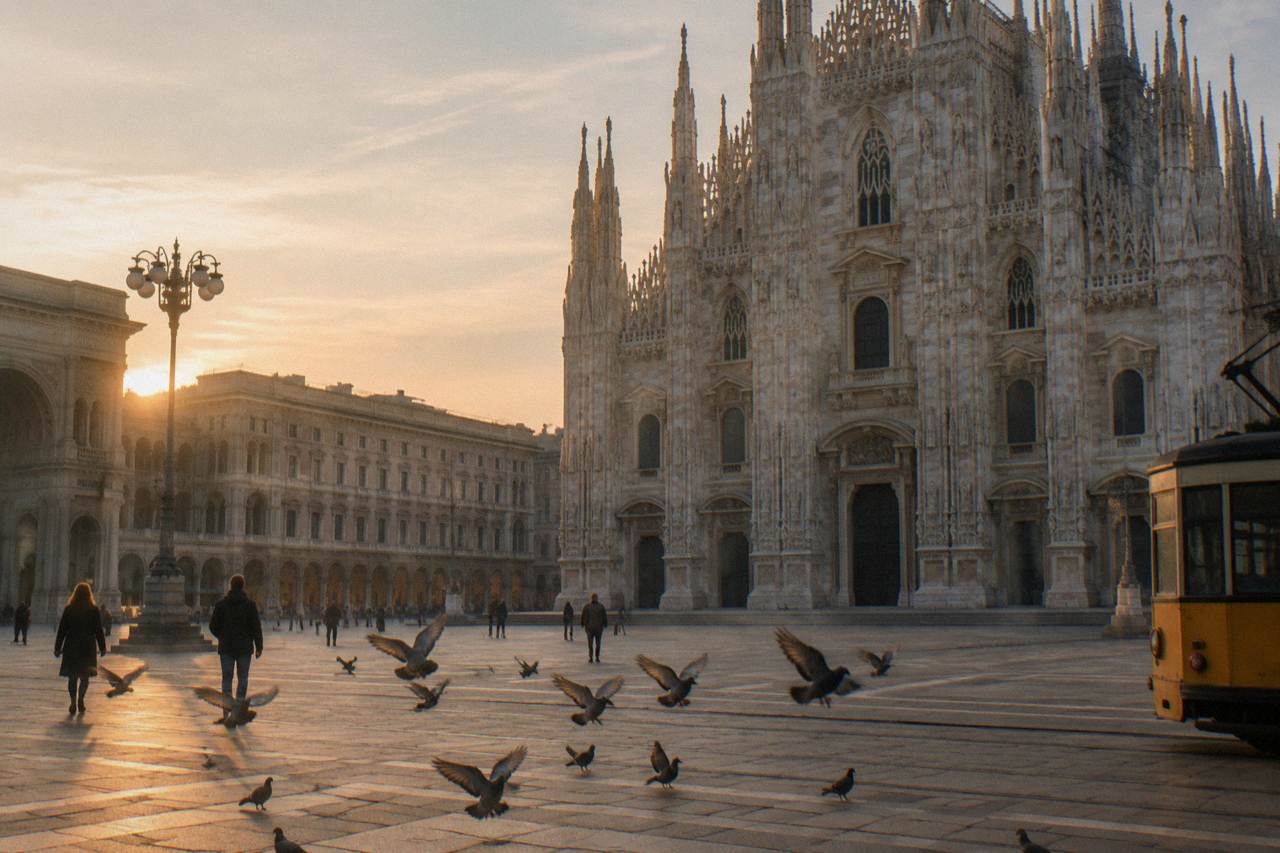
Start with the Duomo quarter, because it delivers the strongest first hour in any Italian city. Piazza del Duomo is a free public square, the cathedral facade fills the eye from edge to edge, and the Galleria Vittorio Emanuele II, the glass-vaulted shopping gallery that links the piazza to La Scala, is free to walk through. You do not need to buy anything to stand under one of the most beautiful ceilings in Europe. The Galleria is free to enter in full, not just the corridors.
The quarter also holds smaller free rooms that most itineraries skip. Piazza Mercanti, one block west of the Duomo, is a surviving medieval square ringed by porticoes, quiet at almost any hour and completely free. Palazzo Reale stands on the piazza's south side; its exhibitions are paid and variable, but the building's public passage is part of the free choreography of the square. This is the pattern of the whole city centre: the headline rooms are paid, the rooms between them are free, and the walk between them costs nothing.
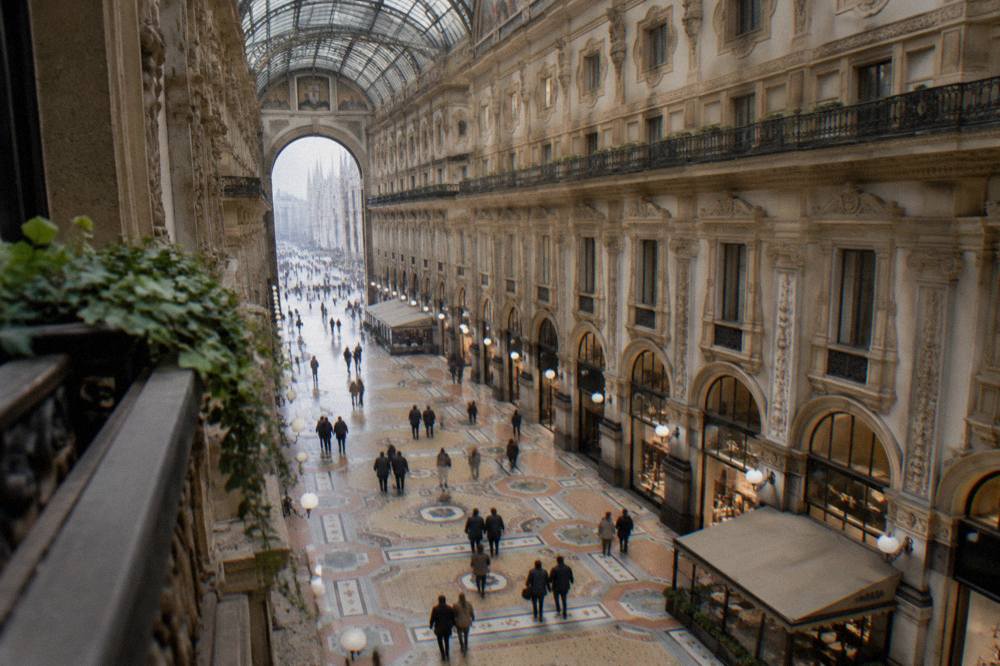
The 2H45 Wonders Walk, rated 4.9 out of 5 across 2,916 GuruWalk reviews, is the featured introduction to exactly this ground: it meets at Piazza del Duomo and runs in English or Spanish for 2 hours and 45 minutes, free with the tip decided at the end. For readers who want the same argument in more depth, the site's free walking tours in Milan guide breaks down all ten walks on the roster, including the two that are not bookable in English.
Beyond the centre, the free churches are the quiet argument for Milan. San Maurizio al Monastero Maggiore, sometimes called the Sistine Chapel of Milan, is free to enter and covered floor to ceiling in Renaissance frescoes. Santa Maria presso San Satiro holds Bramante's famous trompe l'oeil apse, an illusion so convincing that visitors routinely walk around looking for the choir that is not there. These are working churches, not attractions, which is why they stay free. Add the Basilica di Sant'Ambrogio, one of the most important early medieval buildings in northern Italy, and the free church layer alone justifies a day of walking.
Is Milan Too Expensive To Enjoy?
No, provided you do not build the trip around the paid headline sights. Milan is Italy's priciest city for hotels and restaurant terraces, but the sightseeing layer is unusually cheap: the core walkable sights are free, the major churches are free, and the walking tours operate on pay-what-you-want. A visitor can spend heavily on espresso-and-aperitivo streets and still see a complete city for the cost of a transit pass.
The expense reputation comes from the fashion district and the hotel prices around the fairs, and it is fair on both counts. But sightseeing is a different budget. The Duomo interior is paid, the rooftops more so, and the cost breakdown for Milan on a budget shows where the money actually goes. The free layer is not a thin substitute either: the castle courtyards, Parco Sempione, the Colonne di San Lorenzo, the Darsena and the whole Navigli canal bank are all free public space, and they are where Milanans actually spend their evenings.
Food is where the budget bends or holds, and Milan makes both possible. The aperitivo tradition, a drink plus a spread of food at a fixed price in the early evening, is the city's own invention and the budget traveller's best friend; the Milan aperitivo on a budget guide explains how to do it without the designer markups. A coffee standing at the bar costs a fraction of the same cup at a table with a view, and the difference funds an extra half day of the trip.
For a fast, cheap orientation, the Express Walk, Official Guide, rated 4.46 out of 5 across 973 GuruWalk reviews, runs just 1 hour and 30 minutes in English from Largo Ildefonso Schuster. It is the shortest walk on the roster and the cheapest way to get your bearings in a city that does not always signpost itself well. Other pages covering the same trip are gathered on Free Things To Do In Milan.
The table below is the honest budget picture: what a day in Milan costs when you work the free layer versus what it costs when you buy every headline ticket.
| Layer | What it covers | Typical cost |
|---|---|---|
| Free layer | Piazza del Duomo, Galleria, castle courtyards, Parco Sempione, Navigli, the free churches | Nothing |
| Walking tours | Pay-what-you-want guided walks, 1h30 to 2h45 | Tip only, decided by you |
| Civic museums | Castello Sforzesco museums, Museo del Novecento, GAM | Paid, but free first Sunday for all, second Tuesday for under-25s |
| Headline tickets | Duomo rooftops, Last Supper reservation, La Scala museum | Paid every day, timed reservations for the Last Supper |
What Can You See In Milan For Free?
More than most visitors expect: two of Europe's great public rooms, Piazza del Duomo and the Galleria, a full castle you can walk through, a Renaissance fresco church, a Roman column colonnade, an entire canal district and a monumental cemetery that is one of the city's most beautiful places. Almost none of it requires a ticket, a reservation or even a plan.
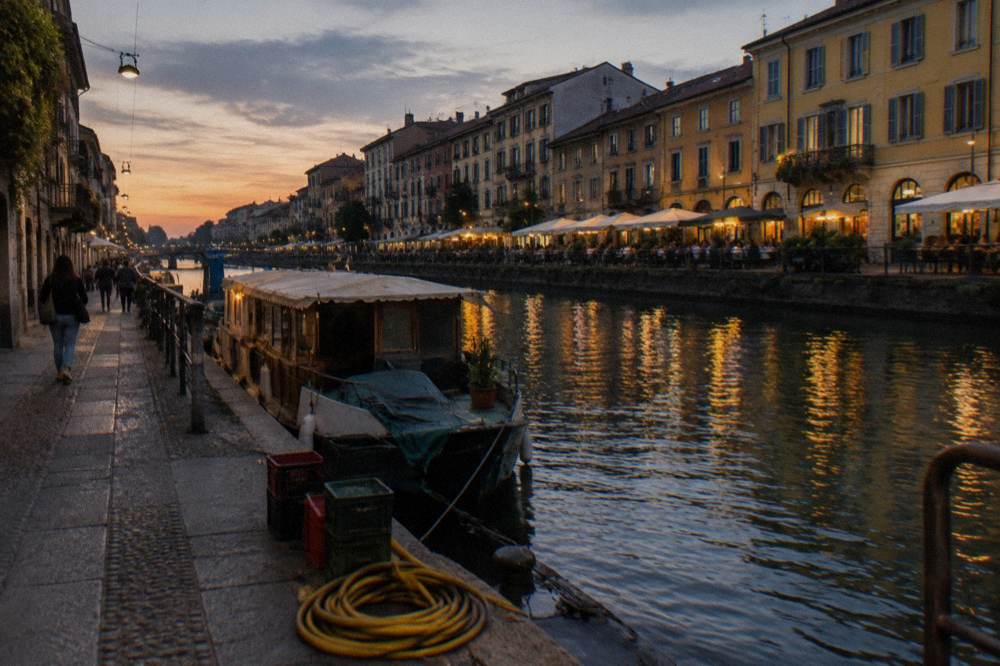
The castle is the best single example. Castello Sforzesco's outer courtyards and grounds are free and open daily, roughly 7:00 to 19:30, and they carry you from the back of the fortress straight into Parco Sempione, the city's great free park, and on to the Arco della Pace at the far end. Only the museums inside the castle charge, under the civic scheme. The Sforza Castle free access guide covers the distinction in detail, because it is the single most conflated fact in Milan: free grounds, paid museums, never the one thing.
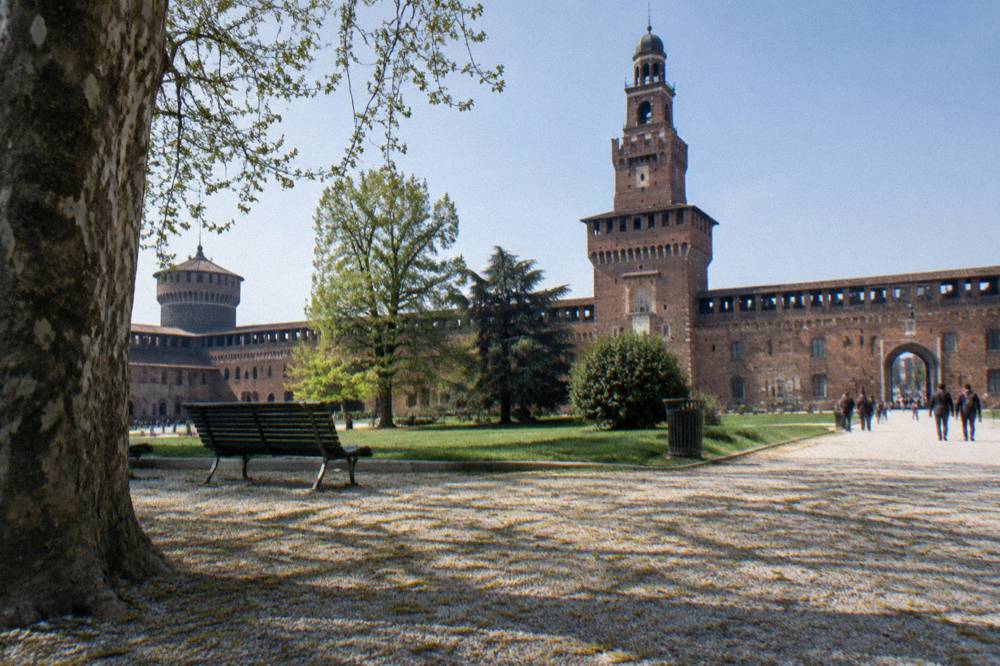
The Navigli district is the other half of the free city. The Naviglio Grande canal is free public space all along its banks, the Vicolo dei Lavandai alley preserves the old washermen's courtyard, and the Darsena, the old harbour basin, is a free public dock where the evening aperitivo crowd gathers. None of it is ticketed. The Navigli free canal district guide maps the full walk from the Colonne di San Lorenzo to the Darsena.
Two free entries deserve special mention because they are genuinely unusual. Pirelli HangarBicocca, a vast former factory housing monumental contemporary art installations, currently charges no admission at all, which its own official visitor page confirms. And the Orto Botanico di Brera, the botanical garden tucked behind the Pinacoteca, is free to enter, a quiet green stop inside the city's most atmospheric neighbourhood.
Add the Cimitero Monumentale to that list, because it surprises people. Milan's monumental cemetery is free to enter and it is, without exaggeration, one of the most beautiful places in the city: a sculpture park of family tombs by artists whose work fills the museums a kilometre away. Visitors who spend a morning there rarely regret it, and it costs nothing. The Colonne di San Lorenzo, a row of Roman columns in front of a paleochristian basilica, sits at the top of the Navigli walk and makes the same point: Milan's free layer includes genuinely ancient material, not just modern public space.
How Many Days Does Milan Need?
Two full days is the honest minimum for the free layer done well, and three lets you add the museum days without rushing. One day covers the Duomo quarter, the Galleria, the castle grounds and Parco Sempione at a walk. A second day belongs to Brera, the Navigli and the Darsena, ideally ending on the canal bank at aperitivo hour. A third day is for the Pinacoteca, the Last Supper reservation and the quieter northern districts.
The one-day version works because Milan's core is compact. The Duomo, the Galleria, Piazza Mercanti, the castle and Parco Sempione form a single walkable chain, roughly 20 minutes end to end on foot. The free one-day Milan itinerary strings them together with the free churches inserted between, and it is a realistic day, not an aspirational one.
The museum question changes the maths. If the Pinacoteca di Brera or the Last Supper are priorities, plan around the free-day schemes rather than fighting them. The national Domenica al Museo scheme makes state museums free on the first Sunday of the month, and the Comune's civic museum ticketing page sets the parallel scheme for the civic venues. The Last Supper needs its own planning entirely: the church of Santa Maria delle Grazie is free to enter as a working church, but the Cenacolo Vinciano viewing is a separate, reserved product, free only on the first Sunday and even then only with a booked timed slot, per the official Cenacolo information page.
For a longer stay, the city keeps giving. The Isola district, the Biblioteca degli Alberi park, Piazza Gae Aulenti and the Bosco Verticale viewed from outside are all free, and the Isola free neighbourhood guide covers the district that grew up in the vertical forest's shadow. North of the centre, Monte Stella, the artificial hill in San Siro, gives a free panorama over the skyline, and the Idroscalo lake park offers free shoreline access on the eastern edge. A fourth day in Milan is not a stretch, which is not something the city's reputation promises.
If the answer so far is a yes for you, these three walks are the natural next step: one full introduction, one short orientation, one small-group alternative.
Common Questions About Whether Milan Is Worth Visiting
Is Milan Worth Visiting?
Yes, with caveats. It is not a classical ruins city, and its headline interiors are expensive and reservation-heavy. But the free layer, the squares, churches, canals, castle grounds and pay-what-you-want walks, is deep enough to fill two or three days at almost no cost, which makes it one of the better value city breaks in northern Italy.
Is Milan Worth Visiting If You Have Already Seen Rome And Florence?
Yes, because it offers something neither of them does: a working Italian city where the sights are embedded in ordinary life rather than cordoned off from it. The Navigli aperitivo, the Brera quarter and the free castle grounds feel lived-in in a way the big three's historic centres often do not.
How Expensive Is Milan Compared To The Rest Of Italy?
Milan is generally Italy's most expensive city for hotels and restaurant terraces, driven by the fashion and fair economy. Sightseeing is the exception: the walkable core is free, the major churches are free, and the walking tours are pay-what-you-want, so the sightseeing budget can be near zero.
Can You See Milan Without Spending Money On Tickets?
Yes, and comfortably. Piazza del Duomo, the Galleria Vittorio Emanuele II, the Castello Sforzesco courtyards, Parco Sempione, the Colonne di San Lorenzo, the Navigli and the Darsena are all free public space, and San Maurizio al Monastero Maggiore is one of several free fresco churches. Only the interiors, rooftops and museum collections charge.
Is One Day Enough In Milan?
One day covers the essential free core: the Duomo quarter, the Galleria, the castle grounds and Parco Sempione, plus an evening on the Navigli. It is a real day rather than a rushed one, but it leaves Brera, the museums and the northern districts unseen. Two days is the better minimum.
What Is The Best Free Thing To Do In Milan?
The Galleria Vittorio Emanuele II at full walk-through is the strongest single free experience, and it costs nothing to enter. Close behind are the castle courtyards leading into Parco Sempione, and the frescoes of San Maurizio al Monastero Maggiore. A free walking tour ties the whole free layer together with local context.