Milan On A Budget: What A Day In The City Really Costs
Milan has a reputation for being Italy's expensive city, but the numbers tell a more interesting story: the walkable core is compact, the headline sights are either free or cheap, and the pay-what-you-want walking tours mean your biggest sightseeing cost can be zero.
Short answer
A budget day in Milan can cost almost nothing: the free-walking-tour scene covers the Duomo, Galleria and Castello Sforzesco on a pay-what-you-want basis, civic museums run €5-€10 full price with free first Sundays, and the Duomo's paid interior is €8-€10. Public spaces, courtyards and churches are free.
How Much Does A Day In Milan On A Budget Really Cost?
The honest answer is that a disciplined day in Milan can cost under €20 per person once your bed is paid for: the free-walking-tour scene makes guided sightseeing free, the civic museums charge €5-€10 full price, and the Duomo's paid interior runs €8-€10. The city's most photographed spaces, from Piazza del Duomo to the Galleria and the castle courtyards, cost nothing at all.
The "expensive Milan" reputation comes from three specific things: hotel rates during trade-fair weeks, designer shopping in the Quadrilatero, and restaurant terraces facing the Duomo. None of those are compulsory. Step one street back from the monument-facing tables and prices drop sharply, and the sightseeing itself is unusually generous for a city of this wealth.
What follows is a section-by-section breakdown: transport, the genuinely free stuff, the paid highlights with their real ticket prices, food, and the museum free-day schemes that can zero out your culture budget entirely. Every figure here comes from the official sources, and the two national and civic free-entry schemes are kept separate throughout, because mixing them up is how most budget guides get Milan wrong.
The single biggest lever on a Milan budget is the pay-what-you-want walking tour scene. Nine of the ten walks on this site's roster run on GuruWalk, one runs on freetour.com, and all of them cost nothing to book: you show up, the guide walks you through the centre for ninety minutes to nearly three hours, and you tip what the walk was worth to you. For a visitor who would otherwise spend €25 to €40 on a fixed-price guided tour, that is the largest single saving available in the city.
Is Public Transport In Milan Affordable On A Budget?
Yes, and most budget visitors barely need it: the walkable core from the Duomo to Castello Sforzesco, the Galleria and the Brera district is a compact rectangle crossed on foot in twenty minutes. When you do need the metro or tram, single tickets and day passes are sold at machine and counter, and the transit operator publishes current fares on its own site.
The geography is the reason transport costs stay low. Milan's headline cluster, Piazza del Duomo, the Galleria Vittorio Emanuele II, Piazza dei Mercanti, the Teatro alla Scala exterior and Palazzo Reale, sits within a five-minute walk of each other. Castello Sforzesco and Parco Sempione add ten more minutes on foot from the Duomo. Brera is wedged between the castle and the cathedral quarter. A first-time visitor can spend two full days inside this rectangle and never buy a transit ticket.
The trips that do justify a ticket are the Navigli canal district to the south, the Isola and Porta Nuova quarter to the north, and outlying sights like the Cimitero Monumentale or Pirelli HangarBicocca. For those, buy what you need rather than a multi-day pass on arrival; the arithmetic only works once you know how many rides you will actually take. Fares change often enough that printing a number here would date the page, so check the operator's own fare page before you travel.
One transport line worth planning around is the walk itself. The featured walks on this site meet at fixed central points, from Piazza del Duomo to Largo Ildefonso Schuster near the Duomo, Via delle Ore, and Piazza dei Mercanti, so you can build your day around a walk's meeting point and reach everything else on foot from there.
If you are weighing the guided options against doing the centre alone, these three are the strongest pay-what-you-want candidates:
What Is Genuinely Free In Milan?
A long list: Piazza del Duomo, the Galleria Vittorio Emanuele II, Castello Sforzesco's courtyards and grounds, Parco Sempione, the Arco della Pace, the Colonne di San Lorenzo, the Navigli district and the Darsena, Piazza Mercanti, Piazza Gae Aulenti and the Bosco Verticale from outside. Four working churches with world-class interiors are free, and Pirelli HangarBicocca is free with no ticket.
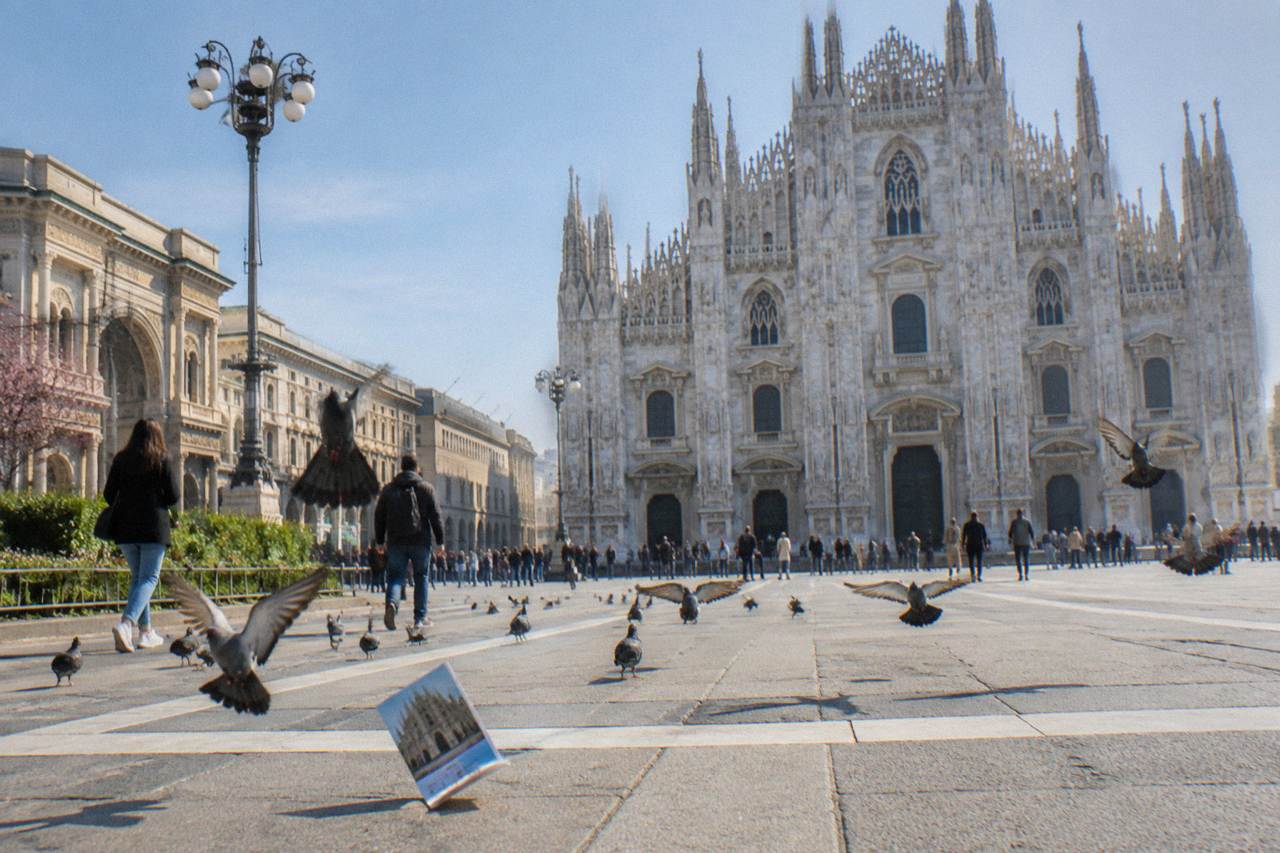
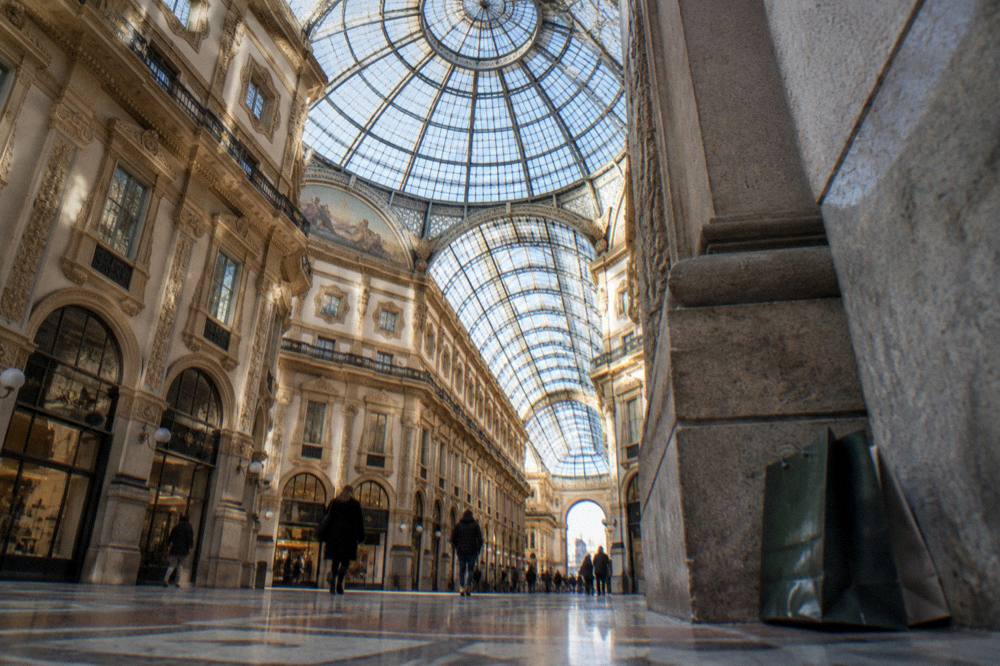
Start with the squares, because they are the city's stage sets and they cost nothing. Piazza del Duomo is a free public square, and the view of the cathedral's facade from the piazza is the one every visitor photographs. The Galleria Vittorio Emanuele II next door is a public shopping gallery, free to walk through, and its mosaic floor and glass dome repay a slow pass even if you buy nothing. Piazza Mercanti, two minutes away, is the medieval merchant square most crowds walk straight past.
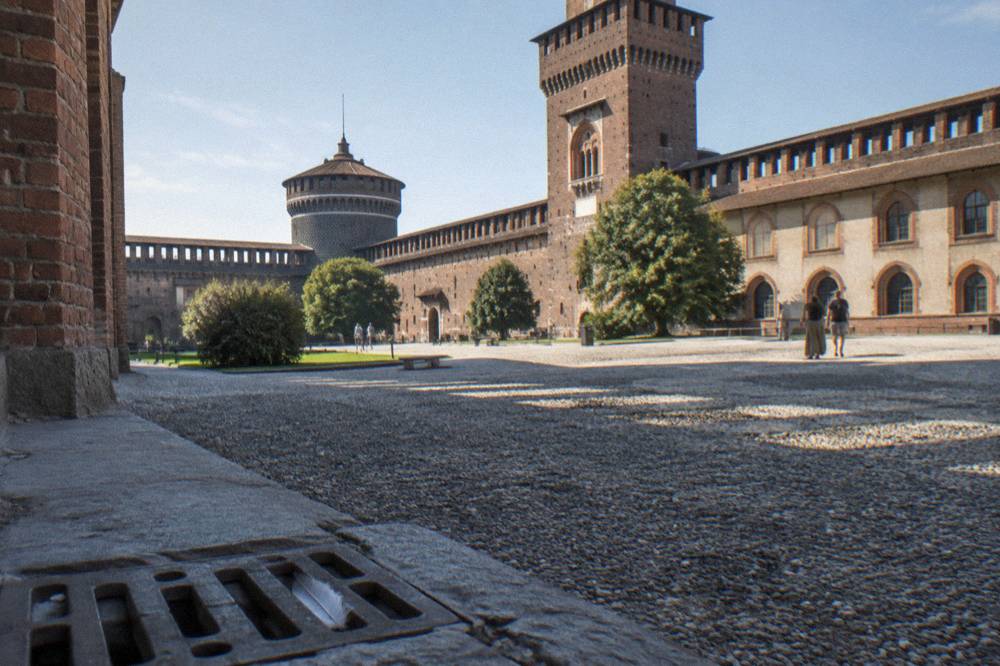
Castello Sforzesco is the site where free and paid most often get confused, so keep the two facts separate. The castle's courtyards and grounds are free and open daily, roughly 7:00 to 19:30, and they are a destination in themselves: you can walk through the central courtyard, out the back into Parco Sempione and up to the Arco della Pace without paying anyone anything. The museums inside the castle are a different product, civic museums under the city's own scheme, and they charge. The same logic applies at the Duomo: standing in the piazza is free, entering the cathedral as a tourist is a paid ticket. Our Sforza Castle free guide covers the free grounds in detail.
The churches are the quietest bargain in Milan. San Maurizio al Monastero Maggiore, often called the Sistine Chapel of Milan for its frescoed interior, is free to enter. Sant'Ambrogio, the city's most ancient basilica, is free as a working church. Santa Maria presso San Satiro holds Bramante's famous trompe l'oeil choir, free. And Santa Maria delle Grazie, the church itself, is free to enter during normal hours, which is a fact that gets blurred constantly with the Cenacolo Vinciano, the Last Supper viewing, which is a separate, paid, reservation-mandatory product on the far side of the same complex.
The 2H45 Wonders Walk, rated 4.9 out of 5 across 2,916 GuruWalk reviews, is the natural companion to this free layer: it meets at Piazza del Duomo and strings the cathedral quarter, the Galleria and the castle district into one pay-what-you-want walk, in English or Spanish. For a first day in the city it covers almost everything in the free list above with a guide explaining what you are looking at.
Beyond the centre, the free list keeps going. The Navigli canal district and the Vicolo dei Lavandai are free public streets, the Darsena dock is a free public space, and the Isola district and Biblioteca degli Alberi park in Porta Nuova cost nothing, with the Bosco Verticale towers viewable from outside as the residential buildings they are. The Cimitero Monumentale, one of the most extraordinary cemetery-museums in Europe, is free to enter. And Pirelli HangarBicocca, a vast converted factory holding one of the best contemporary art collections in Italy, states free admission on its own site, with no ticket required; booking a time slot online is recommended in busy periods but costs nothing.
What Do The Paid Highlights In Milan Cost?
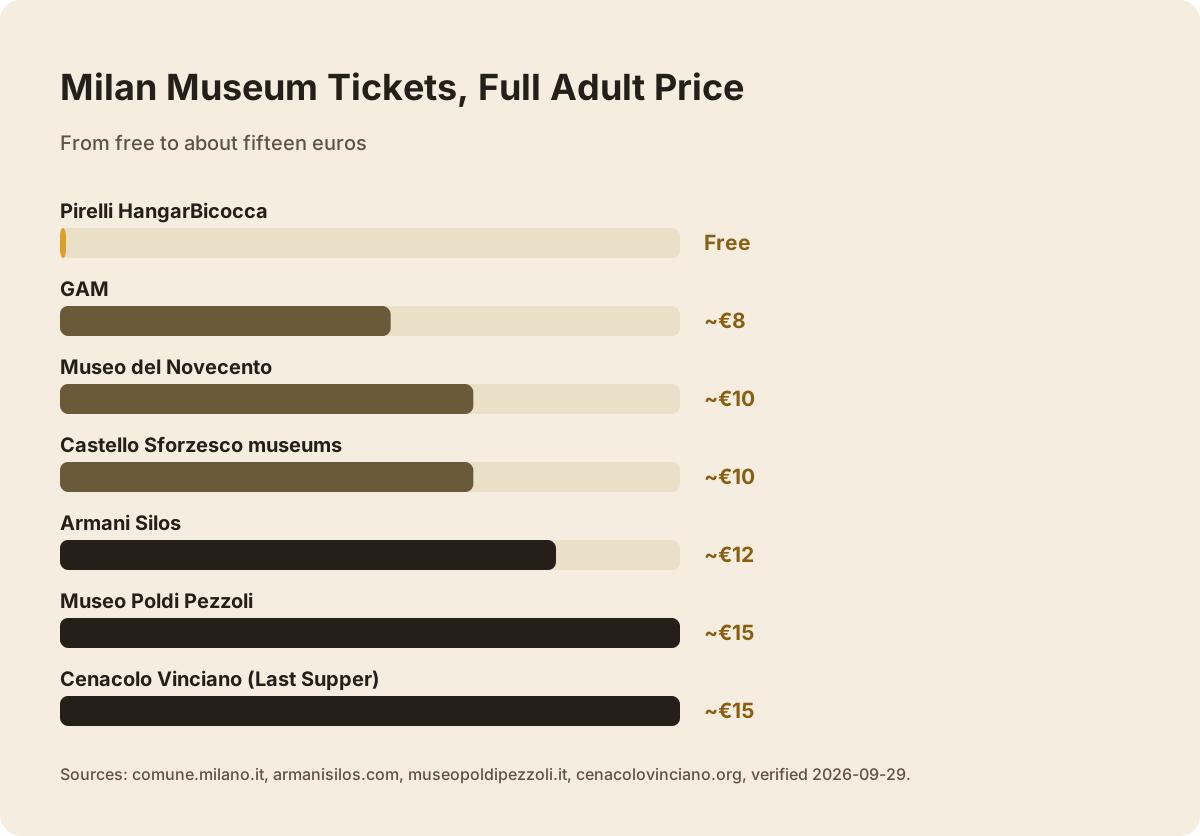
The Duomo's paid interior runs €8-€10 depending on the day, with the rooftop terraces at roughly €16 by stairs or €18 by lift; the Last Supper is €15 full price, €2 for visitors aged 18 to 25, with a mandatory timed reservation; civic museums run €5-€10 full price; and the major private museums, Fondazione Prada, Poldi Pezzoli and Armani Silos, each charge €12-€15.
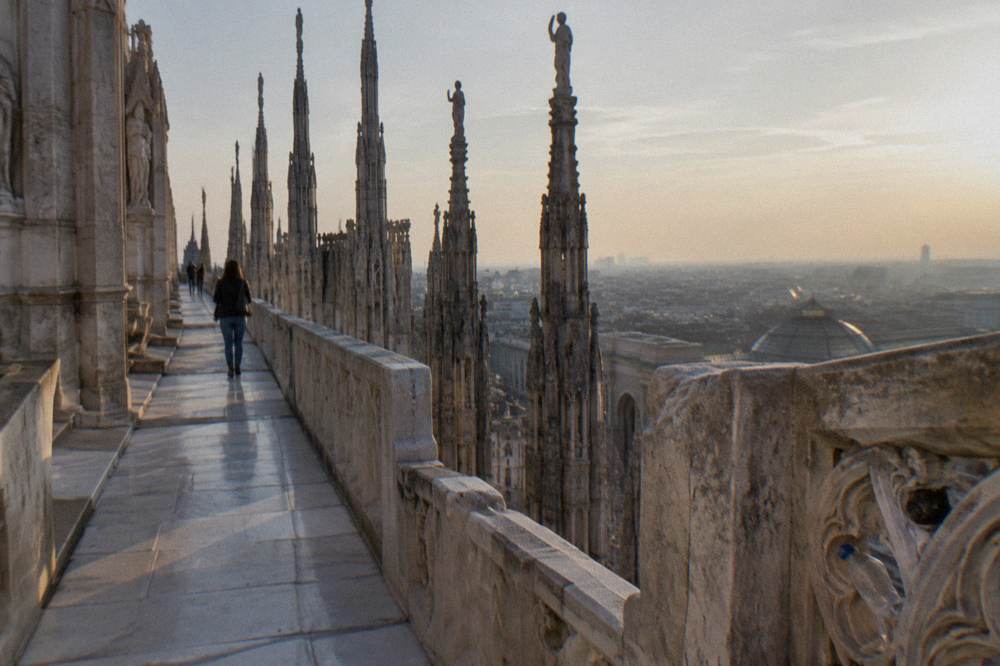
The Duomo complex is the one place where the ticket menu genuinely needs a table, because it sells several different products that third-party guides routinely blur together. The cathedral interior plus the Duomo Museum is one paid ticket, generally €8 to €10 full price with the museum closed on Wednesdays. The rooftops are sold separately, with stairs and lift at different price points and combined tickets bundling interior, museum and terrace. There is also a prayer-only access mode, which is not a tourist ticket and follows the cathedral's own access rules. Current figures are on the cathedral's official ticket page. More of these guides are collected on Free Things To Do In Milan.
| Ticket | Full price | Notes |
|---|---|---|
| Duomo interior + Duomo Museum | €8-€10 | Museum closed Wednesdays |
| Rooftop terraces, stairs | ~€16 | Reduced tickets roughly half price |
| Rooftop terraces, lift | ~€18 | Reduced tickets roughly half price |
| Combined interior + museum + stairs | ~€22 | Cheapest way to do everything |
| Combined interior + museum + lift | ~€26 |
The Last Supper deserves its own paragraph because it is the sharpest trap on any Milan budget. The Cenacolo Vinciano is a state-run, paid, timed-entry product: €15 full price, €2 for visitors aged 18 to 25, free for under-18s accompanying a paid ticket, and a reservation is mandatory on every day of the year, with viewing slots limited and tightly timed. On the first Sunday of the month it falls under the national Domenica al Museo scheme and entry is free, but a timed reservation is still required even on the free day, so it is never a walk-up free sight. Our full Last Supper guide covers the booking mechanics.
The civic museums follow the city's own scheme, separate from the national one. Full tickets run €5 to €10 depending on the venue, with the Castello Sforzesco collections, the Museo del Novecento and the Natural History Museum at the €10 level and the GAM, Galleria d'Arte Moderna, at €8. Reductions of roughly half price apply to visitors aged 18 to 25, students and over-65s, and under-18s are always free. The official policy is published by the city on its civic museums ticket page.
The state museum in the mix is the Pinacoteca di Brera, with its Grande Brera ticket at roughly €15 to €20. It is free on the first Sunday of the month under Domenica al Museo, but with a mandatory reservation through the gallery's own booking system, which is the detail that catches out visitors who assume free means walk-in. Our free and budget museums guide works through the whole list venue by venue.
The private museums each set their own rules and none of them follow either free-day scheme. Fondazione Prada charges €15 for the integrated ticket, with a €1 presale fee added to online purchases. Museo Poldi Pezzoli charges €15 full, €13 for over-65s and carers, €10 for 11-to-18-year-olds, students up to 26, and everyone on the first Sunday of the month, which is that museum's own independent rule, not the civic scheme. Armani Silos charges €12 full and runs free entry for over-65s on Thursdays plus its own first-Sunday participation. Villa Necchi Campiglio, the FAI property, charges €15 with free entry for FAI members. The lesson: never assume a scheme applies to a private museum, and never assume a museum is free because a different one is.
| Museum | Type | Full ticket | Free route |
|---|---|---|---|
| Castello Sforzesco museums | Civic | €10 | First Sunday, all; second Tuesday, under-25 |
| Museo del Novecento | Civic | €10 | First Sunday, all; second Tuesday, under-25 |
| GAM, Galleria d'Arte Moderna | Civic | €8 | First Sunday, all; second Tuesday, under-25 |
| Pinacoteca di Brera | State | €15-€20 | First Sunday, reservation required |
| Cenacolo Vinciano | State | €15 (€2 for 18-25) | First Sunday, reservation still required |
| Fondazione Prada | Private | €15 | None published |
| Museo Poldi Pezzoli | Private | €15 | Its own first-Sunday €10 rate |
| Armani Silos | Private | €12 | Over-65 Thursdays; first Sunday |
| Pirelli HangarBicocca | Private | Free | Always free, no ticket |
If you want the paid layer explained rather than just ticketed, the Express Walk, rated 4.46 out of 5 across 973 GuruWalk reviews, is the budget-friendly option: ninety minutes in English from Largo Ildefonso Schuster, pay what you want, covering the essential centre at a pace that leaves the rest of the day free for the museums you have just budgeted for.
How Much Does Eating In Milan Cost On A Budget?
Milan eating costs scale almost entirely with where you sit: a standing coffee at the bar is a fraction of the table price, the aperitivo tradition bundles a drink and buffet food into one cover charge, and a lunch menu at a neighbourhood trattoria runs far below a terrace facing the Duomo. The aperitivo is the single best value mechanism in the city.
The coffee bar is the first thing to understand, because Milan runs on standing coffee. Order at the bar, drink at the bar, pay the bar price; sit at a table in the same café and the same espresso can cost two or three times more. This is not a scam, it is the published structure of Italian café pricing, and it applies everywhere from the Duomo quarter to Navigli. The Coffee Culture Highlights Walk, rated 4.91 out of 5 across 565 GuruWalk reviews, meets at Piazza dei Mercanti under a pink umbrella and spends two hours on exactly this ground: the cafés, the rituals and the historic centre that frames them, pay what you want.
The aperitivo is Milan's own invention and the budget traveller's best friend. From early evening, bars across Navigli and the centre put out buffet food with a drink order, and the combined price of one drink plus access to the spread is routinely less than a restaurant main course. Portions and quality vary by bar, so treat it as a light dinner some nights rather than a nightly strategy. Our aperitivo on a budget guide covers the district and the etiquette in detail.
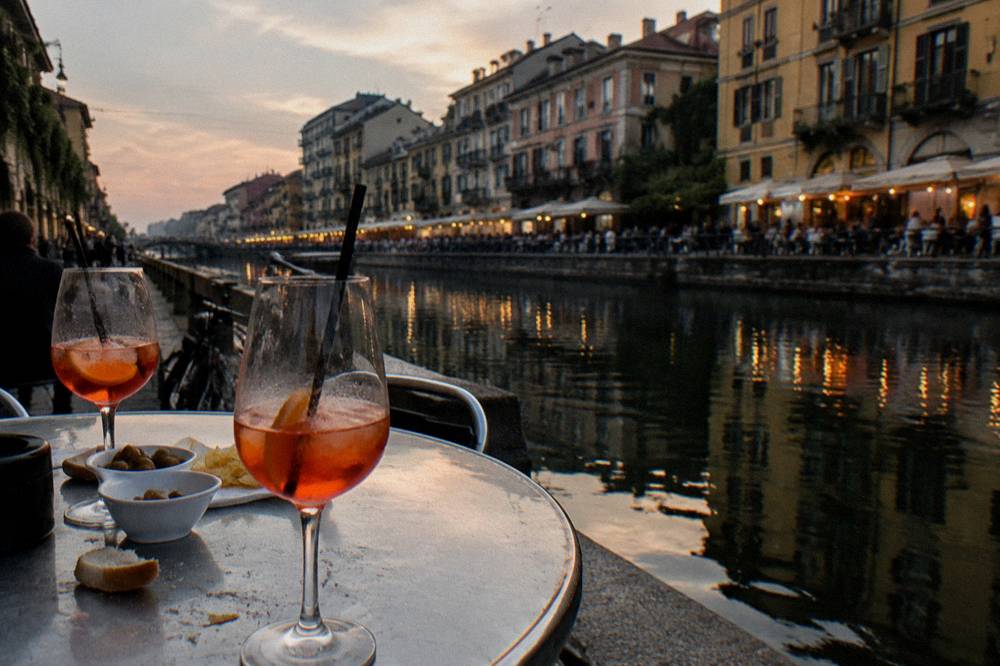
For sit-down meals, the geography rule from the transport section applies doubled. The streets immediately around Piazza del Duomo and inside the Galleria charge for the view; the parallel streets ten minutes out, toward Brera's back lanes or the streets off Via Torino, run a different price list entirely. Lunch is cheaper than dinner almost everywhere in the city, and many neighbourhood places run a fixed midday menu that is the cheapest full meal a visitor will find. Milan's Chinatown along Via Paolo Sarpi, covered in our Chinatown free things guide, adds another low-cost eating layer to the list.
Water is the quiet saving. Tap water is served on request in restaurants across Italy, and asking for it is normal, not rude. Milan's public fountains and the municipal water supply are drinkable, so a refillable bottle does quiet work across a hot day of walking, and it removes the per-bottle markup that quietly inflates a day's spend.
The Travelers' Choice Walk, rated 4.52 out of 5 across 54 GuruWalk reviews, is a useful bridge between the eating and sightseeing budgets: two hours in English from the Monumento ad Alessandro Manzoni, pay what you want, in the quarter where many of the city's historic cafés and the Manzoni-era streets sit, so a morning walk can end at a bar-price lunch a few streets from where it started.
Can You See Milan On A Budget In One Day?
Yes, and the arithmetic is favourable: a one-day budget built around a free walking tour, the free squares and courtyards, a bar-price lunch and an aperitivo can keep total spend in the low tens of euros, with the only compulsory costs being whatever you choose to tip your guide and one transit ticket if you head to Navigli.
Here is how three realistic days stack up. The lean day assumes you do the free layer thoroughly and tip a walk guide modestly. The culture day assumes one civic museum at full price plus the Duomo interior. The full day adds the rooftops and an aperitivo in Navigli. None of these include accommodation, which in Milan varies more by season and trade-fair calendar than by anything else a budget guide can control.
| Day type | What it includes | Typical spend per person |
|---|---|---|
| Lean day | Free walking tour with tip, free squares and castle courtyards, bar-price lunch, tap water | Low tens of euros |
| Culture day | Lean day plus one civic museum (€8-€10) and the Duomo interior (€8-€10) | Adds roughly €20 |
| Full day | Culture day plus rooftop stairs (~€16), one transit ticket, Navigli aperitivo | Adds roughly €25-€30 |
Timing changes the numbers more than anything else. Land on a first Sunday of the month and the state museums join the free layer, with the reservation caveats at Brera and the Cenacolo. Land on a second Tuesday and the civic museums open free to under-25s. Build your dates around those two schemes and the culture line in the table above can drop to zero, which is why our free one day itinerary and the Domenica al Museo guide are worth reading before you book anything.
The walking tours remain the constant across all three day types, because they cost nothing to join regardless of the day of the week. The Morning and Afternoon Walk, rated 4.5 out of 5 across 273 GuruWalk reviews, runs ninety minutes in English from Via delle Ore, and the 1H30 On-Foot Walk, rated 4.93 out of 5 across 40 GuruWalk reviews, covers the same essential ground from Largo Ildefonso Schuster. Between the walks, the free layer and the two free-day schemes, the honest conclusion is that Milan rewards a budget visitor more than its reputation suggests, and the people who overspend here are almost always paying for tables, terraces and rooftops rather than for the city itself.
Before the closing questions, three walks from the food-and-drink, art-and-architecture and hidden-milan families round out the pay-what-you-want options for a second or third day:
Common Questions About Milan On A Budget
How Much Does A Day In Milan On A Budget Really Cost?
A disciplined day can stay under €20 per person once accommodation is paid: the pay-what-you-want walking tours make guided sightseeing free, the free layer of squares, courtyards and churches costs nothing, and a bar-price lunch plus an aperitivo covers food. Adding a civic museum or the Duomo interior adds roughly €10 each.
Is Public Transport In Milan Affordable On A Budget?
Yes, and most visitors barely need it. The core rectangle from the Duomo to Castello Sforzesco, Brera and the Galleria is walkable in minutes. Buy single tickets only for trips to Navigli, Porta Nuova or outlying sights, and check the transit operator's fare page for current prices before you travel.
What Is Genuinely Free In Milan?
Piazza del Duomo, the Galleria Vittorio Emanuele II, Castello Sforzesco's courtyards and grounds, Parco Sempione, the Arco della Pace, the Colonne di San Lorenzo, the Navigli district, the Darsena, Piazza Mercanti, the Cimitero Monumentale and Pirelli HangarBicocca are all free, along with the working churches San Maurizio, Sant'Ambrogio, Santa Maria presso San Satiro and Santa Maria delle Grazie.
Is The Last Supper Ever Free?
On the first Sunday of the month the Cenacolo Vinciano is free under the national Domenica al Museo scheme, but a timed reservation is still mandatory even on the free day. On every other day it is a paid, timed-entry ticket at €15 full price, €2 for visitors aged 18 to 25. It is never a walk-up sight.
Are Milan Museums Free On Sundays?
It depends which museums. State museums, the Pinacoteca di Brera and the Cenacolo Vinciano, are free on the first Sunday under the national scheme, with reservations required. Civic museums, the castle collections, the Museo del Novecento and the GAM, are free for everyone on the first Sunday and free for under-25s on the second Tuesday. Private museums follow their own independent rules.
How Do The Free Walking Tours Work If They Cost Nothing?
All ten walks on this site's roster are free or pay-what-you-want. Nine run on GuruWalk and one, the Best-Tips Walk from Palazzo Morando, runs on freetour.com. Booking costs nothing, the guide meets you at a fixed central point, and you pay only what you feel the walk was worth at the end.