Is The Leonardo Da Vinci Museum In Milan Free?
No, the Leonardo da Vinci Museum in Milan is not free, and it currently has no free general-admission day. Here is what a ticket covers, which free-entry schemes do not apply, and what to do nearby without paying.
Is The Leonardo Da Vinci Museum In Milan Free?
No, the Leonardo da Vinci Museum in Milan is not free. The Museo Nazionale Scienza e Tecnologia Leonardo da Vinci charges admission for every visitor, and it currently has no free general-admission day to plan around. It is not part of Milan's civic museum scheme, and the national first-Sunday Domenica al Museo free entry does not apply to it either.
That is the short answer, and it matters because Milan is otherwise one of Europe's more generous cities for free culture. The Duomo square costs nothing, the Galleria Vittorio Emanuele II is a public passage you walk through freely, the Sforza Castle courtyards are open to all, and Pirelli HangarBicocca runs a genuinely free contemporary art programme with no ticket at all. Visitors arrive expecting the same generosity at the Leonardo museum and are surprised by the turnstile.
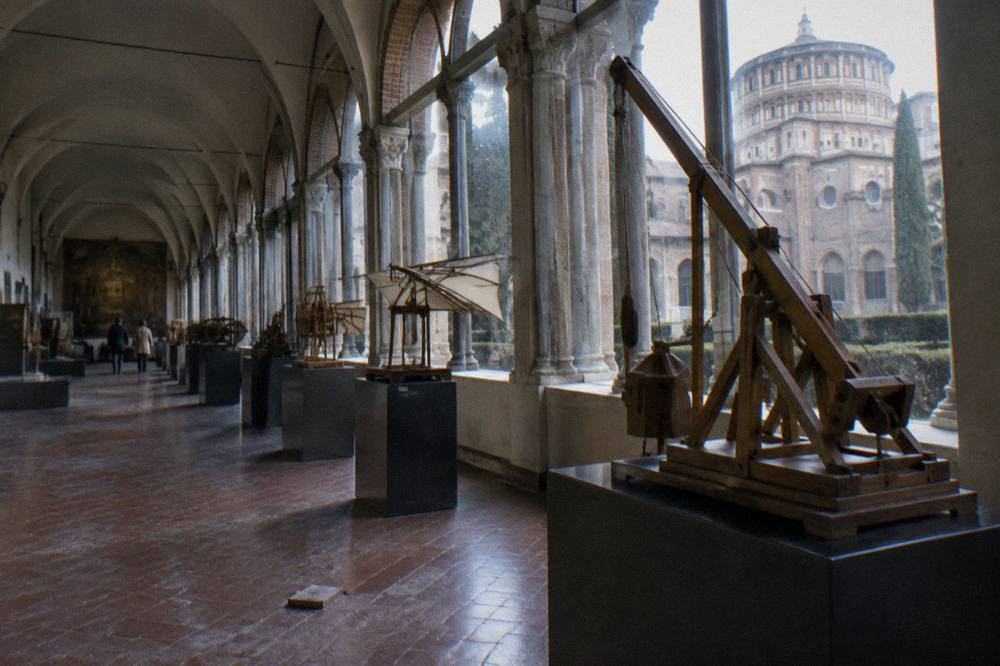
The museum itself is a serious institution, the largest science and technology museum in Italy, housed in an old Olivetan monastery near Santa Maria delle Grazie. Its Leonardo galleries hold models built from his drawings, from flying machines to war engines, alongside a submarine you can enter on some routes and a large transport collection. The current admission figure is on the museum's own site, and prices shift with temporary exhibitions, so check there rather than relying on a number printed in a guide.
What trips people up is the name. "Leonardo da Vinci Museum" sounds like it should be free the way churches are free, or covered by the same first-Sunday scheme as the Pinacoteca di Brera. It is not a church and it is not a state gallery. It is a national science institution with its own ticketing, its own opening calendar, and no free day, so budget for it the way you would budget for a major exhibition.
If your aim is Leonardo rather than the museum as such, there is a lot you can see in Milan without paying anything, and this article maps that ground: what the ticket actually buys, which free-entry schemes exist and why none of them reach this museum, and the free Leonardo-adjacent sights in the streets around it. For the broader picture of which museums do have free days, the companion guide to Milan's free and budget museums covers the whole civic and state landscape.
What Does The Ticket Cover, And Is It Worth Paying?
A standard ticket covers the permanent collection, including the Leonardo da Vinci galleries, the transport halls and the submarine, with temporary exhibitions sometimes priced separately. Reduced rates exist for the usual categories, and under-6s enter free. Whether it is worth paying depends on your interest: the Leonardo galleries are the strongest reason to go, and they are unlike anything else in the city.
The Leonardo galleries are the heart of the visit. They hold one of the world's largest collections of models built from Leonardo's engineering drawings, made to his actual proportions and methods, covering hydraulics, flight, mechanics and machinery. For a visitor whose image of Leonardo is the paintings, this side of him is a genuine discovery, and it is the part of the museum most relevant to Milan, the city where he spent seventeen working years.
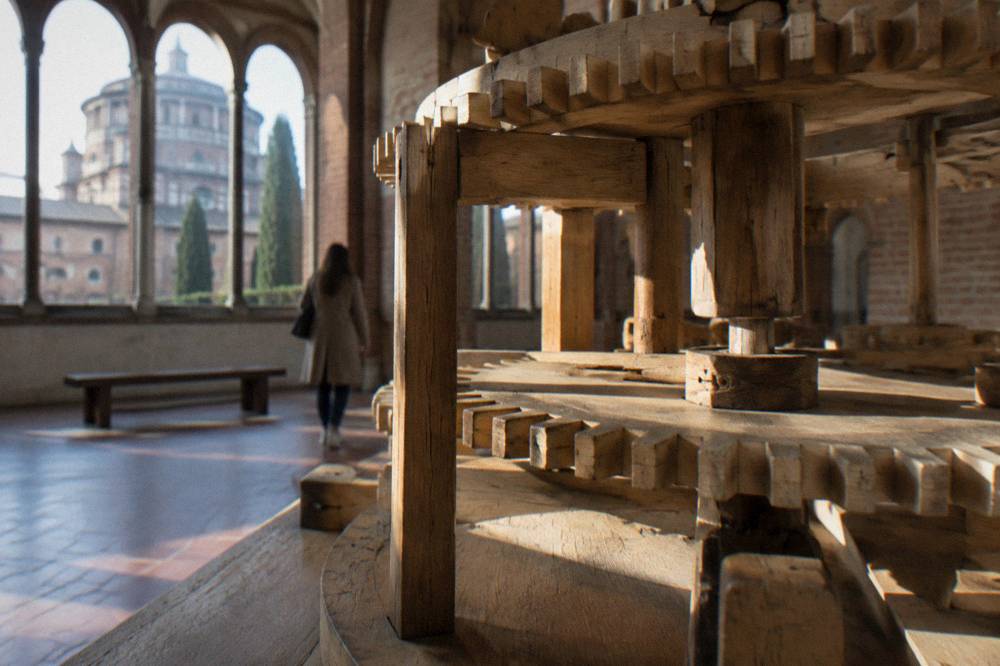
The rest of the collection is broad. Trains, planes, a full-size submarine, telecommunications and astronomy rooms fill the monastery complex and its courtyards, and a visit realistically runs two to three hours if you take it at museum pace rather than skimming. Families get particular value here, since the interactive rooms and the space section hold children's attention in a way the Duomo's stone does not.
Budget it honestly against your Milan list. If your time is short and Leonardo is the draw, remember that the Last Supper, his actual surviving wall painting in this city, is a separate, paid, timed-reservation visit at the Cenacolo Vinciano, and the two are often confused by first-time visitors. The science museum has no painting by Leonardo at all. It has his engineering mind, not his brush.
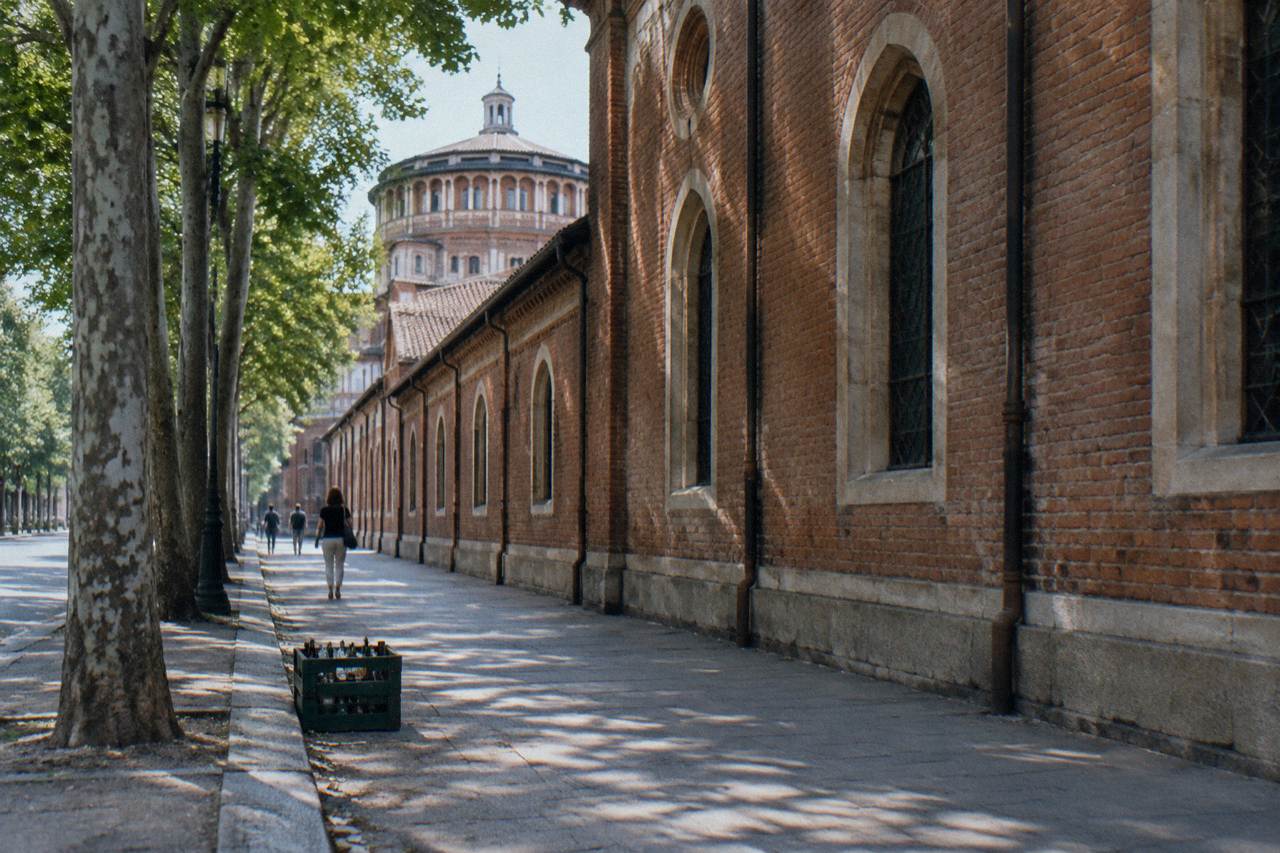
If you decide to skip the ticket, do not skip the neighbourhood. The museum sits a short walk from Santa Maria delle Grazie, the church that holds the Last Supper, and from the quiet, leafy streets of the Magenta quarter, which cost nothing to wander. A pay-what-you-want walk is the cheapest way to give that area a narrative: the 2H30 Monumental Walk on GuruWalk, rated 4.77 out of 5 across 303 GuruWalk reviews, runs in English and Spanish and covers the monumental core that frames Leonardo's Milan. You can read more about how GuruWalk works in Milan before committing to one.
Which Free-Entry Schemes Exist In Milan, And Why None Reach This Museum?
Milan has two separate free-entry schemes, and neither covers the Leonardo science museum. The national Domenica al Museo gives free first-Sunday entry to state museums like the Pinacoteca di Brera and the Cenacolo Vinciano, while Milan's own civic scheme covers civic venues like the Castello Sforzesco museums. The science museum belongs to neither category.
The national scheme is the one most visitors have heard of. On the first Sunday of the month, state-run museums and monuments across Italy open free under Domenica al Museo, and in Milan that means the Pinacoteca di Brera and the Cenacolo Vinciano. Brera's free day still requires a mandatory reservation through its own booking system, and the Last Supper requires a booked, timed slot even on its free day, which is the single most misunderstood detail in Milan trip planning. The scheme's official page is at cultura.gov.it.
The civic scheme is Milan's own, run by the comune, and it covers a different list: the museums inside Castello Sforzesco, the Museo del Novecento, the GAM and other civic venues. Those are free for everyone on the first Sunday of the month, and free for under-25s on the second Tuesday. The comune's own ticketing page at comune.milano.it carries the current structure. The two schemes are frequently muddled into one "free museum Sunday" in third-party guides, and the muddle leads directly to the Leonardo museum question: people assume some scheme must catch it, and none does.
The science museum's independence cuts both ways. It misses the free days, but it also sets its own access policies, so any concession, family rate or exhibition offer is decided by the museum itself rather than by a ministry or the comune. The reliable move is to check the museum's own site for the current admission figure and any offers before you go, rather than trusting a roundup article that may be years old.
What Can You Do Around The Museum Without Paying Anything?
Plenty. Santa Maria delle Grazie, the Renaissance church beside the Last Supper, is free to enter as a working church, the Magenta quarter's streets cost nothing, and Pirelli HangarBicocca's contemporary art halls are free with no ticket. The Last Supper itself is paid and reservation-only, even on its first-Sunday free day, when a booked timed slot is still required.
Start with the church. Santa Maria delle Grazie is free to enter during normal church hours, and it is one of the great buildings of the Italian Renaissance, a Bramante-designed dome over a luminous tribune. Many visitors walk straight past it to the refectory wall holding the Last Supper, which is a separate, state-run, timed-reservation visit with a paid ticket on ordinary days. On the first Sunday of the month the Last Supper is free under Domenica al Museo, but a timed reservation is still required even on that free day, so it is never a walk-up free sight. The two facts, church free and painting paid-and-booked, are separate things.
From the museum's door, the walk east through the Magenta quarter toward the Cadorna area passes quiet residential streets of elegant apartment blocks, and the whole route is free wandering at its best. Heading the other way, the Parco delle Cave and the broader western parks are further out, but the city centre's free set, from Piazza del Duomo to the Castello Sforzesco courtyards, is reachable on foot in under half an hour from the museum.
The standout free sight in the modern direction is Pirelli HangarBicocca, the vast industrial shed turned contemporary art space, which states plainly on its own site that admission is free with no ticket required. It is a short metro ride from the museum district and it is the closest thing Milan has to a free Tate Modern. For visitors weighing the science museum's ticket against a day of free culture, HangarBicocca is the strongest argument for skipping the turnstile.
| Site near the Leonardo museum | Free or paid | The condition that travels with it |
|---|---|---|
| Museo Nazionale Scienza e Tecnologia | Paid | No free general-admission day currently |
| Santa Maria delle Grazie (church) | Free | Working church, normal church hours |
| Cenacolo Vinciano (Last Supper) | Paid | Timed reservation mandatory, including on the free first Sunday |
| Pinacoteca di Brera | Paid, free first Sunday | State museum, mandatory reservation on the free day |
| Pirelli HangarBicocca | Free | No ticket required, booking advised at busy times |
| Castello Sforzesco courtyards | Free | Grounds open to all, the museums inside are paid civic venues |
How Do You See Leonardo's Milan For Free Instead?
You walk. Leonardo's Milan is mostly outdoors and mostly free: the Naviglio he helped design, the castle quarter he worked beside, the Duomo and the Galleria, all cost nothing to see. Two pay-what-you-want walks cover this ground in English, and they cost whatever you decide to give the guide at the end.
The 2H30 Monumental Walk on GuruWalk is the natural fit for the Leonardo theme, since it traces the monumental core, the Duomo, the Galleria Vittorio Emanuele II and the castle quarter, that framed the courtly Milan Leonardo served for nearly two decades. It meets on Via Croce Rossa, a few minutes off the Duomo, runs in English and Spanish, and is rated 4.77 out of 5 across 303 GuruWalk reviews. The castle end of the walk lands you at the Sforzesco courtyards, free to enter at all times, where Leonardo actually worked on projects for his patron Ludovico Sforza.
For the fullest single sweep of the city, the 2H45 Wonders Walk on GuruWalk is the roster's hero listing, rated 4.9 out of 5 across 2,916 GuruWalk reviews, the largest review pool of any free walk in Milan. It runs in English and Spanish from Piazza del Duomo and covers the centre's major ground in one long, well-reviewed loop. A guide telling you which door of the Galleria to spin on and why the castle's tower is named after a Flemish architect is worth more context per minute than most paid audio guides.
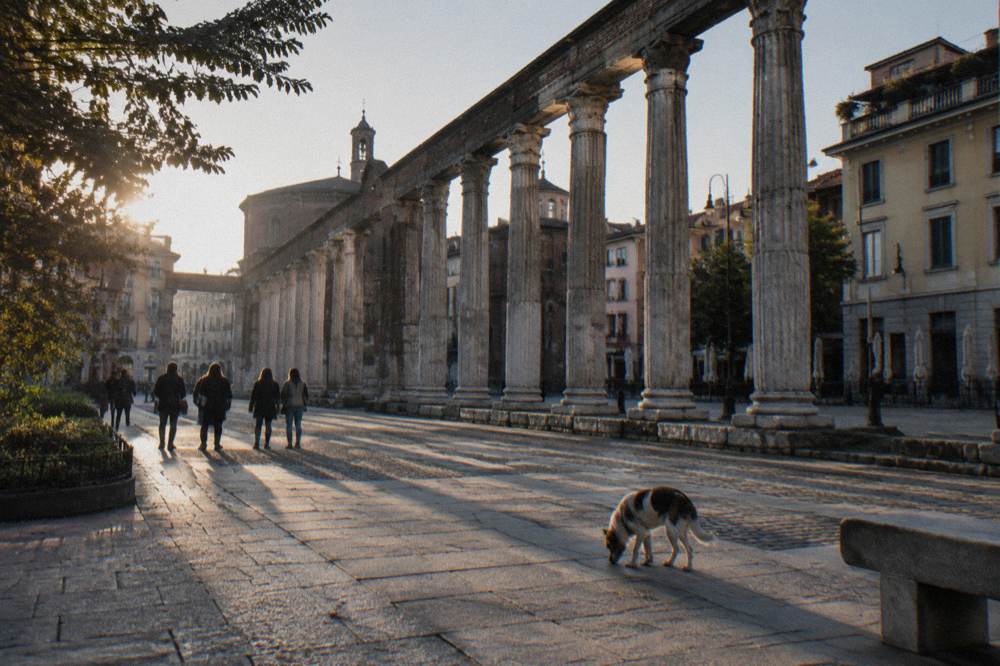
There is also a free Leonardo thread that costs nothing but shoe leather. The Navigli district's canals trace their design back to Leonardo's engineering surveys, the Biblioteca degli Alberi park near Porta Nuova is free, and the Atellani house and Leonardo's vineyard, the garden plot Ludovico Sforza gave him, sits near Santa Maria delle Grazie as a paid visit if you want the one indoor Leonardo-adjacent stop. The free one-day Milan itinerary strings the free outdoor set together if you are planning a whole day rather than an afternoon.
Whatever you choose, keep the paid and free halves of Leonardo's Milan straight. The paintings and the science museum cost money; the city he engineered and inhabited is open to anyone who walks it, and Free Things To Do In Milan exists mostly to prove how much of it there is.
Common Questions About The Leonardo Da Vinci Museum In Milan
Is The Leonardo Da Vinci Museum In Milan Free?
No. The Museo Nazionale Scienza e Tecnologia Leonardo da Vinci charges admission, and it currently has no free general-admission day. It is covered by neither the national first-Sunday Domenica al Museo scheme nor Milan's civic museum scheme, so there is no free day to plan a visit around.
Is The Leonardo Museum Free On The First Sunday Of The Month?
No. The first-Sunday free entry applies to state museums like the Pinacoteca di Brera and the Cenacolo Vinciano, and separately to Milan's civic museums. The science museum is a national institution outside both schemes and charges its standard admission every day.
Does The Museum Have Any Leonardo Paintings?
No. The Leonardo galleries hold engineering models built from his drawings, covering flight, hydraulics, machinery and war engines. His actual paintings in Milan are elsewhere: the Last Supper is at the Cenacolo Vinciano beside Santa Maria delle Grazie, a short walk from the museum, as a separate paid, timed-reservation visit.
How Long Does A Visit Take?
Plan on two to three hours for the permanent collection at a normal museum pace. The Leonardo galleries plus the transport halls and submarine are the core; add more time if a temporary exhibition interests you, since those are sometimes priced separately from the standard ticket.
What Free Things Are Near The Museum?
Santa Maria delle Grazie church is free to enter, the Magenta quarter's streets cost nothing, and the Castello Sforzesco courtyards and grounds are free at all times. Pirelli HangarBicocca, a short metro ride away, is completely free with no ticket required.
Can You See The Last Supper For Free?
Only on the first Sunday of the month, under the Domenica al Museo scheme, and even then a timed reservation is still required. On every other day it is a paid, timed-entry ticket. It is never a walk-up free sight, so book ahead either way.