What To Do In Milan For A Day: A Free-First Plan
One day is enough to see Milan's core without buying a single attraction ticket, if you know which doors are free, which need a reservation and which only look free.
Short answer
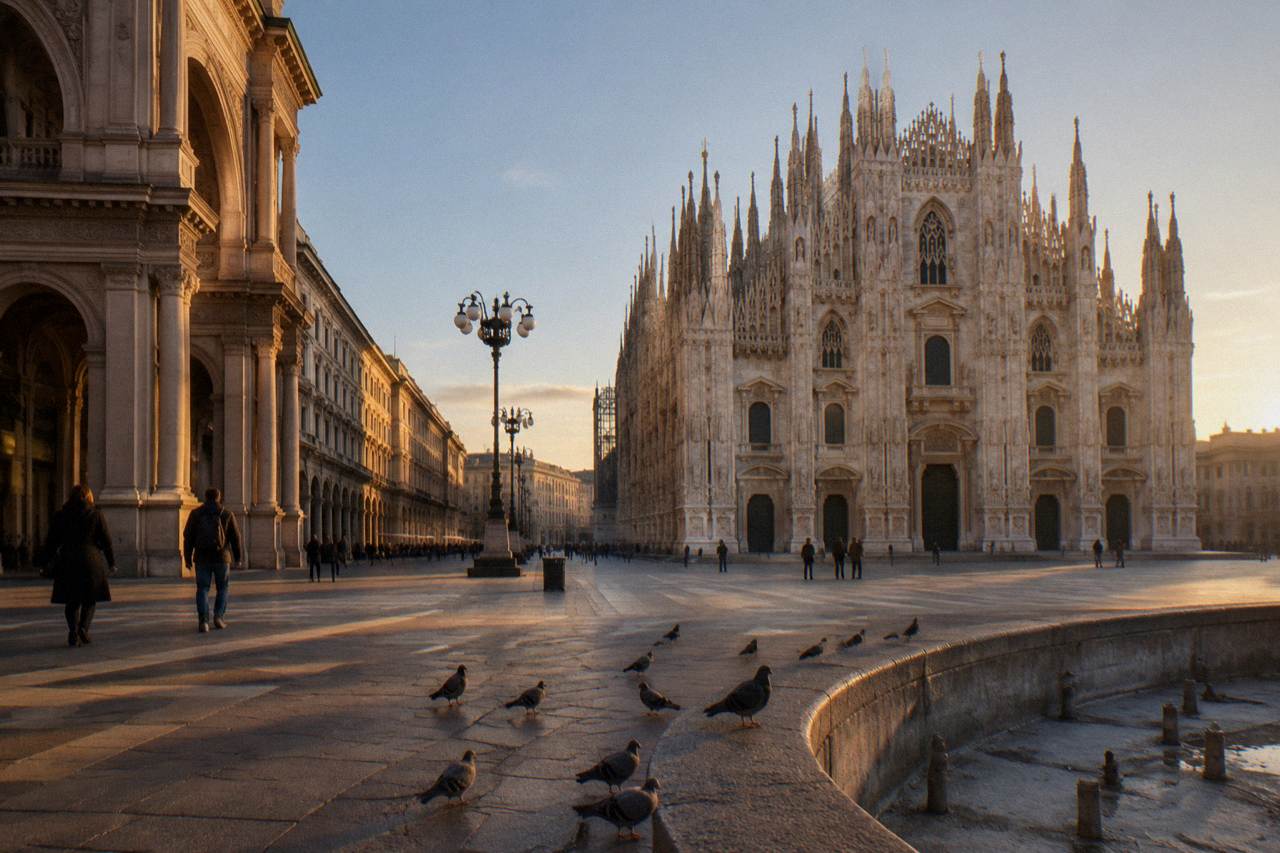
A free-first day in Milan covers Piazza del Duomo, the Galleria Vittorio Emanuele II, Castello Sforzesco's courtyards, Parco Sempione, San Maurizio al Monastero Maggiore and the Navigli, all at no cost. A pay-what-you-want walking tour such as the 2H45 Wonders Walk, rated 4.9 out of 5 across 2,916 GuruWalk reviews, ties it together.
Most of Milan's postcard sights are either public space or working churches, which means the city's core can be walked in a day for the price of a metro ticket and lunch. The paid items, the Duomo's tourist entry, the Last Supper, the castle's museums, are the exceptions, and each has a free or nearly free angle if you plan around the two free-day schemes that run in the city. This guide lays out a full free-first day with pacing options, then prices what the day actually costs.
What Can You See In Milan In One Day For Free?
A single free day in Milan can cover Piazza del Duomo, the Galleria Vittorio Emanuele II, Piazza dei Mercanti, Castello Sforzesco's courtyards and grounds, Parco Sempione, the Arco della Pace, San Maurizio al Monastero Maggiore, Santa Maria presso San Satiro, the Colonne di San Lorenzo and the Navigli canal district. Every one of those is genuinely free with no ticket, no reservation and no qualifying condition.
That list is not a scrape of leftovers. It is the standard first-day Milan circuit, the same ground most paid tours cover. The Galleria is a public shopping arcade, so walking under its glass vault and spinning on the bull mosaic costs nothing. Piazza dei Mercanti, one street west of the Duomo, is a quiet medieval square most first-time visitors miss entirely. The castle's outer courtyards and the grounds around them open daily and are free at all times, which is a separate fact from the paid civic museums inside, a distinction that trips up a lot of guides.
The free-first approach also changes how you use time. Instead of queueing for a paid interior, you spend the day moving through open space and stopping in churches, which are the city's best free interiors. Two of them, San Maurizio al Monastero Maggiore with its wall-to-wall frescoes and Bramante's trompe l'oeil apse at Santa Maria presso San Satiro, sit directly on the walking route between the Duomo and the castle, so they cost you minutes, not detours.
To keep the day's free inventory straight at a glance, the table below groups every stop on this plan by what kind of free it is.
| Stop on the one-day plan | Type of free | Where it sits on the route |
|---|---|---|
| Piazza del Duomo | Public square, always open | Start point |
| Galleria Vittorio Emanuele II | Public arcade, always open | One minute from the Duomo |
| Piazza dei Mercanti | Public square, always open | One street west of the Duomo |
| San Maurizio al Monastero Maggiore | Working church, free entry | Between the Duomo and the castle |
| Santa Maria presso San Satiro | Working church, free entry | Two minutes from the Duomo |
| Castello Sforzesco courtyards and grounds | Public space, always open | Ten minutes north of the Duomo |
| Parco Sempione and Arco della Pace | Public park and monument | Directly behind the castle |
| Colonne di San Lorenzo | Public monument, always open | Between the centre and the Navigli |
| Navigli, Vicolo dei Lavandai and Darsena | Public streets and waterfront | Southwest of the centre |
If you want a fuller version of this plan with meal stops and evening options, the site's free one day Milan itinerary stretches the same ground into a relaxed full day, while this page stays focused on pacing and cost.
What's The Best Free-First Morning In Central Milan?
Start on Piazza del Duomo before the crowds thicken, walk through the Galleria to Piazza dei Mercanti, then take a pay-what-you-want walking tour from the square as your morning spine. The 2H45 Wonders Walk, rated 4.9 out of 5 across 2,916 GuruWalk reviews, covers the Duomo, the Galleria, the Scala quarter and the castle in 2 hours and 45 minutes, meeting at Piazza del Duomo 6.
The morning tour is the single best free-first decision you can make in Milan, because the city's layout is less obvious than Rome's or Florence's. The Duomo, the Galleria, La Scala and the castle sit on one axis but the connecting lanes, the good squares and the stories behind them are easier to absorb with a guide who works on tips. Every walk on this site's roster is free to join and pay what you want at the end, so the tour price is whatever you decide it was worth.
The trio above spans three commitment levels. The Wonders Walk is the long, complete option in English and Spanish. The Morning and Afternoon Walk from the same family of guides runs 1 hour and 30 minutes in English, rated 4.5 out of 5 across 273 GuruWalk reviews, and suits a day when the afternoon is already spoken for. The 1H30 On-Foot Walk, rated 4.93 out of 5 across 40 GuruWalk reviews, is the small-group end of the scale. All three meet in the city centre, so none of them costs travel time to reach.
If the full Wonders Walk fits your pace, it is the one to build the morning around. Its 2 hours and 45 minutes trace the whole free-first route, from the cathedral square through the Galleria to the castle district, with a guide who fills in what the facades do not say.
After the tour ends, the early afternoon is yours on ground you now recognize. Walk back through the Galleria slowly, find the bull mosaic on the floor, and exit onto Piazza della Scala. The theatre's exterior is free to view, and the square's statue of Leonardo gives you the photo without a museum ticket.
How Do You See The Duomo And The Last Supper Without Paying?
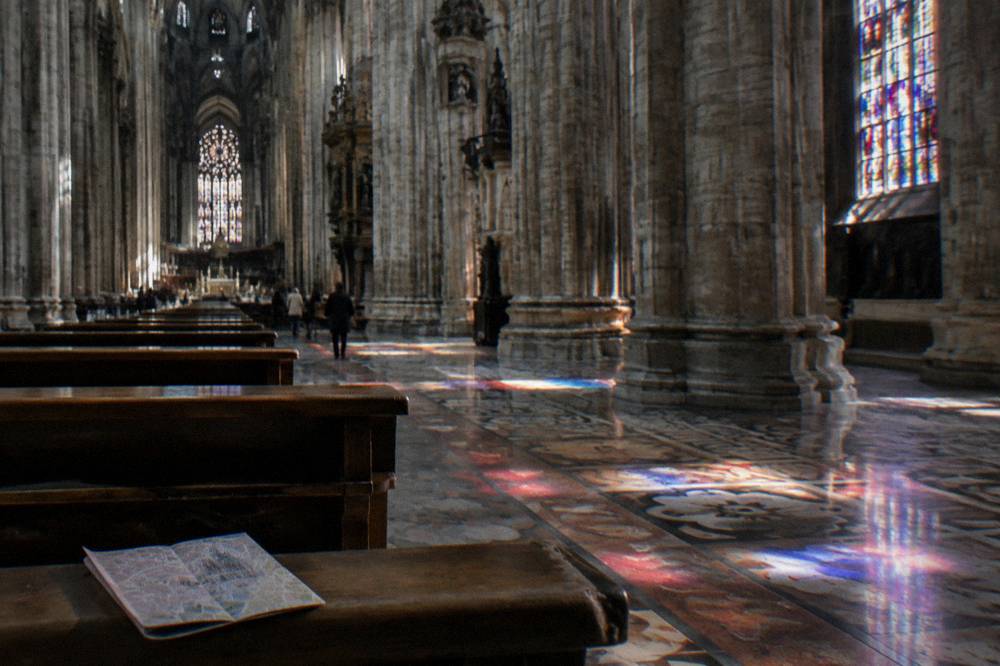
The Duomo's tourist interior entry and its rooftop terraces are both paid, though the cathedral runs free museum days on the last Sunday of the month from late September 2026 onward, with reservation. The Last Supper at the Cenacolo Vinciano is free only on the first Sunday of the month under the national Domenica al Museo scheme, and a timed reservation is still required even on that free day. On every other day it is a paid, timed-entry ticket.
These are the two facts most likely to cost a visitor money or disappointment, so they deserve precision. The Duomo is a complex of separate products: tourist entry to the interior, the rooftop terraces by stairs or by lift, the museum, and a prayer-only entry mode with its own rules. Tourist entry and the terraces are paid, and the cathedral's own ticket page is the only source worth trusting for the current split, because third-party guides routinely blur the modes together.
The Last Supper has the sharpest trap in the city. Leonardo's fresco is state-run and reservation-mandatory every single day of the year, free Sunday included. Writing "free on the first Sunday" as a complete sentence would hand you a closed door. The church of Santa Maria delle Grazie itself, next door, is a separate fact: free to enter during normal church hours. The two never blur into one, and the official Cenacolo Vinciano information page spells out both. This site keeps a full page on the Last Supper in Milan covering booking tactics and the free-day mechanics in detail.
The practical free-first move is simple. If your day is not a first Sunday, treat both as paid-or-skip decisions and spend the time on the free churches instead, which are covered further down this page. If it is a first Sunday, book the Last Supper slot well ahead, because free day does not mean quiet day.
Is Castello Sforzesco And Parco Sempione Free?
Yes, the castle's courtyards and its surrounding grounds are free and open daily, roughly 7:00 to 19:30, with no ticket of any kind. The museums inside the castle are paid civic museums, covered by Milan's own free-first-Sunday and free-second-Tuesday-for-under-25s scheme, so the free status of the grounds never extends to the collections inside.
This split is the most commonly garbled fact in Milan guides. The castle is not one attraction. Its outer courtyards, its facades, the fountain piazza in front and the whole grounds belt behind it are public space, and they deliver most of the castle experience, the architecture, the scale, the passage through the gates. The frescoed rooms and art collections inside are a separate, ticketed product. The comune's civic museums ticket page is the authority on the interior scheme, and the castle's own site lists the grounds hours.
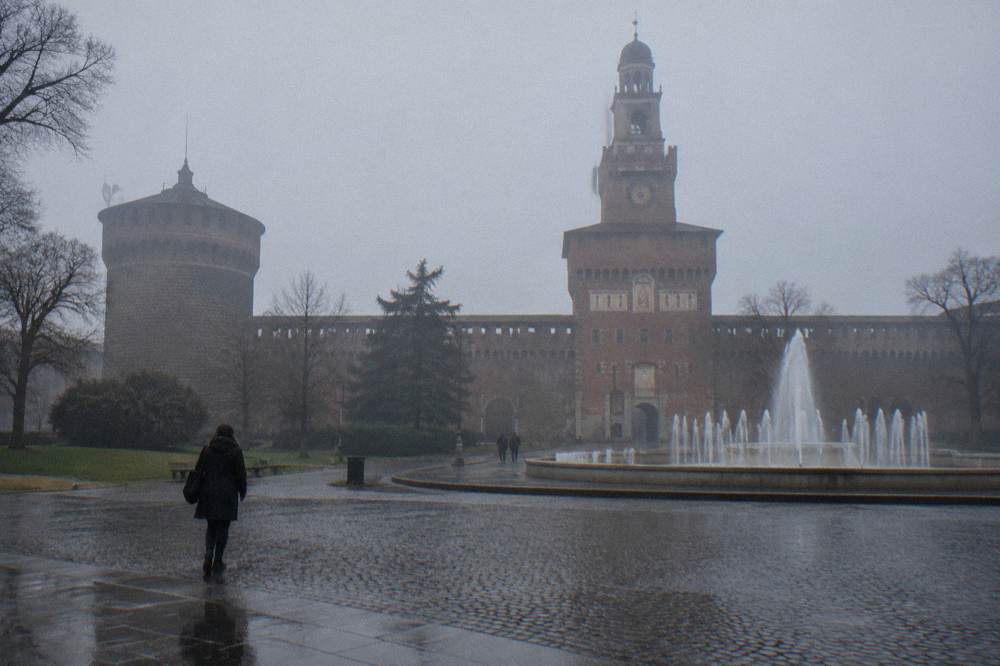
The free-first afternoon writes itself from the castle gate. Walk through the courtyards, exit the back into Parco Sempione, and follow the paths to the Arco della Pace at the far end. The arch, the park and the bridge views back toward the castle all cost nothing, and the whole stretch is twenty to thirty minutes of easy walking. If you have the legs for it, the route back through the Brera district passes the Orto Botanico, the botanical garden behind the Pinacoteca, which is free to enter during its opening hours.
The site's guide to Parco Sempione and the free castle views maps the park and the photo angles in more depth, and the blog post on whether Sforza Castle is free answers the grounds-versus-museums question in short form.
What About A Free Afternoon In Brera And The Navigli?
Brera's streets, the Biblioteca Nazionale Braidense reading rooms and the Orto Botanico are free, while the Pinacoteca di Brera itself is a paid state museum, free only on the first Sunday with a mandatory reservation. The Navigli canal district, the Vicolo dei Lavandai and the Darsena are free public streets and waterfront, and they are where Milan's cheapest evening culture, the aperitivo, lives.
Brera in the afternoon is the city at its most walkable, lanes, antique shops, the botanical garden. The gallery inside Palazzo Brera is the paid item in the neighbourhood, and its free day runs on the state scheme, not the civic one, with booking handled through the Pinacoteca's own reservation system. If your visit is not a first Sunday, the neighbourhood still justifies the visit without the gallery.
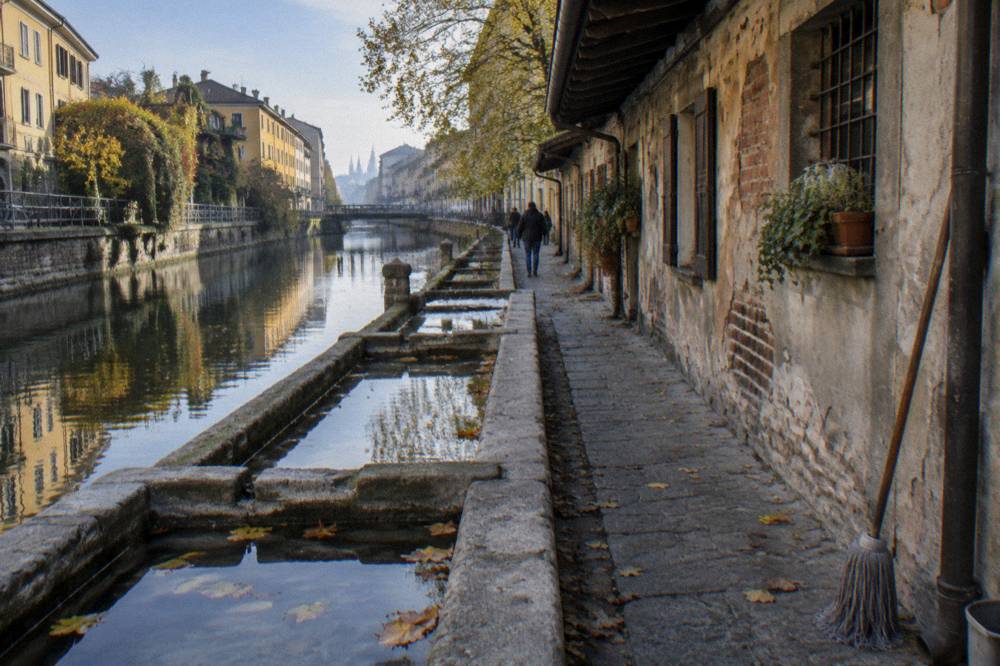
The Navigli is the evening half of the free-first day. The canal-side streets are public, the Vicolo dei Lavandai, the old washermen's alley off the Naviglio Grande, is free to see, and the Darsena, the old dock basin where the canals meet, is an open waterfront. Sunset along the Naviglio Grande is the closest thing Milan has to a free event, and it happens nightly. The site's Navigli free canal district guide covers the full stretch, and the piece on budget aperitivo in Milan explains how the canal bars' evening ritual works without turning into a fifty-euro night.
If you are short on time and want the canal district explained rather than just walked, the Express Walk, Official Guide, rated 4.46 out of 5 across 973 GuruWalk reviews, is a 1 hour and 30 minute English walk meeting at Largo Ildefonso Schuster, close to the Navigli end of the city. It compresses the essential-milan ground into a short loop, which suits a day that has to end early.
Which Free Churches And Museums Need No Ticket At All?
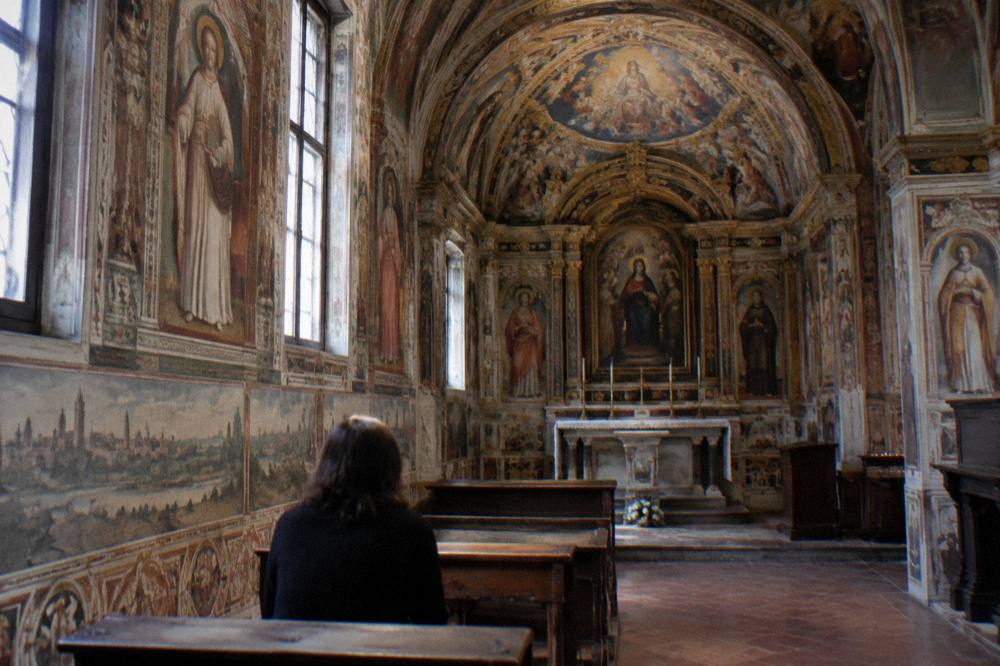
San Maurizio al Monastero Maggiore, Santa Maria presso San Satiro, the Basilica di Sant'Ambrogio and the church of Santa Maria delle Grazie are all free to enter as working churches, and Pirelli HangarBicocca is the one major art venue in Milan that admits everyone free with no ticket. None of these depends on a free-day scheme, a reservation or an age limit.
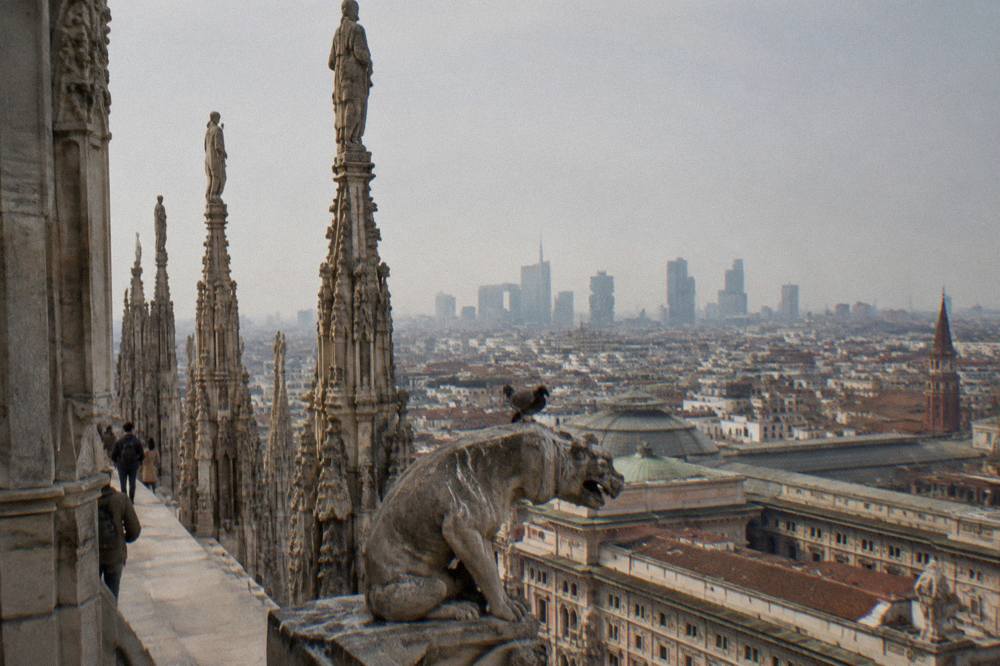
This is the section that makes a free-first day feel deliberate rather than deprived. San Maurizio is nicknamed the Sistine Chapel of Milan for a reason: its interior is covered floor to vault in frescoes, and the only barrier to entry is a church door. Santa Maria presso San Satiro, a few minutes from the Duomo, hides Bramante's famous painted apse, a perspective illusion that makes a shallow recess look like a deep choir. Sant'Ambrogio, one of the oldest churches in the city, anchors its own square and basilica complex.
Pirelli HangarBicocca is the outlier worth a tram ride. The vast former factory hall hosts large-scale contemporary installations, and the venue states plainly on its own site that admission is free, with online booking only recommended for busy periods. That policy is unusual for a space of this scale anywhere in Europe, and it makes the venue the single best no-strings art stop in the city. The HangarBicocca visitor page confirms the free-entry policy directly.
For a longer list, including the cemetery that doubles as an open-air sculpture museum and the city's quieter districts, the guide to unusual free things to do in Milan goes past the core circuit.
Half-Day Or Full Day: How Should You Pace It?
With one full day, run the morning walk, the castle and park after lunch, Brera mid-afternoon and the Navigli at sunset. With only a half day, cut the Navigli, keep the Duomo square, the Galleria, San Maurizio and the castle courtyards, and use a 1 hour 30 minute walk instead of the long one. The pacing choice matters more than the sight list, because the free items are spread along one axis and the walk length sets the tempo.
The table below shows the two realistic paces side by side.
| Time block | Full-day free-first plan | Half-day compressed plan |
|---|---|---|
| Morning | Piazza del Duomo, then the 2H45 Wonders Walk | Piazza del Duomo and the Galleria on foot |
| Midday | Lunch near Brera or the castle grounds | Express Walk, 1 hour 30 minutes |
| Early afternoon | Castle courtyards, Parco Sempione, Arco della Pace | San Maurizio and Santa Maria presso San Satiro |
| Late afternoon | Brera lanes and the Orto Botanico | Castle courtyards only |
| Evening | Navigli and the Darsena at sunset | Free evening, no canal leg |
The compressed half day still touches every free category: a square, an arcade, a frescoed church and a castle. What it gives up is the water. The Navigli is the one item that punishes rushing, because its whole value is the slow evening drift along the canal, so it is the first thing to cut and the last thing to compress.
If your half day falls on a morning and you want a guide with a mid-sized group, the Travelers' Choice Walk, rated 4.52 out of 5 across 54 GuruWalk reviews, runs 2 hours in English from the Monumento ad Alessandro Manzoni. It sits between the express and the full walk in both length and group feel.
What Does A Free-First Day In Milan Actually Cost?
The sightseeing itself can cost zero: every square, church, park and castle courtyard on this plan is free, and the walking tours are pay what you want. A realistic day budget is therefore transport plus food plus tips, roughly the price of a day of eating in any Italian city, with the paid museums as optional add-ons priced individually rather than as a pass.
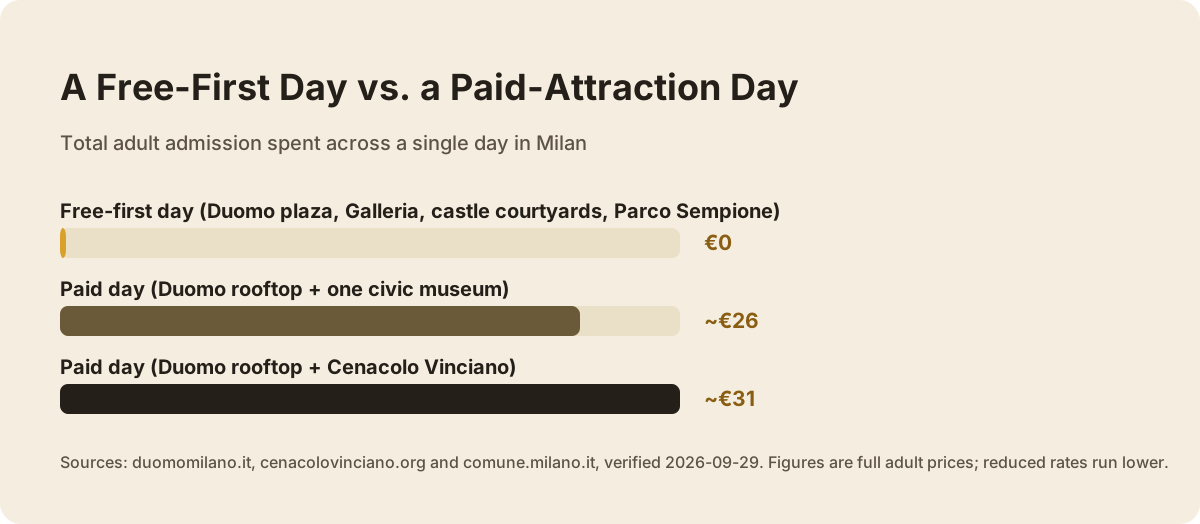
The honest way to price the day is to separate the fixed base from the optional layer. The base, metro rides, lunch, an aperitivo, a tip for the guide, is what you spend in the city regardless of the plan. The optional layer is where a free-first plan saves real money, and the table below shows where each paid item sits.
| Item on the one-day plan | Cost status | Condition to watch |
|---|---|---|
| Piazza del Duomo and the Galleria | Free, no conditions | Crowds peak mid-morning |
| Duomo interior, tourist entry | Paid | Free museum days on the last Sunday of the month, reservation required |
| Last Supper, Cenacolo Vinciano | Paid, timed reservation | Free first Sunday under Domenica al Museo, booking still required |
| Castello Sforzesco courtyards and grounds | Free, always | Grounds hours vary by season |
| Castle museums inside | Paid civic museums | Free first Sunday for all, free second Tuesday for under-25s |
| San Maurizio and San Satiro | Free churches | Open during church hours |
| Pirelli HangarBicocca | Free, no ticket | Booking recommended at busy times |
| Navigli, Darsena, Vicolo dei Lavandai | Free public space | Best at sunset |
| Pay-what-you-want walking tour | Free to join | You tip the guide at the end |
One warning about the free-day schemes: they are three separate systems, not one. The national first-Sunday scheme covers state museums, the civic scheme covers the comune's museums on its own calendar, and private museums such as the Poldi Pezzoli, Fondazione Prada and Armani Silos set their own rules independently, though Armani Silos participates in the first-Sunday scheme with its own conditions. The guide to Domenica al Museo in Milan and the round-up of free and budget museums in Milan separate the schemes museum by museum. For the wider question of whether the city deserves its expensive reputation, the Milan cost breakdown prices a full trip, and this site, Free Things To Do In Milan, keeps the rest of the free inventory.
Common Questions About One Free Day In Milan
What To Do In Milan For A Day If You Want To Spend Nothing?
Walk Piazza del Duomo, the Galleria Vittorio Emanuele II and Piazza dei Mercanti in the morning, join a pay-what-you-want walking tour, cross the Castello Sforzesco courtyards into Parco Sempione in the afternoon, visit San Maurizio al Monastero Maggiore and Santa Maria presso San Satiro, and finish at the Navigli and the Darsena for sunset. Every item on that list is free with no reservation.
Can You See The Last Supper For Free On A One-Day Visit?
Only if your day is a first Sunday of the month, when the Cenacolo Vinciano joins the national Domenica al Museo scheme, and even then a timed reservation is still mandatory. On every other day it is a paid, timed-entry ticket with limited slots, so a one-day visit without a booking means seeing the church of Santa Maria delle Grazie next door instead, which is free.
Is The Duomo Free To Enter?
Tourist entry to the cathedral interior and the rooftop terraces is paid, though the cathedral runs free museum days on the last Sunday of the month from late September 2026 onward with a reservation. The square in front, the Galleria behind it and the museum-free views of the facade all cost nothing.
Are The Free Walking Tours Really Free?
Yes. Every walk in this site's roster, nine on GuruWalk and one on freetour.com, is free to join and pay what you want at the end. You tip the guide in cash or by card after the walk, and the amount is your decision.
Is One Day Enough For Milan?
One day covers the free-first core, the Duomo square, the Galleria, the castle grounds, Parco Sempione, one or two frescoed churches and the Navigli at sunset, comfortably. It does not cover the major paid museums at any relaxed pace, so treat those as a reason to come back rather than a reason to rush.
What Is The Best Free Thing To Do In Milan In The Evening?
Sunset along the Naviglio Grande and the Darsena, followed by a budget aperitivo in the canal district. The canal-side streets, the Vicolo dei Lavandai and the waterfront are all free public space, and the evening atmosphere is the city at its most social.
The three walks below close the loop for whichever pace you chose: the Coffee Culture Highlights Walk, rated 4.91 out of 5 across 565 GuruWalk reviews, meeting at Piazza dei Mercanti under the pink umbrella at the Loggia degli Osii; the 2H30 Monumental Walk, rated 4.77 out of 5 across 303 GuruWalk reviews in English and Spanish; and the 1H45 Best-Tips Walk, rated 9.4 out of 10 across 562 freetour.com reviews, meeting at Palazzo Morando on Via Sant'Andrea. Each one is free to join, and each one covers ground this plan walks past.