Why Is Milan So Expensive?
Milan's prices run above Rome's and Florence's for reasons rooted in fashion-capital economics, rents and tourism pressure. Here is where the money goes and how to avoid paying the premium.
Why Is Milan So Expensive?
Milan is expensive because it is Italy's financial and fashion capital, not primarily a tourist city. Rents, salaries and commercial costs sit closer to Munich or Zurich than to Naples, and those costs flow into every restaurant menu and hotel rate. Milan's headline attractions are also built around timed, ticketed entry, so a first visit can feel like a pay-per-view city. The premium is real, but it is largely optional.
The structural explanation matters before the practical one. Milan hosts the Italian stock exchange, the national banking headquarters and the twice-yearly Fashion Week machine. The city's economy produces wealth at a rate southern Italy does not, and prices follow wealth. Commercial rent on Via Montenapoleone ranks among the highest in Europe for retail space, which is why a coffee near the fashion quadrilateral can cost triple what the same coffee costs ten minutes east in Porta Venezia. That rent premium, not greed, is the mechanism that makes Milan feel expensive.
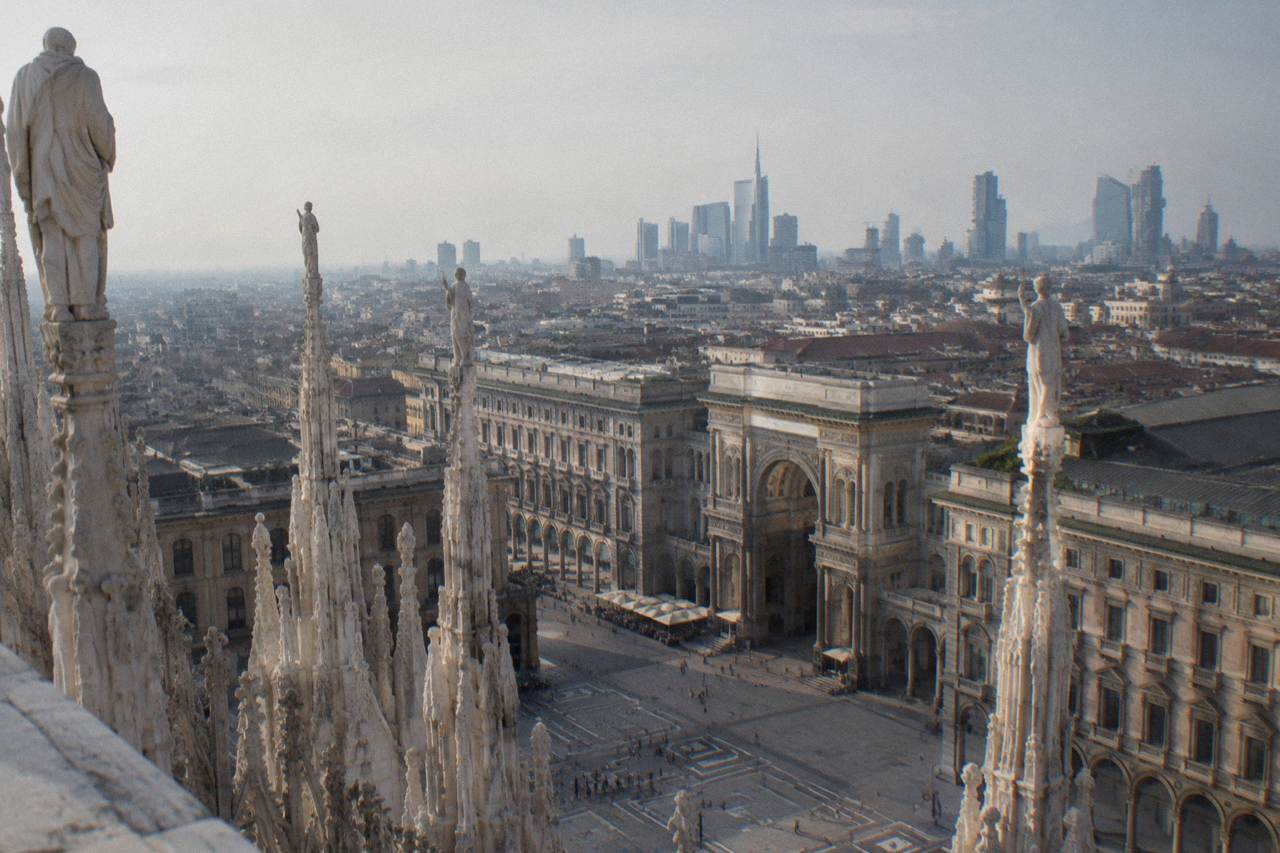
Tourism pressure compounds it. Milan receives far fewer leisure visitors than Rome or Venice, but the visitors it gets are concentrated in a small central rectangle between the Duomo, the Galleria, the castle and Brera. Demand stacks onto a limited supply of hotel rooms and restaurant tables in that zone, and pricing responds. A city that also hosts trade fairs, design week and football matches at San Siro keeps its hotel base sold out often enough that average rates stay high year round.
The third factor is how Milan sells itself. The Duomo complex splits into interior, museum, and rooftop tiers with separate prices. The Last Supper runs on timed reservations. The big private museums, Fondazione Prada and Armani Silos, are ticketed commercial venues rather than subsidised civic institutions. A first-time visitor who buys everything at face value can spend the price of a budget flight before lunch. A visitor who knows which doors are free walks out with the same photographs and a much lighter receipt.
If you want the full picture of the paid city before deciding what to skip, these three pay-what-you-want walks cover the expensive highlights at a price you set yourself.
The anchor option among them is the 2H45 Wonders Walk, rated 4.9 out of 5 across 2,916 GuruWalk reviews. It runs on GuruWalk, it meets at Piazza del Duomo 6, and over 2 hours and 45 minutes it threads the Duomo, the Galleria Vittorio Emanuele II and the ground toward Castello Sforzesco, which is precisely the strip where Milan's costs concentrate. Walking it with a guide first is the cheapest possible orientation to a city whose biggest expenses are all clustered within a kilometre of that square. You can read more about it on the Wonders Walk tour page.
Where Does The Money Actually Go?
The biggest driver of a costly Milan day is the ticket stack: the Duomo's split pricing, the mandatory Last Supper reservation, and the civic and private museums that each charge separately. Full civic museum tickets run around €10, the Duomo's rooftop by stairs around €16, and the Last Supper €15 with a booked slot. None of these are scams; they are the standard prices of a wealthy city's flagship sights, and an unprepared itinerary buys them all in one day.
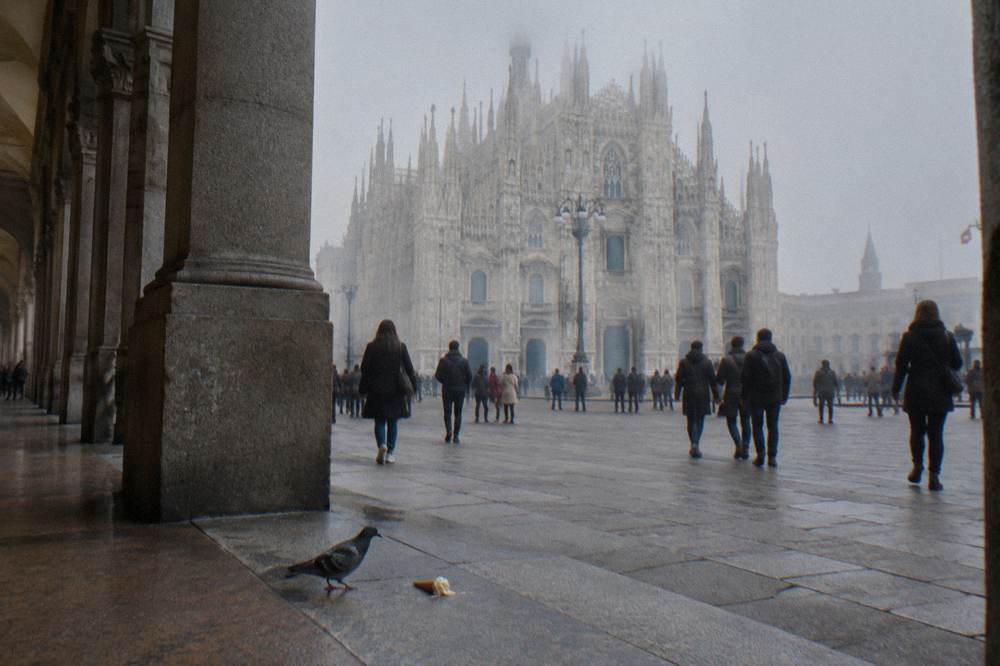
Start with the Duomo, because it is the fact most visitors get wrong. The cathedral's tourist entry and museum are paid, generally in the €8 to €10 range depending on the day, while the rooftop terraces cost more, roughly €16 by stairs and €18 by lift, with combined tickets around €22 to €26. The current tier structure is set out on the cathedral's own ticketing page at duomomilano.it. People arrive expecting a free church, find a ticketed monument, and the day's budget wobbles immediately. Prayer-only entry exists under the cathedral's access rules, but tourist visits run on tickets.
The Last Supper is the second shock. The Cenacolo Vinciano charges €15 full, €2 reduced for visitors aged 18 to 25, with mandatory timed reservations through the official booking system at cenacolovinciano.org. It is free on the first Sunday of the month under the national Domenica al Museo scheme, but a timed reservation is still required even on the free day, so it is never a walk-up freebie. Santa Maria delle Grazie the church next door is free to enter during normal church hours; the two facts belong to different buildings and different rules.
The civic museums add the third layer. Castello Sforzesco's museums, the Museo del Novecento and GAM charge full tickets of roughly €10 for the first two and €8 at GAM, with about half off for visitors aged 18 to 25, students and over-65s, and free entry for under-18s. The Comune di Milano sets out the whole structure on its civic museums ticketing page. The castle's courtyards and grounds, by contrast, are free and open daily, roughly 7:00 to 19:30, which is covered in detail in the guide to Parco Sempione and the free castle views.
The private museums sit outside every public scheme. Fondazione Prada charges €15 for its integrated Milan ticket, Armani Silos €12, Museo Poldi Pezzoli €15, Villa Necchi Campiglio €15, and the Museo Teatrale alla Scala €12. Each sets its own rules, and the state and civic free-day schemes do not apply to them, with one nuance: Armani Silos participates in first-Sunday free entry on its own terms. A visitor who assumes "museums are free on Sundays here" and plans a Poldi Pezzoli morning around it will be paying full price at the door.
| Attraction | Full adult price | Free route |
|---|---|---|
| Duomo interior + museum | ~€8-€10 | Paid every day for tourist entry |
| Duomo rooftop (stairs) | ~€16 | No free option |
| Last Supper (Cenacolo Vinciano) | €15 | First Sunday only, timed reservation still required |
| Castello Sforzesco museums | ~€10 | First Sunday free for all, grounds always free |
| Museo del Novecento | ~€10 | First Sunday free, second Tuesday free for under-25s |
| Fondazione Prada | €15 | No free days |
| Armani Silos | €12 | First Sunday free entry on its own terms |
If the ticket stack is the part of Milan you would rather not pay for, the question below is how the free layer of the city works.
Can You See Milan Without Paying The Premium?
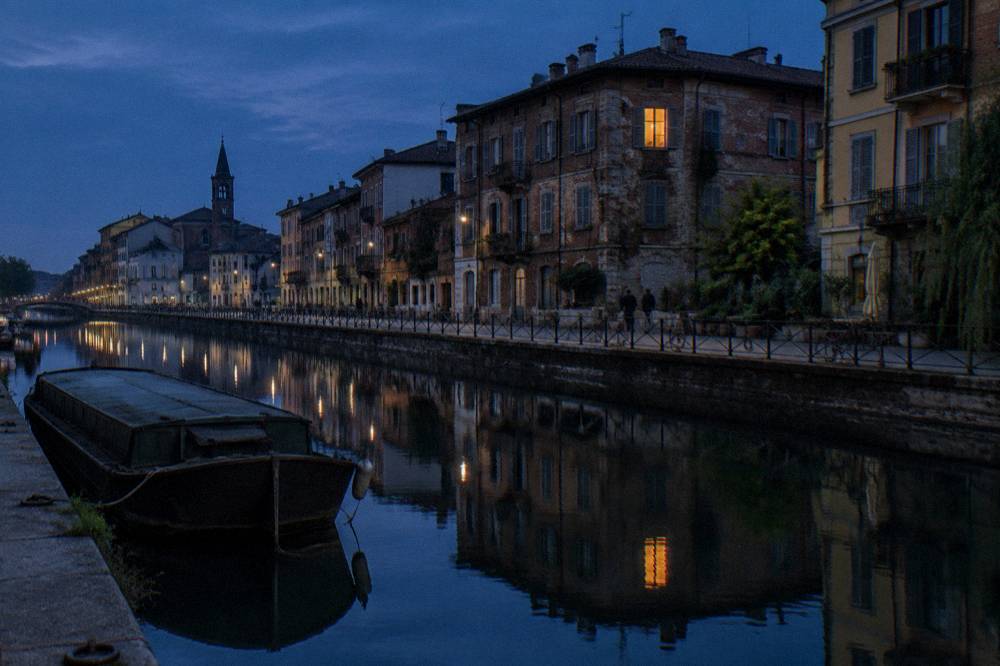
More of Milan than most visitors expect. The Galleria Vittorio Emanuele II, Piazza del Duomo, the castle courtyards, Parco Sempione, the Navigli canals, the Colonne di San Lorenzo and the Bosco Verticale and Porta Nuova district cost nothing to see. Four major churches, including San Maurizio al Monastero Maggiore, are free to enter. Pirelli HangarBicocca, a major contemporary art space, is completely free with no ticket required. The premium attaches to interiors and timed slots, not to the city itself.
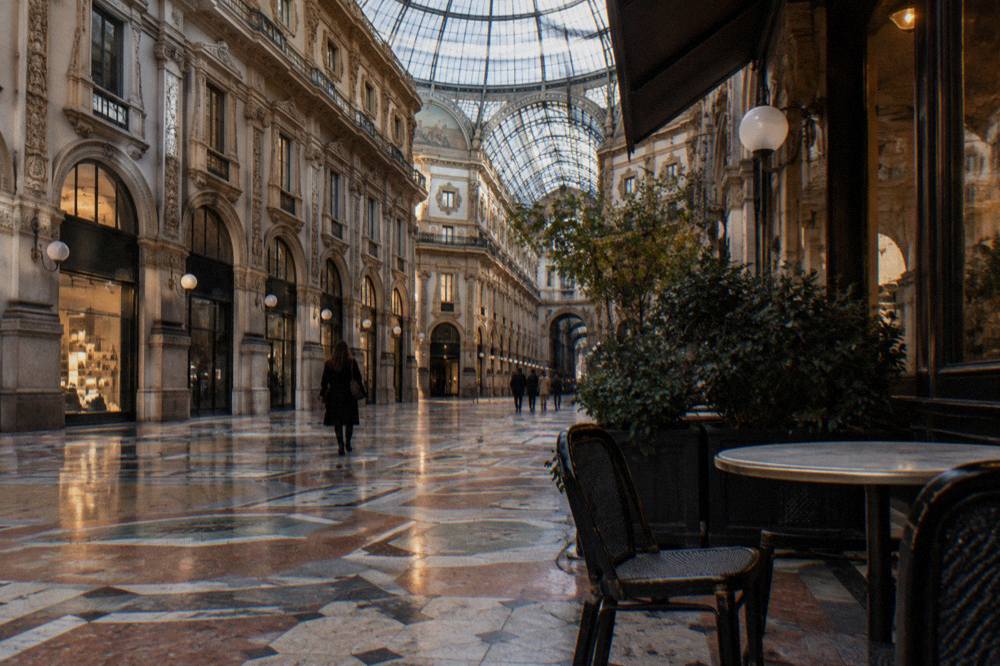
The pattern is consistent once you see it. Everything that is a public space, a working church or a neighbourhood is free. Everything that is a controlled interior with a queue is paid. The Galleria is the clearest case: one of the most photographed interiors in Italy, glass-vaulted and marble-floored, and it is simply a public passage you walk through. The Bosco Verticale towers are residential buildings, so the free experience is viewing them from the surrounding parks and Piazza Gae Aulenti, which costs exactly nothing.
The free-day schemes then convert several of the paid interiors into free ones, if you time the trip. The national Domenica al Museo scheme opens state museums on the first Sunday of the month, which in Milan means the Pinacoteca di Brera and the Cenacolo Vinciano, with the reservation caveat on the latter and mandatory booking for Brera through its own reservation system. The civic scheme covers the castle museums, the Museo del Novecento and GAM on the same first Sunday for everyone, plus a second-Tuesday free day for visitors up to 25. The two schemes are separate, and the private museums belong to neither. The full mechanics, including what is free at night, are laid out in the guide to the best free things to see in Milan.
Pirelli HangarBicocca deserves its own sentence because it is genuinely unusual: a large-scale contemporary art venue with free general admission, no ticket, stated plainly on its own site at pirellihangarbicocca.org. In a city where Fondazione Prada charges €15, an institution of comparable ambition charging nothing is the exception worth planning a metro ride for.
And then there is the walking tour economy, which is the single biggest cost-cutter in the city. Milan's free walking tours are pay-what-you-want: you book a slot, walk the route, and pay the guide at the end what you think the walk was worth. For a visitor facing a €16 rooftop and a €15 painting, a two-hour guided walk of the entire historic centre at a self-set price reframes what the city costs. The site you are reading, Free Things To Do In Milan, exists largely because that scene is broad enough to plan whole days around.
How Do Pay-What-You-Want Tours Keep Milan Affordable?
Pay-what-you-want tours keep Milan affordable by shifting the commercial risk onto the guide, who is paid only what each participant chooses to give. This model has produced a roster of walks on GuruWalk plus one on freetour.com, covering the essential centre, the monumental district, the coffee culture, and the hidden corners at no fixed price, with ratings and review counts printed on each listing so quality is visible before you commit a euro.
The economics are worth understanding, because they explain why the model survives in an expensive city. The platforms take a small booking fee per reservation, the guide fronts the time and the knowledge, and the payment happens at the end of the walk, in cash or by app, at whatever figure the walker chooses. Guides who run bad walks earn badly and stop running them; guides with four-figure review counts are running walks that thousands of people judged worth paying for. The result is a self-filtering market, which is why a walk rated 4.9 out of 5 across 2,916 GuruWalk reviews is a safer purchase than most fixed-price tours anywhere in Italy.
The Express Walk, Official Guide is the short-format option: 1 hour and 30 minutes, rated 4.46 out of 5 across 973 GuruWalk reviews, meeting at Largo Ildefonso Schuster and running on GuruWalk. For a visitor whose budget anxiety is about time as much as money, an hour-and-a-half orientation walk at a self-set price answers the question "what am I looking at" before any tickets get bought. It pairs naturally with an afternoon spent only on the free layer: the castle grounds, the park, the canals.
The longer formats go deeper. The Morning and Afternoon Walk runs 1 hour and 30 minutes at 4.5 out of 5 across 273 GuruWalk reviews, and the 1H30 On-Foot Walk carries 4.93 out of 5 across 40 GuruWalk reviews, a smaller pool but a striking average. The Coffee Culture Highlights Walk, rated 4.91 out of 5 across 565 GuruWalk reviews, meets at Piazza dei Mercanti at the Loggia degli Osii under a pink umbrella, and it is the one that answers a different expensive-city question: how Milan's café culture, the thing you are overpaying for on the fashion streets, actually works when it is not being sold to tourists.
How Much Should You Budget For A Day In Milan?
A paid day in Milan, one flagship ticket plus food and transport, runs well past €60 before accommodation, and a central hotel pushes the figure higher. The same day rebuilt around the free layer, one pay-what-you-want walk, the free public spaces and a market or Chinatown lunch, can land under €30. The gap is the ticket stack and the postcode premium, not the experience. Milan is expensive yet easy to visit cheaply.
The budget lever that matters most is accommodation location, and it is also the least discussed. Staying inside the historic rectangle can double the nightly rate versus staying a few metro stops out, while the metro itself is fast and cheap relative to the walk time across the centre. The second lever is meal geography: the same espresso that costs a premium under the Galleria's arches costs a fraction in the Isola district or along Via Paolo Sarpi, Milan's Chinatown, both of which are free to wander and cheaper to eat in. The third lever is timing, because a trip that includes a first Sunday converts two or three paid interiors into free ones at a stroke.
| Spend type | Premium day | Rebuilt free day |
|---|---|---|
| Morning sightseeing | Duomo rooftop ~€16 | Pay-what-you-want walk, you set the figure |
| Lunch near the centre | €25-€40 restaurant | Market or Chinatown lunch, far less |
| Afternoon culture | Museum ticket ~€10-€15 | Castle grounds, Parco Sempione, Galleria, all free |
| Evening | Aperitivo at premium prices | Navigli aperitivo, priced more gently |
| Daily total per person | Well past €60 | Under €30 is achievable |
The rebuilt day is not a worse day. It is the same city, seen at street level, with the money spent where you choose rather than where the ticket office sits. The evening version of that plan is covered in the guide to free things to do in Milan at night, and the full walking route exists as a free one day Milan itinerary.
If you are assembling that rebuilt day, these three walks are the backbone: the long Wonders format for the centre, the Morning and Afternoon Walk for a shorter circuit, and the compact On-Foot Walk for a tight schedule.
Common Questions About Milan's Costs
Why Is Milan So Expensive?
Milan is Italy's financial and fashion capital, with rents, salaries and commercial costs closer to northern Europe's than to southern Italy's. Tourism stacks onto a small central zone where those costs are highest, and the headline attractions use timed, ticketed entry. The premium is real but largely optional, because the pay-what-you-want walking tours and the free-entry schemes cover most of what visitors come to see.
Is Milan More Expensive Than Rome?
For a visitor, Milan generally costs more per day, mainly on hotels, restaurants near the centre and attraction tickets. Rome has more free headline sights, while Milan concentrates its icons into paid, timed experiences. Milan's free layer, including the Galleria, the castle grounds and the canals, narrows the gap considerably if you use it.
Can You Visit Milan Cheaply?
Yes. Pay-what-you-want walking tours cover the historic centre at a price you set, the major public spaces and several churches are free, Pirelli HangarBicocca is free with no ticket, and the first-Sunday schemes open state and civic museums. A day rebuilt around these can come in under €30 per person before accommodation.
Are The Free Walking Tours In Milan Actually Free?
They are pay-what-you-want, which means there is no fixed price: you reserve a slot, take the walk, and pay the guide at the end what you think it was worth. Most run on GuruWalk, and one, the Wonderfull Milan Free Tour, runs on freetour.com. There is no minimum stated on GuruWalk or freetour.com, and both platforms take a small booking fee per reservation.
What Is The Most Expensive Thing To Do In Milan?
Among the standard sights, the San Siro stadium tour and museum at €37 full price is the costliest single ticket, followed by the Duomo's combined rooftop and museum options at roughly €22 to €26. The Last Supper at €15 is cheaper but needs a timed reservation booked well ahead.