Is Milan Expensive To Visit?
A plain answer to whether Milan is expensive to visit, with verified prices for the major sights, the free layer that changes the maths, and how pay-what-you-want walking tours fit in.
Is Milan Expensive To Visit?
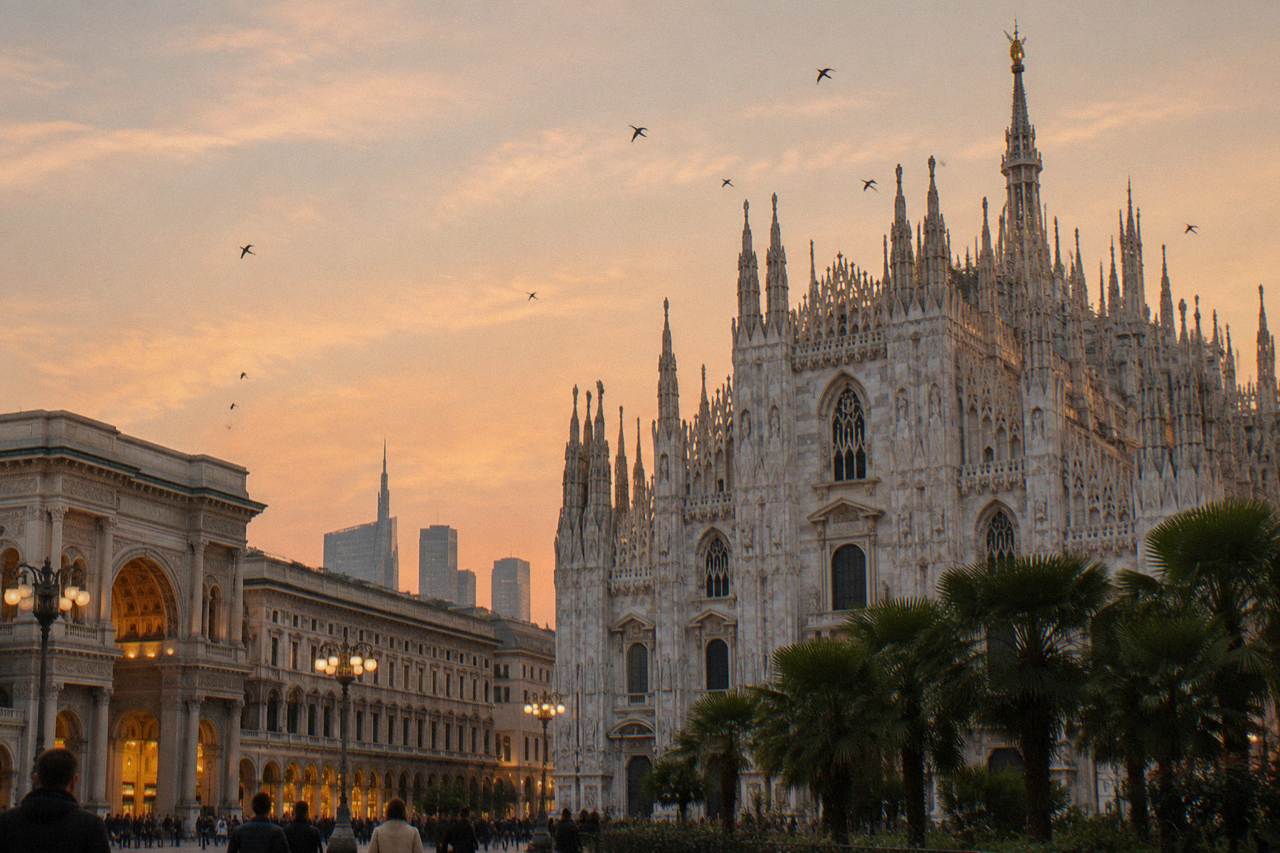
Milan is expensive by Italian standards but not by big-city European standards, and the honest answer depends on which Milan you visit. The headline sights carry real prices, roughly €15 for the Pinacoteca di Brera and €16 to reach the Duomo rooftop by stairs, yet the castle courtyards, the Galleria, the Navigli and every walking tour on this site cost nothing at all. A visitor who buys every ticket can spend freely. A visitor who plans around the free layer can see the city's most famous spaces for the price of a coffee.
That split is what makes Milan unusual among expensive cities. Paris or London concentrate their icons behind ticket desks. Milan puts several of its most photographed places, Piazza del Duomo, the Galleria Vittorio Emanuele II, the Castello Sforzesco courtyards and Parco Sempione, in open public space. The paid layer sits on top: museum interiors, rooftop terraces, the Last Supper. Choose your layer and you have chosen your budget.
The city also runs on pay-what-you-want walking tours in a way most rivals do not. The walks on this site are free at the point of booking, you tip the guide at the end, and the best of them are genuinely good. The 2H45 Wonders Walk, rated 4.9 out of 5 across 2,916 GuruWalk reviews, costs nothing to join and covers the Duomo, the Galleria and the castle in two hours and forty-five minutes. That single fact reframes the whole cost question, because in most expensive cities the equivalent guided introduction runs at a fixed price.
If you want a structured start, these three free walks cover the essential city:
The rest of this article puts real numbers on both layers, so you can decide for yourself where Milan's costs bite and where they do not. Every figure below comes from official sources or from the walk listings themselves, and the free options are checked against the city's own entry schemes rather than secondhand lists.
Where Does Milan's Money Actually Go?
The money in Milan goes into interiors and views, not into the streets themselves. The cathedral's rooftop, the state galleries, the castle's museums and the Last Supper are the four big ticket lines, while the squares, courtyards, canals and parks that define the city's character are free public space. Most visitors overspend not because Milan is greedy but because they buy interior tickets for things they could partly see for free.
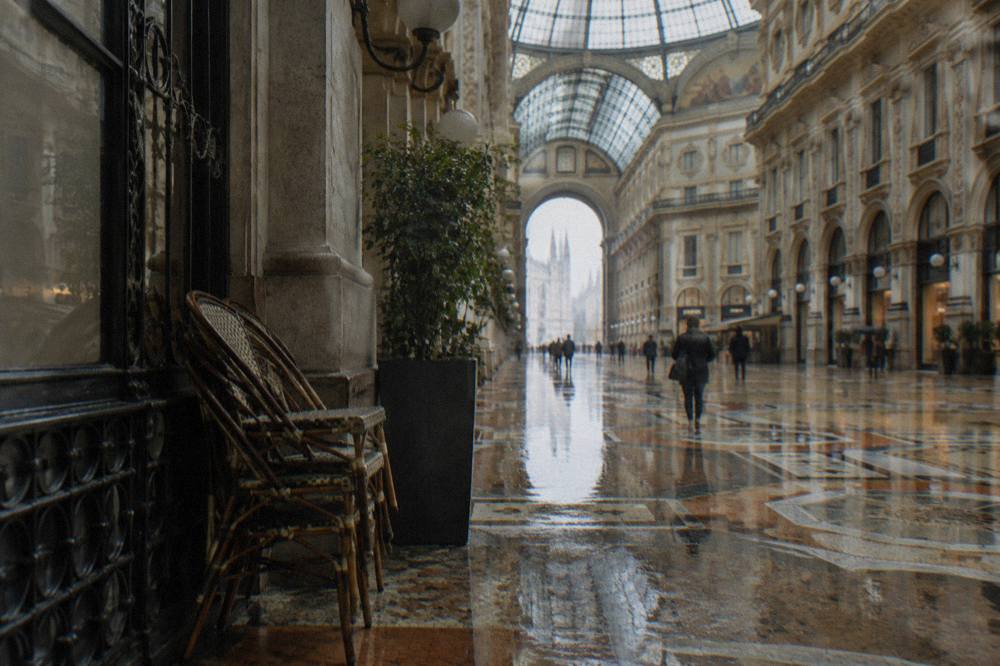
Take the Duomo complex as the clearest example. Walking into Piazza del Duomo and looking up at the cathedral's forest of spires costs nothing. Tourist entry to the interior plus the Duomo Museum is a paid ticket, and the rooftop terraces are a separate paid product, about €16 by stairs and €18 by lift for a full-price adult. The cathedral's own ticket page lays out the combinations, and the museum adds free days on the last Sunday of the month from late September onward, with a reservation. Three different products, three different prices, endlessly conflated in third-party guides.
The castle works the same way. Castello Sforzesco's outer courtyards and grounds are free and open daily, roughly 7:00 to 19:30, and they are genuinely worth walking: the fountain esplanade, the ducal courtyard and the passage through to Parco Sempione cost nothing. The civic museums inside the castle are paid, and they fall under Milan's own civic-museum scheme rather than the national one. The Comune di Milano's civic museums ticket page is the source for that scheme: free for everyone on the first Sunday of the month, free for under-25s on the second Tuesday.
If the plan is to see the city's famous outdoor spaces with a local guide and pay only what you think the walk was worth, the 2H45 Wonders Walk is the strongest single choice. It is rated 4.9 out of 5 across 2,916 GuruWalk reviews, runs in English and Spanish, lasts 2 hours and 45 minutes, and meets at Piazza del Duomo 6, right at the centre of the paid-and-free split this section describes.
One budgeting habit worth stealing: decide each morning whether today is an interior day or a street day. Interior days cost money and should be booked ahead. Street days can be close to free, especially with a pay-what-you-want walk anchoring the route. Our Milan budget cost breakdown expands this into a full daily plan.
How Much Do The Big Sights Cost In Milan?
The major paid sights cluster between €10 and €37 for a full-price adult: €15 for the Pinacoteca di Brera's Grande Brera ticket, €15 for the Last Supper with a mandatory reservation, €12 for the Armani Silos, €12 for the La Scala museum, and €37 for the combined San Siro stadium tour and museum. Private venues set their own prices, and none of them inherit the state or civic free days.
Here are the verified full-price adult figures for the main paid sights:
| Sight | Full adult price | Free possibilities |
|---|---|---|
| Duomo rooftop terraces | about €16 stairs, €18 lift | none for the terraces |
| Duomo interior + museum | paid ticket, varies by day | museum free last Sunday of month, with reservation |
| Cenacolo Vinciano (Last Supper) | €15, reservation mandatory | first Sunday under Domenica al Museo, booking still required |
| Pinacoteca di Brera | €15 to €20 Grande Brera | first Sunday, reservation via the gallery's booking site |
| Castello Sforzesco museums | paid, civic scheme | first Sunday all visitors, second Tuesday under-25s |
| Fondazione Prada | €15 integrated ticket | none listed |
| Armani Silos | €12 | first Sunday of the month |
| Museo Poldi Pezzoli | €15 | reduced €10 on first Sundays |
| Villa Necchi Campiglio | €15, FAI members free | none confirmed for non-members |
| Museo Teatrale alla Scala | €12 | none listed |
| San Siro tour + museum | €37 | none listed |
Two warnings travel with that table. The Last Supper is the sharpest trap in Milan: the Cenacolo Vinciano is free on the first Sunday of the month under the national Domenica al Museo scheme, but a timed reservation is still required even on the free day, and on every other day it is a paid, booked ticket. The church of Santa Maria delle Grazie next door is a separate, free fact, open in normal church hours. Never blur the two. The official Cenacolo site is the place to check slots before promising anyone a viewing.
The second warning is about the three free-entry schemes, which never generalise across each other. The national Domenica al Museo covers state museums, in Milan the Pinacoteca di Brera and the Cenacolo. The civic museicivici scheme covers the city's own museums, the castle collections, the Museo del Novecento and the GAM. Private museums, Prada, Poldi Pezzoli, Armani Silos, Villa Necchi, set their own rules entirely, and only some of them join a free Sunday. A guide that tells you "museums are free on the first Sunday" without naming which scheme is selling you a queue for a closed door.
What Can You Do In Milan For Free?
More of Milan's identity is free than in almost any comparable European capital: Piazza del Duomo, the Galleria Vittorio Emanuele II, the Castello Sforzesco courtyards, Parco Sempione, the Navigli canals, the Colonne di San Lorenzo, the Bosco Verticale from the outside and Piazza Gae Aulenti all cost nothing, and Pirelli HangarBicocca, a major contemporary art space, admits everyone free with no ticket. That last one is the genuine outlier, stated plainly on the venue's own site, and it is worth double-checking before each visit because a free policy at that scale is rare.
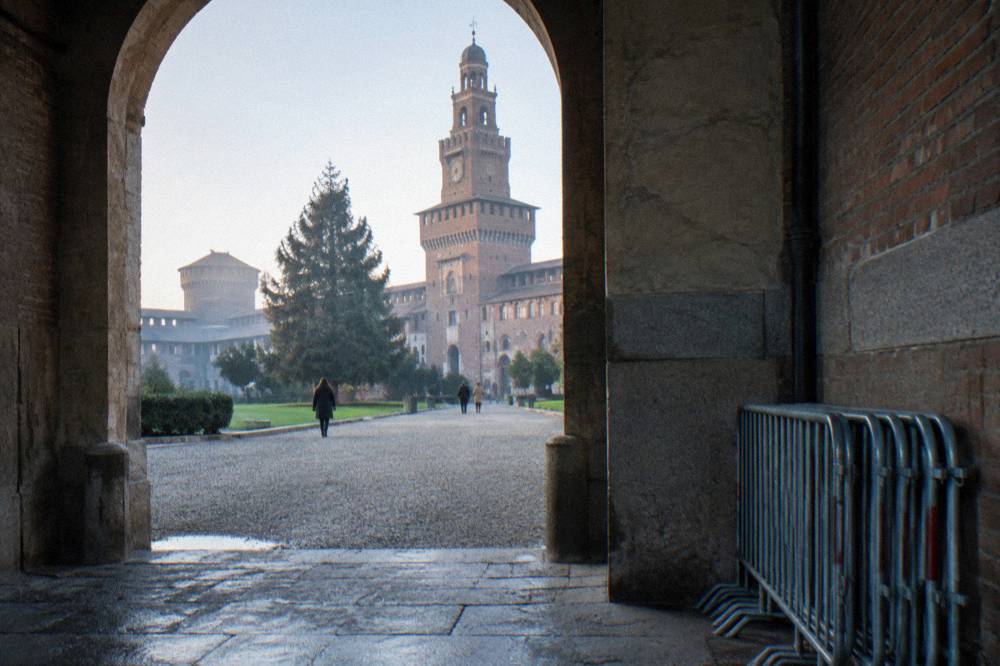
The churches are the other quiet bargain. San Maurizio al Monastero Maggiore, sometimes called the Sistine Chapel of Milan for its wall-to-wall frescoes, is free to enter. Sant'Ambrogio, one of the oldest churches in northern Italy, is free as a working church. Santa Maria presso San Satiro, with Bramante's famous trompe l'oeil apse squeezed behind Piazza del Duomo, is free. A morning of Milan's best art can genuinely cost nothing if you route it through churches rather than galleries.
The free layer also includes the districts people travel for. The Navigli canal district, the Vicolo dei Lavandai and the Darsena dock are public streets, free at any hour, and they are covered in detail in our Navigli free canal district guide. The Isola neighbourhood, Via Paolo Sarpi's Chinatown and the Biblioteca degli Alberi park around Porta Nuova are the same: no ticket, no gate, no schedule beyond ordinary opening hours.
The best way to turn that scattered free layer into a route is a pay-what-you-want walk. The 2H45 Wonders Walk starts at Piazza del Duomo 6 and stitches the cathedral square, the Galleria and the castle into one 2-hour-45-minute story, in English or Spanish, with the guide paid by tip alone. For a shorter taste of the same ground there is a detailed free one day Milan itinerary built entirely around these no-cost spaces.
Add the free-admission layer up and the cost picture inverts. A three-day visit routed through squares, courtyards, churches and canals, with one paid interior chosen deliberately, lands far below what the city's reputation suggests.
How Do Free Walking Tours Work In Milan?
Milan's free walking tours are pay-what-you-want: booking costs nothing, the walk runs on a fixed route with a fixed meeting point, and you pay the guide a tip at the end based on what you thought it was worth. Nine of the ten walks on this site run on GuruWalk, one on freetour.com, and all ten are operated by independent local guides rather than by any tourism board or by this site.
The mechanics matter because they remove the risk from the booking decision. There is no upfront fee to lose if your plans shift, and there is no fixed price anchoring the guide's income, which is why the good walks compete on quality rather than on discounting. The Express Walk, run by an official licensed guide and rated 4.46 out of 5 across 973 GuruWalk reviews, lasts 1 hour and 30 minutes and meets at Largo Ildefonso Schuster, a short walk from the Duomo. It is the shortest full introduction on the roster, aimed squarely at visitors who want the outline of the city before deciding where to spend the rest of their day.
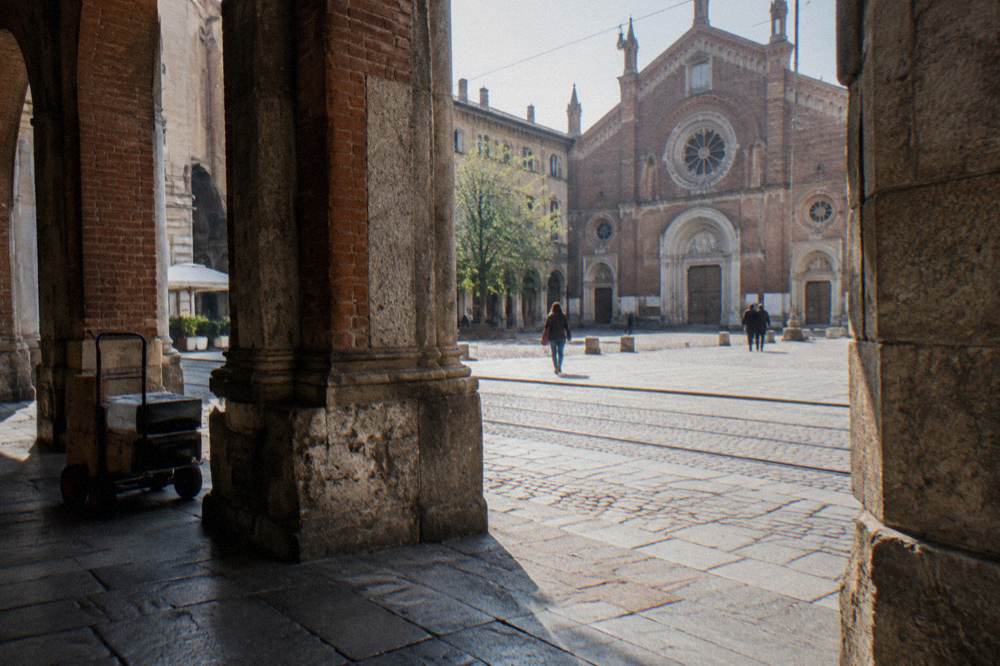
The 1H30 On-Foot Walk meets at the same spot and is the roster's highest-rated option, 4.93 out of 5 across 40 GuruWalk reviews, though with a much smaller review pool than the leaders. The Morning and Afternoon Walk, 4.5 out of 5 across 273 GuruWalk reviews, covers the same essential ground with two departure windows. Ratings on this site are always printed with their scale and their review count, because a 4.93 from 40 reviews and a 4.9 from 2,916 are different kinds of fact.
One practical note: the walks are the cheapest guided layer in the city, but they are not the only free one. The state and civic free-day schemes from earlier in this article can be combined with a walk, do the walk on a Saturday, spend the first Sunday inside Brera or the castle museums with a reservation. That is the closest thing Milan has to a cheat code.
Can You Eat And Drink In Milan Without Overspending?
Yes, and the reason is structural rather than lucky: Milan's aperitivo tradition bundles a drink and a buffet of food into one cover charge, and espresso at the bar counter remains one of the last genuinely cheap rituals in a wealthy city. Food is where Milan's wealth shows most, the fashion-district restaurants near the Galleria price for an audience that is not watching its wallet, but the neighbourhood layer a few streets out is a different economy.
The aperitivo is the structural answer, and it is covered in full in our Milan aperitivo on a budget guide. The Navigli bars run the classic version: one drink, a spread of food, an evening fed for the price of a cocktail. Timing matters more than venue choice, the early evening window is when the spreads are freshest and the crowds thinnest.
Coffee culture is deep enough in Milan that a walk exists for it. The Coffee Culture Highlights Walk, rated 4.91 out of 5 across 565 GuruWalk reviews, runs 2 hours in English and meets at Piazza dei Mercanti at the Loggia degli Osii, where the guide carries a pink umbrella, a detail worth knowing because it is how you actually find the right person in a crowded square. It is a pay-what-you-want walk like the others, and it doubles as an edible introduction to the historic centre.
The honest summary on food: budget for one splurge, whether that is aperitivo in Navigli or a proper trattoria in Isola, and let the bar-counter espresso culture carry the mornings. Milan rewards visitors who distinguish the two economies rather than assuming the whole city prices like the streets around the Galleria.
So Is Milan Worth The Money?
Milan is worth the money if you treat the paid sights as a short, deliberate list and let the free layer carry the rest, because the free layer here is not a consolation prize, it contains the castle, the canals, the Galleria, the parks and the city's best frescoed church. The visitors who leave feeling fleeced are usually the ones who bought every interior ticket and skipped the streets in between.**
The paid list is short and worth it if art is your reason for travelling: Brera for the paintings, the Last Supper for the fifteen minutes that justify the booking effort, the Duomo rooftop for the view of the Alps on a clear day. Everything else on the paid table is optional, and several of the private museums are skippable without losing anything essential to Milan.
Everything on the free list is not a compromise, it is the city. The Free Things To Do In Milan directory this site publishes exists precisely because that layer is thick enough to fill a week. The walks make it navigable: a local guide, no upfront cost, and a route that turns scattered squares into a story. If you are weighing Milan against a cheaper Italian city, the real comparison is not headline prices but how much of the essential experience sits behind a ticket desk, and in Milan that share is smaller than the city's reputation implies.
If a guided start would help, these three free walks cover the centre, the classic monuments and the on-foot essentials:
Common Questions About Milan Costs
Is Milan Expensive To Visit?
Milan is expensive by Italian standards, with major sights priced between €10 and €37, but a large share of the essential city is free: the squares, castle courtyards, canals, parks and churches cost nothing, and every walking tour on this site is pay-what-you-want. Budget for one or two paid interiors and the free layer can carry the rest of the trip.
Is The Duomo Free To Enter?
The piazza and the cathedral exterior are free. Tourist entry to the interior and the Duomo Museum is a paid ticket, and the rooftop terraces are a separate product, about €16 by stairs and €18 by lift. The museum has free last-Sunday-of-the-month entry with a reservation.
Are Milan Museums Free On The First Sunday Of The Month?
State museums are, under the national Domenica al Museo scheme, which in Milan means the Pinacoteca di Brera and the Cenacolo Vinciano, both with reservations. Civic museums follow a separate city scheme, free for all on the first Sunday and free for under-25s on the second Tuesday. Private museums set their own rules.
Do You Have To Pay For A Walking Tour In Milan?
No. The walks listed on this site are pay-what-you-want: booking is free and you tip the guide at the end. Nine run on GuruWalk and one on freetour.com, all operated by independent local guides.
What Is The Cheapest Way To See Milan In One Day?
Route the day through free public space, Piazza del Duomo, the Galleria, the castle courtyards, Parco Sempione and the Navigli, and anchor it with a pay-what-you-want walk such as the 2H45 Wonders Walk, rated 4.9 out of 5 across 2,916 GuruWalk reviews.
Is Food Expensive In Milan?
It can be near the Galleria, but the aperitivo tradition bundles a drink and a buffet into one cover charge in the Navigli, and bar-counter espresso stays cheap citywide. Budget one deliberate splurge and let neighbourhood spots carry the rest.