Is Navigli Free To Visit?
Yes, Navigli is free to visit: the canals, bridges, Vicolo dei Lavandai and the Darsena cost nothing to walk. Here is exactly what is free, what is paid, and how to see the district without spending.
Is Navigli Free To Visit?
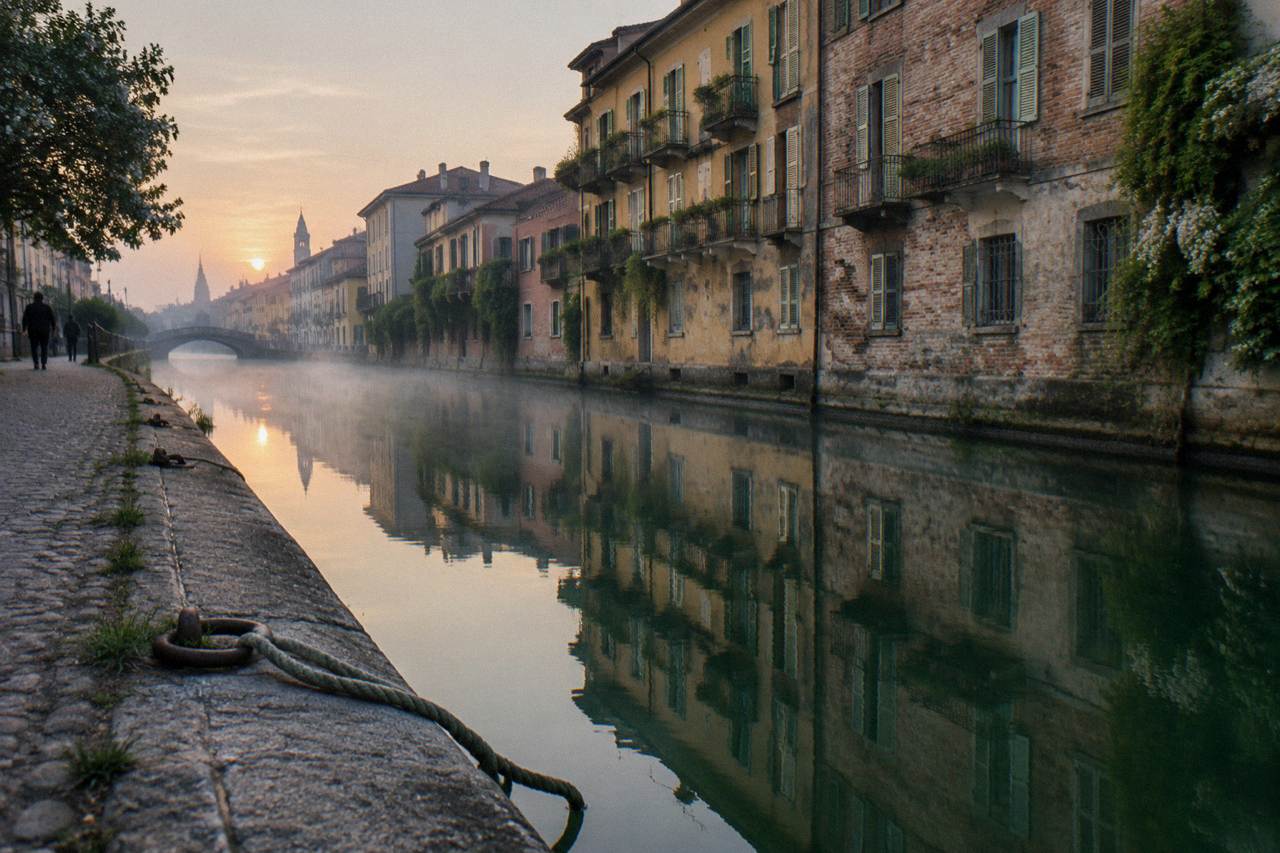
Yes, Navigli is completely free to visit. The Naviglio Grande and Naviglio Pavese canals, their bridges, the Vicolo dei Lavandai wash-house alley and the Darsena dock are all public spaces with no entry charge of any kind. The only things that cost money in the district are optional: canal boat trips, purchases at market stalls, and food and drinks. You can spend a full day here without paying a cent.
That answer surprises people who expect a ticket booth somewhere, because Milan's headline sights, the Duomo terraces, the Last Supper, the castle museums, all carry charges. Navigli is the opposite. The district's entire appeal is the public waterway itself: centuries of canal engineering, low brick facades leaning over the water, laundry alleys and iron footbridges, all of it open streets that nobody gates or charges for. The canals were dug to bring building materials and goods into the city, moving marble, rice and sand along routes the roads of the day could not carry. What was industrial infrastructure is now the most atmospheric free walk in Milan.
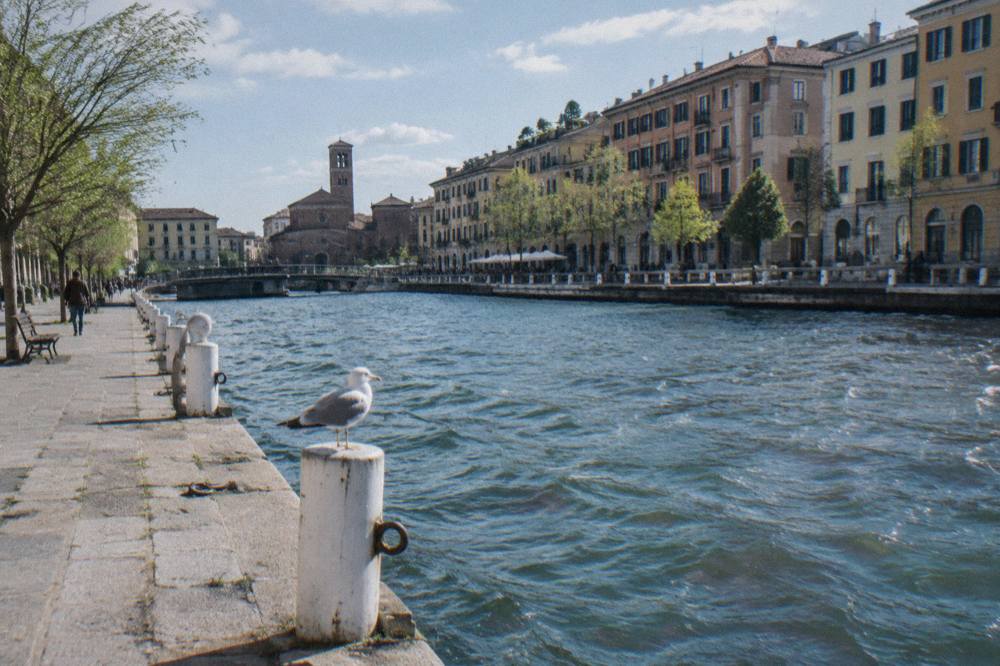
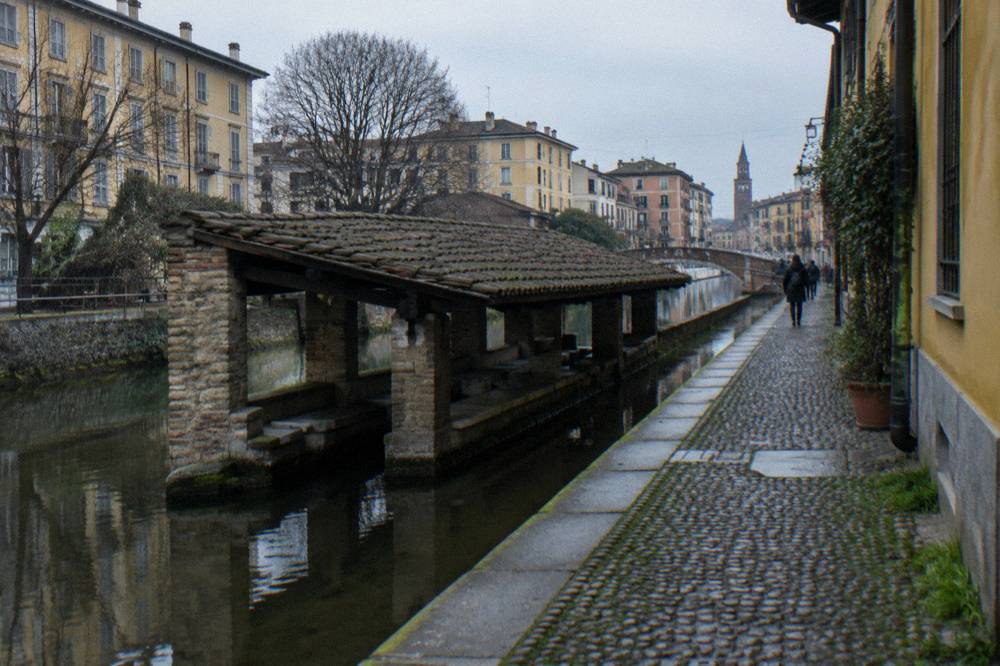
The free status covers everything you would actually list as "seeing Navigli." You can walk the full length of the Naviglio Grande from the Darsena out toward the western suburbs. You can cross the Ponte delle Gabelle and the other canal bridges as many times as you like. You can photograph the Vicolo dei Lavandai, the restored wash-house alley where neighborhood women once laundered clothes in the canal, and it costs nothing. The Darsena, the old dock basin where the two canals meet, is a free public waterfront with benches, a small beach of river stones and evening crowds. None of it requires a ticket, a reservation or even a schedule.
The distinction that matters is between the district and its commerce. The walk is free; the businesses along it are not. A canal boat cruise is a paid product, prices vary by operator and season and are quoted at the dock or on each operator's own page. The stalls of the canal-side markets are free to browse and only cost money if you buy. An aperitivo with a canal view is a purchase like any other. If you treat those as choices rather than as part of the visit, Navigli is one of the cheapest afternoons in the city.
If you prefer a guide's company to a self-guided wander, the free walking-tour scene in Milan is pay-what-you-want rather than ticketed, and several of the strongest walks touch the same central-Milan ground that pairs naturally with a Navigli afternoon. The walks below are all free to join, with the tip decided at the end.
What Is Free In Navigli And What Costs Money?
Everything on the canal itself is free: the Naviglio Grande towpath, the Naviglio Pavese, the iron bridges, the Vicolo dei Lavandai and the entire Darsena waterfront. Everything sold to you alongside it is paid: boat cruises, market purchases, restaurant meals, bar aperitivo and canal-side shops. There is no entry fee, no museum charge and no paid viewpoint anywhere in the district, so the whole question is which optional extras you choose.
The cleanest way to plan the visit is to see the district as a free stage with paid actors on it. Here is the honest breakdown.
| Element | Free or paid | What to know |
|---|---|---|
| Naviglio Grande towpath | Free | Public canal-side walk, no gates or hours beyond normal street access |
| Naviglio Pavese | Free | The second canal, quieter, runs south from the Darsena |
| Iron footbridges | Free | Cross and photograph as often as you like |
| Vicolo dei Lavandai | Free | Restored wash-house alley, one of the most photographed corners |
| Darsena basin and waterfront | Free | Public dock, benches, evening atmosphere at no charge |
| Canal boat cruise | Paid | Optional trip, prices quoted by each operator at the dock |
| Antiques and craft market stalls | Free to browse, paid to buy | Stalls line the canal when markets run; schedule varies, check locally |
| Aperitivo and restaurants | Paid | The classic Navigli evening expense, budget per drink |
| Public transport to Navigli | Paid | Standard Milan metro or tram ticket each way |
Two rows deserve a warning. The boat cruises are the most common upsell in the district, and they are sold hard at the water's edge. They are a legitimate product, a canal view from the water is genuinely different from the towpath, but the free walk already covers the same stretch of water from the bank. The market stalls are the other one: browsing costs nothing, and the antiques and print stalls along the Naviglio Grande are one of the district's real pleasures, but the schedule of market days is not fixed year-round, so confirm locally or at your accommodation before you plan a trip around a specific day.
The aperitivo row is where most budgets actually flex. Navigli is Milan's aperitivo heartland, and a canal-side table at sunset is priced accordingly. The drink itself buys you the view, so many visitors treat one well-chosen aperitivo as the single paid item of the day and keep everything else free. For a full breakdown of doing this without overspending, the guide to Milan aperitivo on a budget covers the honest price ranges, and the deeper guide to Milan's free canal district maps the whole area walk by walk.
If the day is going well and you want a guide's perspective on the city rather than the district alone, the freetour.com listing that stands out for pairing with a Navigli afternoon is Fabrice's 1H45 Best-Tips Walk, rated 9.4 out of 10 across 562 freetour.com reviews, which meets at Palazzo Morando in the fashion district and covers central Milan's practical, insider ground. It is pay-what-you-want, English or German, and its ground is the historic center rather than the canals, so it slots in before a canal evening rather than replacing it.
Are Navigli Boat Tours Worth The Money?
A Navigli boat tour is a paid extra, not a requirement, and the free towpath already gives you the same water from the bank. The cruise adds a low, on-the-water perspective and a commentary, which some visitors enjoy, but nothing about the district is hidden from the shore. Prices vary by operator and are quoted at the dock, so decide on the spot whether the view from the water justifies it.
This is the sharpest upsell in the district, so it deserves its own honest treatment. The boats are small, flat-bottomed craft that putter along the Naviglio Grande, and the experience is pleasant, but the geometry of a canal means the view from the water is not dramatically different from the view from the towpath. On a river or a lake, the water takes you somewhere the road cannot. On a canal, the road runs right beside the water the whole way.
That is not an argument against the cruise, it is an argument about expectations. If you want the commentary, the seated rest, or the novelty of being on the water, the trip delivers all three. If you are asking "is Navigli free to visit" because you are watching a tight budget, the cruise is the first thing to skip, and the walk loses nothing by its absence. Prices are set by each operator and change with season and demand; the figure on the day is the one at the dock, and haggling is not part of the culture here.
The market stalls deserve the same clear-eyed treatment. The antiques and print sellers along the canal are free entertainment even if you never open your wallet, and window-shopping the stalls is a legitimate way to spend an hour. The paid version of the same hour is buying something, and the stalls range from genuine antiques to tourist prints, so look carefully before you part with money.
Can A Free Walking Tour Cover Navigli?
The featured free walks of Milan concentrate on the historic center, not the canals, so Navigli is best walked self-guided. The pay-what-you-want walks on GuruWalk and freetour.com cover the Duomo, the Galleria and the castle quarter, and none of the eight featured walks is a dedicated Navigli tour. The district's canal path is simple enough that a guide is optional anyway.
This is worth saying plainly, because directories blur it. Milan's free walking-tour scene is strong, but its center of gravity is the monumental core: Piazza del Duomo, the Galleria Vittorio Emanuele II, Castello Sforzesco and the streets between them. The walks that run on GuruWalk, and the one freetour.com listing, meet in the center and stay there. A visitor who books a free walk expecting the canals will get the center instead.
That is not a loss, because the two halves of the day complement each other. The center walks are rated on real review pools: the 2H45 Wonders Walk is rated 4.9 out of 5 across 2,916 GuruWalk reviews and runs in English and Spanish from Piazza del Duomo, the Express Walk is rated 4.46 out of 5 across 973 GuruWalk reviews and covers the essentials in an hour and a half, and the Morning and Afternoon Walk is rated 4.5 out of 5 across 273 GuruWalk reviews. All are pay-what-you-want, with the tip decided at the end.
For the canal half of the day, self-guided is the standard and it costs nothing. Start at the Darsena, walk the Naviglio Grande northwest with the water on your right, cross at any bridge that tempts you, detour down the Vicolo dei Lavandai, and turn back when the stalls thin out. The whole route is flat, signposted by the water itself, and impossible to get lost on, because the canal is the map. If you want a guide's voice for part of the day, take one of the center walks first and ask the guide directly, guides who work Milan daily are the best source on where the canal crowds are thinnest.
When Is The Best Time To Walk Navigli For Free?
Early evening is the best free time in Navigli: the light comes low along the water, the bars light up and the Darsena fills, and none of that atmosphere costs anything to stand inside. Mornings are the quiet alternative, with empty towpaths and stall-setters, while weekend afternoons are the most crowded and the most heavily sold to. The district is free at every hour, so the choice is purely about crowds and light.
The evening answer is the popular one for a reason. Navigli at sunset is the postcard version of Milan, the low golden light on the brick facades, the bridges lit from below, the Darsena promenade full. Standing there costs nothing. The paid version of the same evening is the aperitivo table, and the free version is the canal-side rail, and both look at the same water. Visitors who want the atmosphere without the bar bill simply time the walk for the hour before dinner and eat elsewhere.
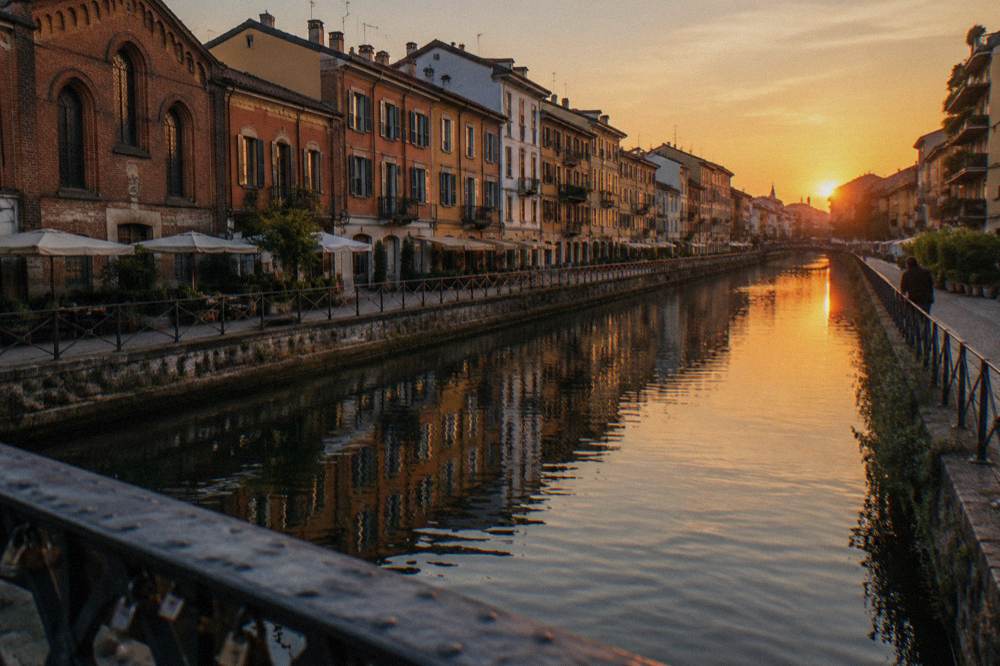
Mornings are the connoisseur's slot. The towpath is nearly empty, the joggers and dog walkers have it to themselves, and the canal reads as a working piece of the city rather than a nightlife district. Photographers get cleaner shots without crowds in the frame, and the walk to the Darsena from the center passes through waking streets. Weekend afternoons are the opposite: the stalls are out, the crowds are thick, and the boat-ticket sellers are at their most persistent. If your day is flexible, take the morning walk and the evening return, and let the afternoon carry your one paid stop, whether that is an aperitivo or a market find.
Night is its own free attraction, and it is covered properly in the guide to free things to do in Milan at night. The canal district after dark is one of the few Milan experiences that improves after the shops close, and the walk costs the same nothing at midnight as at noon.
What Free Sits Within Walking Distance Of Navigli?
Several genuinely free sights sit on or near the canal route: the Vicolo dei Lavandai wash-house alley on the Naviglio Grande, the Darsena waterfront, and, walking north, the Colonne di San Lorenzo, one of Milan's most striking free Roman ruins. All are public space with no charge, and they chain together into a free walking route that ends near the center, where the paid museum district begins.
The Colonne di San Lorenzo is the anchor of the northern end of the route. Sixteen Corinthian columns of Roman origin stand against the facade of the Basilica di San Lorenzo, and the square around them is free public space that doubles as an evening gathering point. It is a fifteen-minute walk from the Darsena through the Ticinese quarter, and the walk itself, through Porta Ticinese and its market streets, is free atmosphere the whole way.
The basilica itself, like most of Milan's working churches, is free to enter, and the district around Porta Ticinese and the canals holds more of them. This is where the free-visit logic of Milan becomes powerful: the entire southern arc of the center, from the Colonne to the Navigli, can be done for the price of a metro ticket in, and many visitors walk it in both directions.
If your canal day falls on the first Sunday of the month, the pairing writes itself: the free walk through Navigli and the Colonne, then a free afternoon in a state museum under Domenica al Museo, the culture ministry's first-Sunday scheme. The civic museums run their own separate scheme, with full details on the city's official ticketing page, including the second-Tuesday rule for visitors up to 25. Neither scheme applies to anything in Navigli itself, which is fitting, because nothing in Navigli needs a scheme to be free.
Common Questions About Navigli
Is Navigli Free To Visit?
Yes. The canals, bridges, Vicolo dei Lavandai and the Darsena are public spaces with no entry charge. Only optional extras like boat cruises, market purchases and drinks cost money, and a full visit can be done entirely free.
Do You Need A Ticket For The Naviglio Grande?
No. The Naviglio Grande is a public canal with open towpaths on both sides. There is no gate, ticket or reservation of any kind, and you can walk its full length at any hour.
Are Navigli Boat Tours Free?
No. Canal boat cruises are paid products run by private operators, with prices quoted at the dock and varying by season. The free alternative is the towpath itself, which follows the same water from the bank.
Is The Darsena Free?
Yes. The Darsena is a free public waterfront where the canals meet, with open promenades and seating. It is one of the district's best free evening spots.
What Is The Best Free Thing To Do In Navigli?
Walk the Naviglio Grande towpath from the Darsena, detour through the Vicolo dei Lavandai, and return at sunset when the facades light up. The whole route is free and takes about an hour at a relaxed pace.
Can You Walk From Navigli To The Duomo?
Yes, and the walk is free. It is roughly forty minutes on foot via Porta Ticinese and the Colonne di San Lorenzo, passing through free public quarters the whole way, with no transport needed.
If you are planning the wider free itinerary, Free Things To Do In Milan maps the whole city on the same logic this district runs on: the best of Milan, the canals included, is standing in the street, and the street charges nothing.