Navigli: Milan's Free Canal District, Markets And Evening Walks
The Navigli is the one Milan district where the main attraction is the street itself: two canals, a working dock, laundry alleys and a market tradition that costs nothing to watch, walk or photograph.
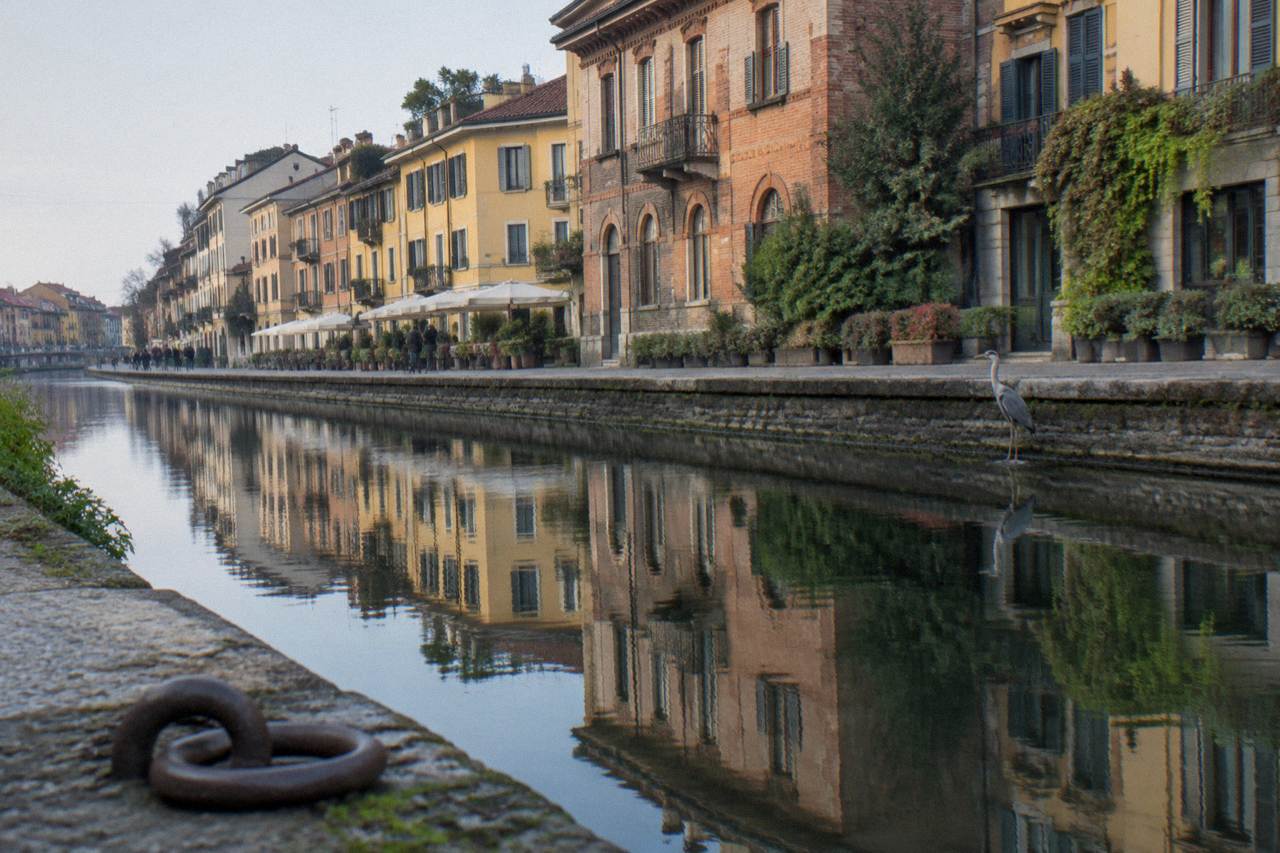
Short answer
The Navigli district is entirely free to visit: the canals, the Darsena dock, Vicolo dei Lavandai and the Sunday antiques market all sit on public streets. Budget roughly 2 to 3 hours for the canal walk itself, more if you stay for aperitivo, and pair it with a pay-what-you-want walking tour for context.
Milan is not a canal city in the way Venice or Amsterdam is, but it kept one canal district, and the Navigli is where the city goes when it wants to feel like itself: unhurried, a little shabby at the edges, and free from end to end. The two working canals, the Naviglio Grande and the Naviglio Pavese, meet at the Darsena, a former river port that is now a public dock. Everything worth seeing here sits on public streets and costs nothing to walk, which is why this district anchors so many budget itineraries, including our free one day Milan itinerary.
What Is The Navigli District And Why Is It Free To Visit?
The Navigli is a canal district southwest of Milan's centre, built around the Naviglio Grande and the Naviglio Pavese, and every part of it a visitor walks through, the towpaths, the bridges, the Darsena dock and the side alleys, is public space with no ticket, gate or entry fee anywhere. The canals date to the medieval and Renaissance periods, when Leonardo da Vinci worked on Milan's lock and canal system, and the Naviglio Grande once carried the marble for the Duomo's construction. That engineering history is visible for free in the brick bridges, the sluice gates and the long waterline of converted warehouses.
What makes the district unusual for Milan is that its attraction is horizontal. The Duomo rewards a paid ticket with a rooftop view, the Last Supper rewards a booked slot with a fresco, but the Navigli rewards nothing but time. You walk the canal edges, look into courtyards, cross the iron bridges and watch the neighborhood go about its evening. The district's free status is not a discount or a scheme; it is simply a residential and commercial quarter whose streets happen to be the sight.
The practical shape of the district matters for planning. The Naviglio Grande runs roughly from the Porta Ticinese gate down toward the southwest, lined on both banks with bars, vintage shops and photographers' studios. The Naviglio Pavese branches off at the Darsena. The Alzaia Naviglio Grande, the old towpath on the western bank, is the classic free walk, and it takes about 20 to 30 minutes at a strolling pace from Porta Ticinese to the quieter, greener stretches where the canal leaves the nightlife behind. For more on the city's free evening scene, see our guide to free things to do in Milan at night.
What Can You See Along The Canals For Free?
The free sights of the Navigli are the Naviglio Grande towpath, the Naviglio Pavese bank, the Darsena dock, the Vicolo dei Lavandai laundry alley, the iron bridges and the Porta Ticinese gate, all within a walkable loop of roughly 2 to 3 kilometres that takes in the district's whole character in a single free circuit. Start at Porta Ticinese, the neoclassical customs gate that once marked the canal entrance to the city, then follow the water.
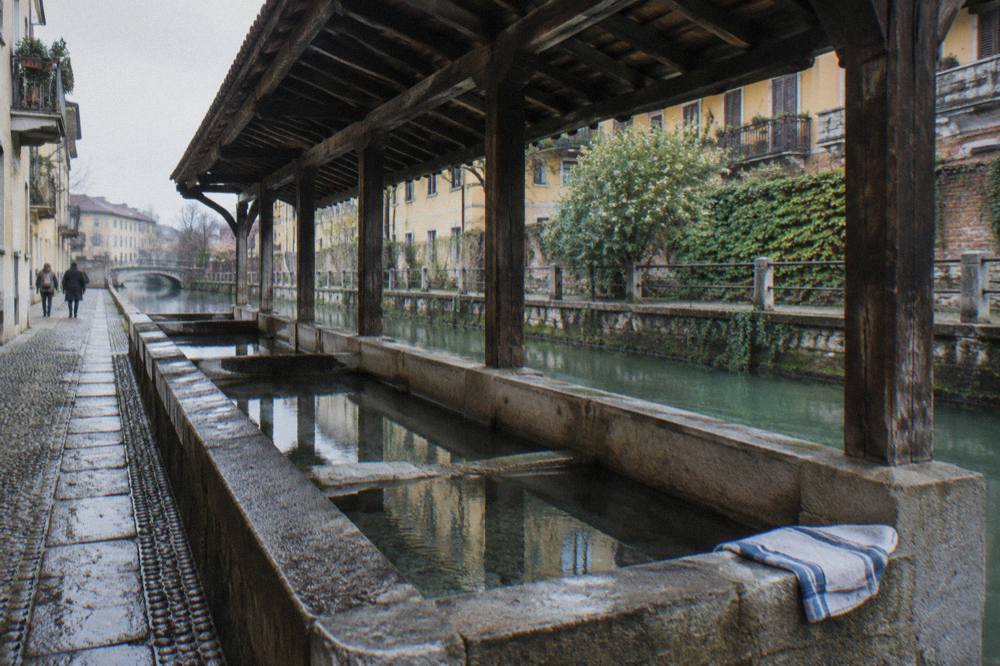
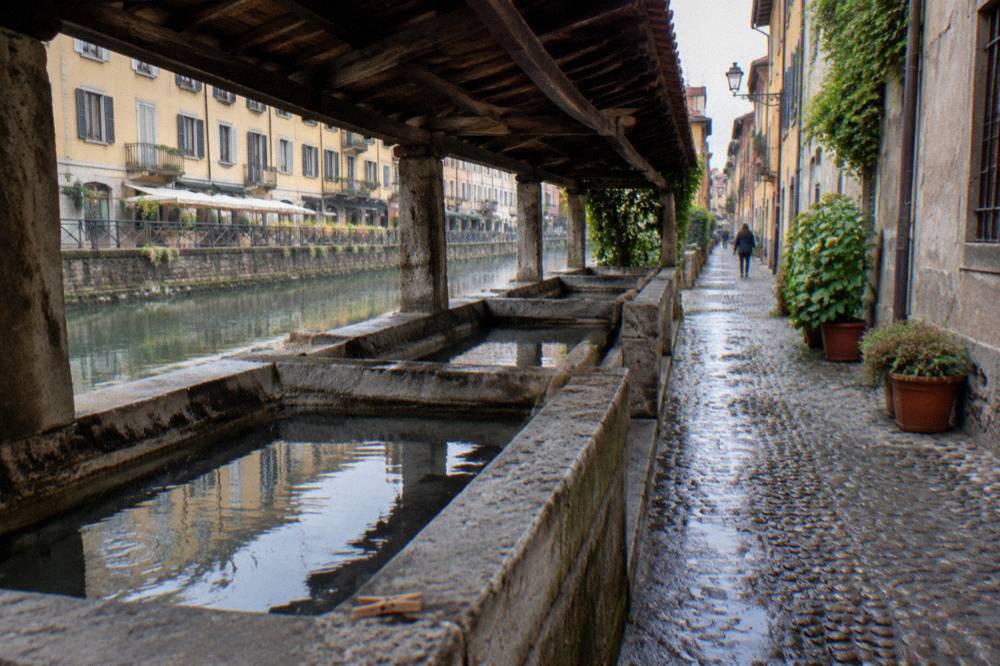
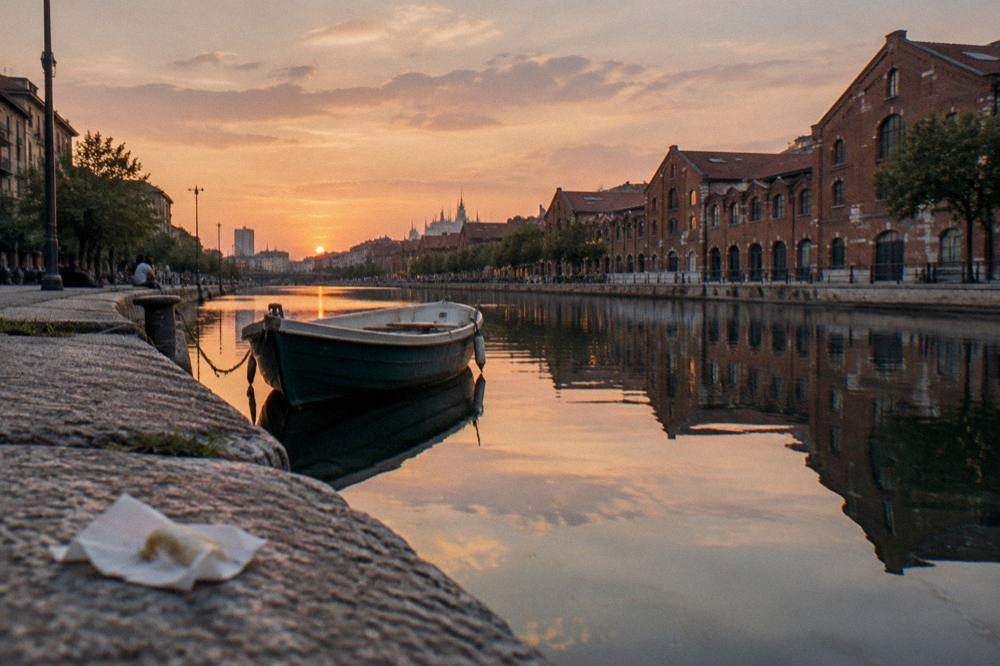
The Vicolo dei Lavandai is the district's most photographed free detail: a narrow alley off the Naviglio Grande where washermen once laundered clothes in the canal water, with the old sheltered washing troughs still standing. It is a public alley, open at all times, and it takes five minutes to see properly. The Darsena, at the junction of the two canals, is the largest open space in the district, a redeveloped dock with stone edges where people sit at sunset. It is free public space, no entry, no ticket.
| Free sight | What it is | Where it sits |
|---|---|---|
| Naviglio Grande towpath | Old canal-side walkway lined with bars and studios | Porta Ticinese southwest along the canal |
| Darsena | Redeveloped public dock where the two canals meet | Junction of Naviglio Grande and Naviglio Pavese |
| Vicolo dei Lavandai | Historic laundry alley with original washing shelters | Off the western bank of the Naviglio Grande |
| Porta Ticinese | Neoclassical gate marking the old canal entrance to the city | North end of the district, near the Colonne di San Lorenzo |
| Naviglio Pavese bank | Quieter canal edge with fewer crowds | Branching south from the Darsena |
The Colonne di San Lorenzo, a free row of Roman columns beside the Basilica di San Lorenzo, sits just outside the district's north end and makes a natural add-on, since it lies on the walk between the Duomo area and Porta Ticinese. The columns are public monuments, always visible, and the church interior is generally free to enter as a working church. A loop that takes in the columns, the gate, both canals and the laundry alley covers the district's whole free inventory in about two hours at a relaxed pace.
If you want a guide's context rather than a self-led walk, the pay-what-you-want options below all cover old Milan ground that pairs naturally with an afternoon in the Navigli, and several of them run daily.
The trio above spans the formats that suit this district: a longer best-tips walk, a short express option for tight schedules, and a morning-and-afternoon walk with two departure windows. All three are free to book with payment settled directly with the guide at the end.
When Are The Navigli Markets And The Best Times To Visit?
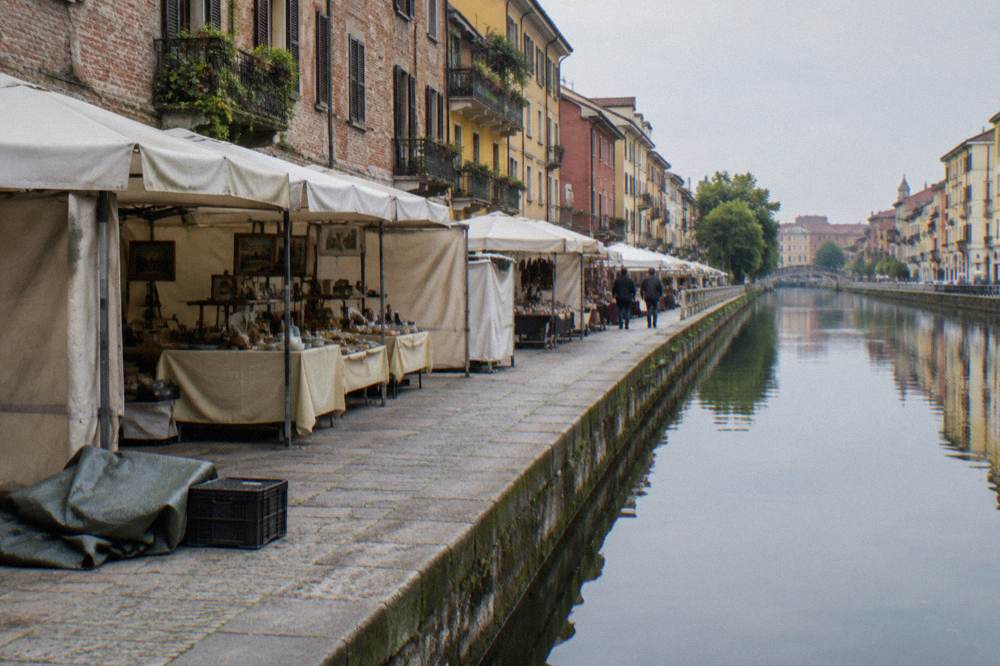
The Navigli's signature free event is the antiques and vintage market held along the Naviglio Grande on the last Sunday of the month, when stalls line the canal bank and the towpath turns into an open-air market that costs nothing to browse, while the district's other rhythm is daily: quiet towpaths by day and its busiest, most atmospheric hours between early evening and nightfall. Market day is the one date worth building a visit around. The stalls sell antiques, prints, furniture and vintage clothing, and browsing is entirely free, which makes it one of the best people-watching afternoons in Milan even if you never open your wallet.
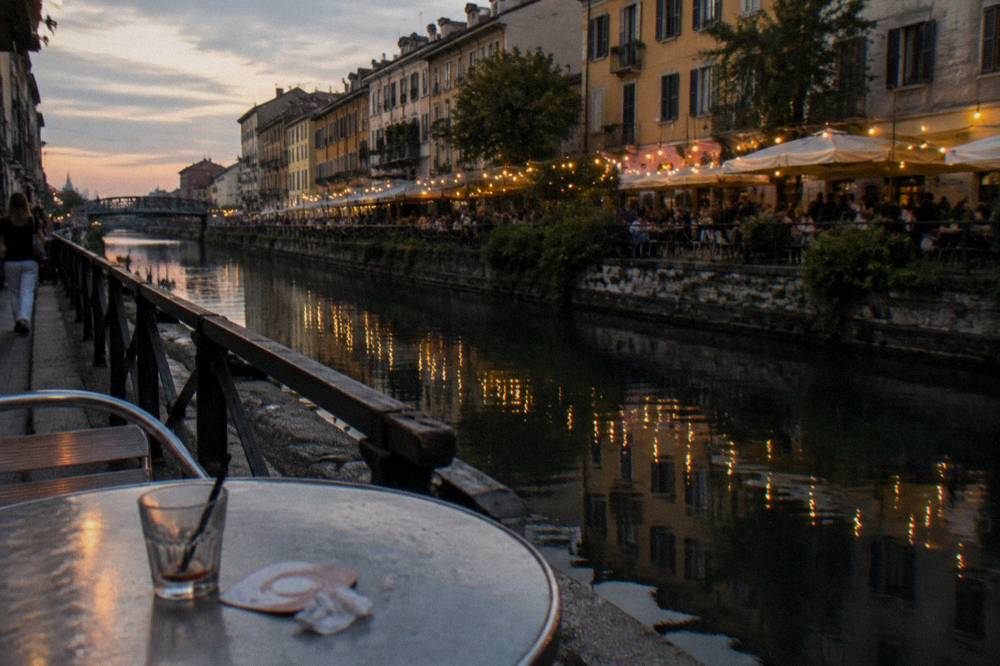
Outside market Sundays, timing changes the district more than in most of Milan. Midday is the quietest and best for photographs, when the canal edges are clear and the light sits flat on the water. Late afternoon into evening is when the bars fill and the towpath becomes a promenade, and that is the atmosphere most visitors come for. The canal walk itself is safe and public at all hours, but the shops and stalls keep their own schedules, so check opening signs on the day.
| Time | What the district feels like | Best for |
|---|---|---|
| Morning | Quiet towpaths, deliveries, few visitors | Photographs, unhurried walking |
| Midday | Cafes open, canal edges clear | A slow loop of both canals |
| Late afternoon | Bars opening, promenade crowd building | People-watching, aperitivo |
| Evening | The district at its busiest and most atmospheric | The classic Navigli night walk |
| Last Sunday of the month | Antiques and vintage market on the towpath | Free browsing, street atmosphere |
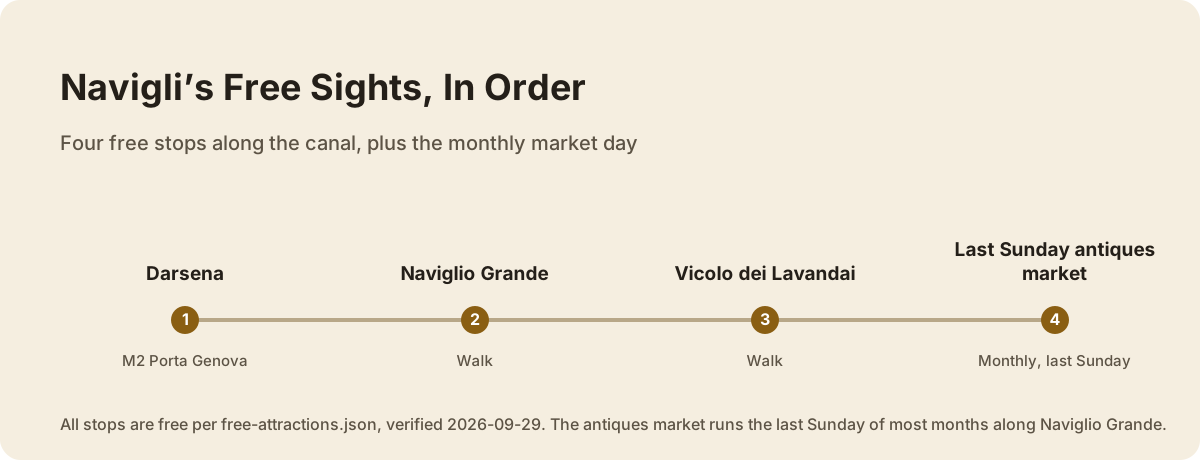
One planning note that pairs well with a Navigli day: if your visit lands on a first Sunday of the month, Milan's civic museums, including the Castello Sforzesco collections and the Museo del Novecento, open free to everyone under the city's own scheme, with details on the comune's civic museum ticketing page. The national first-Sunday scheme for state museums is separate and runs under the culture ministry's Domenica al Museo programme. A museum morning and a canal evening make a full free day.
Which Free Walking Tours Cover The Navigli And Old Milan?
No pay-what-you-want walk on this site's roster starts on the canals themselves, but the Best-Tips Walk by Fabrice, rated 9.4 out of 10 across 562 freetour.com reviews, meets at Palazzo Morando on Via Sant'Andrea and covers the old centre with the kind of local orientation that makes a later self-guided Navigli walk far richer, all for a tip you choose at the end. The walk runs an hour and 45 minutes in English and German and is listed on freetour.com. It is the strongest fit for this district because Fabrice's format is exactly what the Navigli rewards: practical, current, local knowledge rather than a scripted monument list.
The meeting point at Palazzo Morando, Via Sant'Andrea 6, sits in the fashion district, a straight walk or short tram ride from Porta Ticinese, so the logistics chain cleanly: tour the centre in the afternoon, then walk down to the canals for the evening. Palazzo Morando itself is worth knowing about for another reason, since some of its permanent collections are among the civic venues that open free under the city's first-Sunday scheme. More of these guides are collected on Free Things To Do In Milan.
For a fuller city sweep before the canals, the 2H45 Wonders Walk is the roster's most-reviewed option, rated 4.9 out of 5 across 2,916 GuruWalk reviews, running 2 hours and 45 minutes in English and Spanish from Piazza del Duomo. It covers the monumental core, the Duomo square, the Galleria and the castle approach, which leaves your evening free for the Navigli. It is the walk to pick when you want the whole centre explained once, properly, before you go off-script.
The honest framing for both: neither walk is a Navigli tour, and no walk on the roster claims to be. The canals are best self-guided, at your own pace, with the towpath as your route. A guided walk buys you the city around the canals, and a tip-based walk lets you pay what the orientation turns out to be worth to you. If you are weighing the whole roster, our free walking tours in Milan guide compares all of them side by side.
Where To Eat And Drink On A Budget Near The Canals?
The Navigli is Milan's aperitivo heartland, and the budget play is the classic Milanese pattern: order one drink and the buffet of small dishes that comes with it, with typical aperitivo price ranges running roughly 10 to 18 euro per person depending on the bar and the spread, so check the board before you sit, since prices vary widely along the water. Aperitivo hours usually run from early evening, and the canal banks are where the ritual is most theatrical. Our Milan aperitivo on a budget guide breaks the mechanics down in detail.
The free layer beneath the paid drinks is the atmosphere itself. Sitting on the Darsena steps or walking the towpath during aperitivo hours costs nothing and delivers most of the scene: the crowds, the canal light, the sound of the district at full volume. Many visitors do exactly that, then spend on one drink at one bar rather than a full dinner. The bars facing the canal charge for the view in their prices, so a street away from the water usually means a cheaper round.
Coffee culture has its own free-adjacent angle here. Milan's historic cafe ritual, standing at the bar for a quick espresso rather than sitting at a table, is the cheapest way to participate in the city's cafe life, and the Coffee Culture Highlights Walk, rated 4.91 out of 5 across 565 GuruWalk reviews, is built around exactly that culture. It runs 2 hours in English, meeting at Piazza dei Mercanti, Loggia degli Osii, where the guide waits with a pink umbrella. The walk is pay what you want, and it turns the city's coffee history into a walkable story.
For food shopping rather than eating out, the streets around Via Cesare Correnti and the western Naviglio Grande host small grocers and bakeries where a picnic costs a fraction of a canal-front dinner. The canal edges themselves are public seating in all but name, and a picnic on the Alzaia in the early evening is the district's most reliable free pleasure.
How Do You Plan A Full Free Day Around The Navigli?
A full free Navigli day works best in one direction: monuments in the morning, canals in the afternoon, aperitivo and the evening towpath at the end, a sequence that covers the Duomo square, the Colonne di San Lorenzo, Porta Ticinese, both canals, the Vicolo dei Lavandai and the Darsena on foot with no ticket anywhere, and it compresses into a loop of roughly 4 to 5 kilometres total walking. The direction matters because the district faces southwest and catches the evening light along the water, which is the payoff of the whole route.
Start at Piazza del Duomo, the free public square, then walk down Via Torino to the Colonne di San Lorenzo, the free Roman columns. From there it is a short walk to Porta Ticinese and the canal entrance. Follow the Alzaia Naviglio Grande along the western bank, detour into the Vicolo dei Lavandai, continue to where the canal quiets, then return along the opposite bank and finish at the Darsena for sunset. If the day is a last Sunday, the market stalls fill the towpath and the same loop becomes a browsing route.
| Time of day | Free stop | Time needed |
|---|---|---|
| Morning | Piazza del Duomo and the walk down Via Torino | 45 to 60 minutes |
| Late morning | Colonne di San Lorenzo and Porta Ticinese | 30 to 45 minutes |
| Afternoon | Naviglio Grande towpath and Vicolo dei Lavandai | 60 to 90 minutes |
| Early evening | Darsena and the Naviglio Pavese bank | 30 to 45 minutes |
| Evening | Aperitivo or a picnic on the Alzaia | As long as you like |
The loop also chains into the rest of a budget stay. The district sits on the route between the centre and the Ticinese and Porta Romana areas, and the tram lines along Via Vigevano and Porta Ticinese connect it to the Duomo in minutes, so a Navigli day does not need to be a whole-day commitment. Our Milan on a budget cost breakdown guide places the district in the context of a full trip's spending.
What Else Is Free Near The Navigli?
The closest free neighbours to the Navigli are the Colonne di San Lorenzo and the Basilica di San Lorenzo outside the district's north end, the Porta Ticinese gate at its entrance, and, a short tram ride away, the Istituto dei Ciechi garden and the Darsena's riverside extensions, while the wider free museum schemes of the city centre sit within easy reach for a combined day. The columns and the gate need no planning at all, since both sit directly on the walking route from the centre.
The church layer is worth a clause. The Basilica di San Lorenzo's interior is generally free to enter as a working church, and the same applies to Sant'Ambrogio a short transit ride north, one of Milan's oldest and most atmospheric churches. These are quiet, free interiors that most canal-bound visitors walk straight past. For a fuller map of the city's no-cost interiors, our best free things to see in Milan guide lists them all.
One honest caution: the Navigli's own paid layer, the canal boat cruises and the dinner cruises marketed along the towpath, is entirely optional and sits outside this site's remit. The free canal experience is the walk, not the boat. Everything in this guide stands on public streets, and the district's character survives on foot better than from the water anyway, since the laundry alleys, the market stalls and the towpath texture are all on the bank.
The walks below close the loop for a Navigli-centred visit: the Travelers' Choice Walk, the Monumental Walk and the Coffee Culture Highlights Walk, each pay what you want, each covering a different slice of the city that the canals complement rather than duplicate.
Common Questions About The Navigli
Is The Navigli District Free To Visit?
Yes, entirely. The canals, towpaths, Darsena dock, Vicolo dei Lavandai and Porta Ticinese are all public space with no entry charge. The district's only costs are optional: drinks, food and the canal boat cruises sold along the bank.
What Are The Navigli Market Days?
The district's signature antiques and vintage market runs along the Naviglio Grande on the last Sunday of the month, and browsing the stalls is free. Outside market Sundays the towpath is open as normal, with shops and bars keeping their own hours.
Where Does The Navigli Canal Walk Start?
The classic free loop starts at Porta Ticinese, the old canal gate, follows the Alzaia Naviglio Grande along the western bank with a detour into the Vicolo dei Lavandai, and finishes at the Darsena where the two canals meet.
How Long Does A Navigli Walk Take?
The full free loop, from Piazza del Duomo down through the Colonne di San Lorenzo, Porta Ticinese, both canals and the Darsena, takes roughly 2 to 3 hours at a relaxed pace, covering about 4 to 5 kilometres of walking.
Is The Navigli Good At Night?
Yes, and evening is when the district is at its most atmospheric. The bars fill during aperitivo hours, the towpath becomes a promenade, and the canal banks stay public and walkable. Our guide to free things to do in Milan at night covers the wider evening scene.