Unusual Things To Do In Milan For Free: Ossuaries, Canal Locks And Hidden Courtyards
Most visitors see the Duomo, the Galleria and the castle, then leave. Milan keeps its strangest sights a few streets away, and almost all of them cost nothing: a chapel lined with human bones, functioning canal locks from the pre-railway era, and courtyards you can spot through open gates.
Short answer
Milan's most unusual free sights include the ossuary chapel of San Bernardino alle Ossa, the trompe l'oeil apse of Santa Maria presso San Satiro, the working canal locks on the Navigli, the always-free Palazzo Morando collections, and Pirelli HangarBicocca, a major contemporary art space with free admission and no ticket.
What Are Milan's Most Unusual Free Attractions?
The strangest free things to do in Milan are the ossuary chapel of San Bernardino alle Ossa, the optical-illusion apse of Santa Maria presso San Satiro, the working canal locks of the Navigli, the free collections of Palazzo Morando, and Pirelli HangarBicocca, a major contemporary art venue that charges no admission at all. Each one sits within walking distance or a short tram ride of the Duomo.
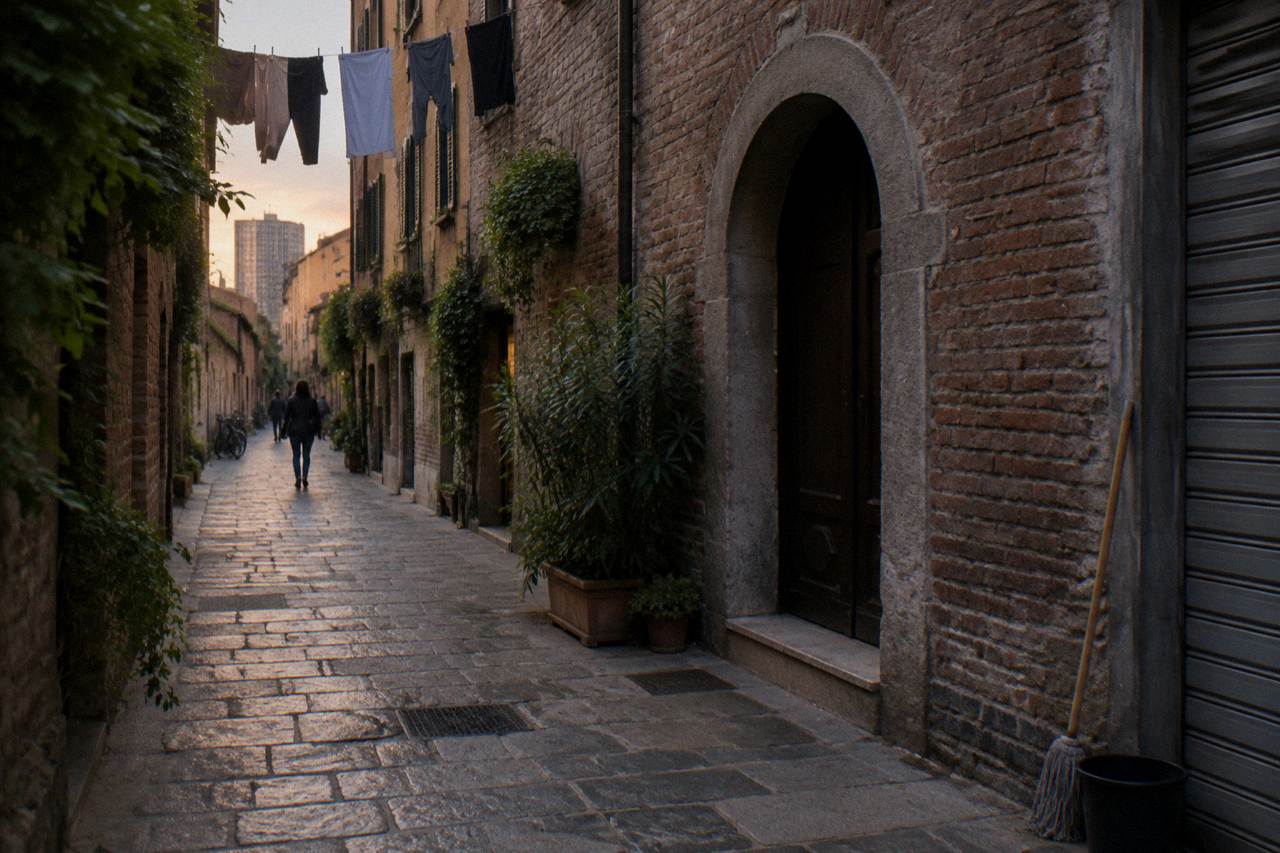
Milan has a reputation as Italy's business capital, all glass towers and trade fairs, which is exactly why its odd corners catch people off guard. A chapel decorated with bones. Canals with lock gates that still function. A church apse that is not really there. These are not obscure relics on the edge of the city: most of them are within fifteen minutes of Piazza del Duomo, and every one in the table below costs nothing to see.
| Unusual free sight | What makes it odd | Where it is |
|---|---|---|
| San Bernardino alle Ossa | Chapel walls lined with human bones | Near Piazza Santo Stefano, a short walk from the Duomo |
| Santa Maria presso San Satiro | Bramante's painted apse that looks deep but is flat | Just off Piazza del Duomo |
| Navigli canal locks | Working lock gates on a historic canal system | Naviglio Grande, south-west of the centre |
| Vicolo dei Lavandai | A preserved alley where washerwomen worked the canal | Naviglio Grande |
| Palazzo Morando | Fashion and history collections, always free | Via Sant'Andrea, fashion district |
| Pirelli HangarBicocca | Major contemporary art, free admission, no ticket | Bicocca district, north of the centre |
| Monte Stella | An artificial hill built from post-war rubble | San Siro area |
| Cimitero Monumentale | A vast open-air museum of funerary sculpture | Near Porta Volta |
This guide walks through them one by one, with the practical details that matter: what is genuinely free, what only looks free, and which of the pay-what-you-want walking tours cover this same strange ground with a local guide. For the classic sights instead of the odd ones, start with the best free things to see in Milan.
Where Can You See A Chapel Lined With Bones For Free?
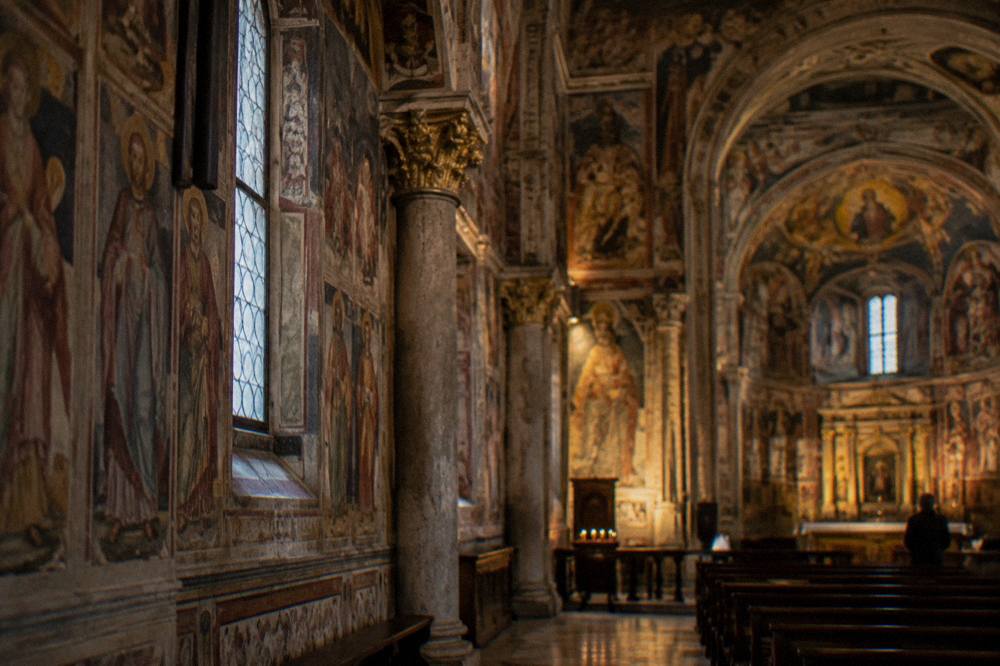
San Bernardino alle Ossa is a small church near Piazza Santo Stefano whose side chapel is decorated floor to ceiling with human bones, arranged in niches and patterns, and it is free to enter as a working church. Milan also hides two other strange free churches: San Maurizio al Monastero Maggiore, covered in frescoes, and Santa Maria presso San Satiro, with an apse that is a painting, not architecture.
The ossuary chapel is the single strangest room in central Milan. Bones from the city's earlier hospitals and cemeteries were moved here long ago, and rather than stacking them in a crypt, the chapel's decorators turned them into the walls themselves: skulls and leg bones set into niches, framed around a statue, forming patterns that visitors either find macabre or oddly serene. It is a small space, you will be in and out in ten minutes, and it costs nothing because it is part of a functioning parish church. Check the church's own posted hours before going, since it closes for services.
San Maurizio al Monastero Maggiore is the other church worth seeking out on the same walk. Its interior is covered wall to wall with Renaissance frescoes, enough that it gets called the Sistine Chapel of Milan, and entry is free during normal church hours. Santa Maria presso San Satiro plays a different trick entirely: the space behind the altar looks like a deep domed apse, but step to the side and the illusion collapses. Bramante painted the whole depth onto a wall barely a metre thick, because the street behind the church left no room for a real apse. It is one of the great optical illusions of Renaissance architecture and it sits a two-minute walk from the Duomo.
These three churches sit inside the ground that several free walking tours cover. Fabrice's 1H45 Best-Tips Walk on freetour.com, rated 9.4 out of 10 across 562 freetour.com reviews, is built around exactly this kind of local tip, and the shorter Express Walk from Frog Free Walking Tour, rated 4.46 out of 5 across 973 GuruWalk reviews, packs the historic centre's odd details into an hour and a half. All of these walks run on a pay-what-you-want basis: you reserve a spot, walk, and pay the guide what you think the walk was worth at the end.
Can You See Leonardo's Vineyard Without Paying?
Leonardo's vineyard, granted to him by the Sforza family, sits behind Casa degli Atellani on Corso Magenta, and seeing the actual vineyard and house costs €10 for a full adult ticket. But the building's exterior and the street itself are free to walk, and Santa Maria delle Grazie next door, the church holding the Last Supper, is free to enter as a church, separate from the paid, reservation-mandatory Cenacolo Vinciano viewing.
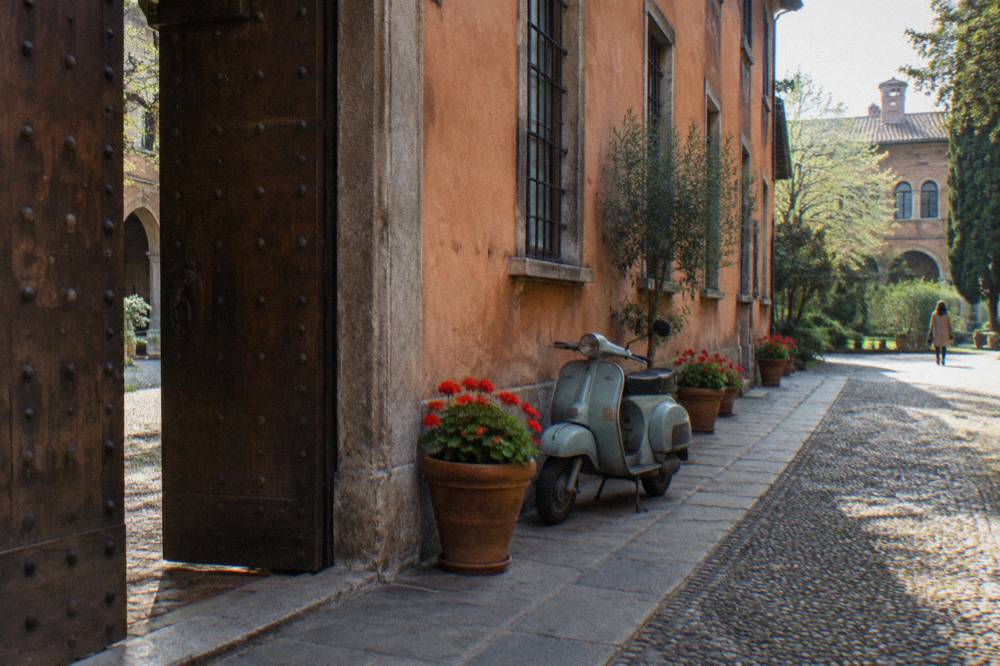
The vineyard is one of Milan's quietest stories. The Sforza family granted Leonardo a vineyard as payment for painting the Last Supper a few streets away, and the plot has been replanted with the same grape variety, Malvasia di Candia Aromatica, using surviving root stock identified by researchers. The paid visit covers the Casa degli Atellani interior, the vineyard and a small museum room with an audio guide, in a visit of roughly thirty minutes. If that does not fit the budget, the exterior costs nothing: Corso Magenta is one of the city's most handsome streets, and the Atellani facade with its courtyard glimpses is a genuine free sight in itself.
Two doors down, Santa Maria delle Grazie needs untangling, because one building holds two completely different experiences. The church is a working Dominican church, free to enter during normal hours, with its Bramante-designed cloister and dome. The Cenacolo Vinciano, the refectory wall where Leonardo painted the Last Supper, is a separate state-run site with timed entry, a €15 full ticket, and a mandatory reservation even on the first Sunday of the month, when the Domenica al Museo scheme makes the viewing free but does not remove the booking requirement. Never treat first-Sunday as walk-up free here: the slots go weeks in advance.
| Sight on Corso Magenta | Free status | What you actually get |
|---|---|---|
| Casa degli Atellani and Vigna di Leonardo | Paid, €10 full adult ticket | House interior, replanted vineyard, audio guide, about 30 minutes |
| Casa degli Atellani exterior | Free | The facade and courtyard doorway from the street |
| Santa Maria delle Grazie, the church | Free during church hours | The nave, dome and Bramante cloister |
| Cenacolo Vinciano, the Last Supper | Paid, €15 full, timed reservation mandatory | 15 minutes in front of the fresco |
| Cenacolo Vinciano on the first Sunday | Free but reservation still required | Same viewing, booked under Domenica al Museo |
If you want a guide rather than a solo walk through this layer of Milan's history, the 2H30 Monumental Walk from Puente Tours covers the castle and monumental end of the same story. Fabrice's Best-Tips Walk is the better fit for the Corso Magenta kind of detail, the small facts a resident knows, and it costs only what you choose to tip. Full background on the free-first-Sunday rules across the city is in the Domenica al Museo guide for Milan.
How Do The Navigli Canal Locks Work?
The Navigli are canals designed partly by Leonardo da Vinci himself, and the lock system that lets boats climb between water levels still exists and still functions, free to watch from the towpaths. The Naviglio Grande, the Vicolo dei Lavandai wash-house alley and the Darsena dock are all free public spaces, and the whole district costs nothing to explore on foot.
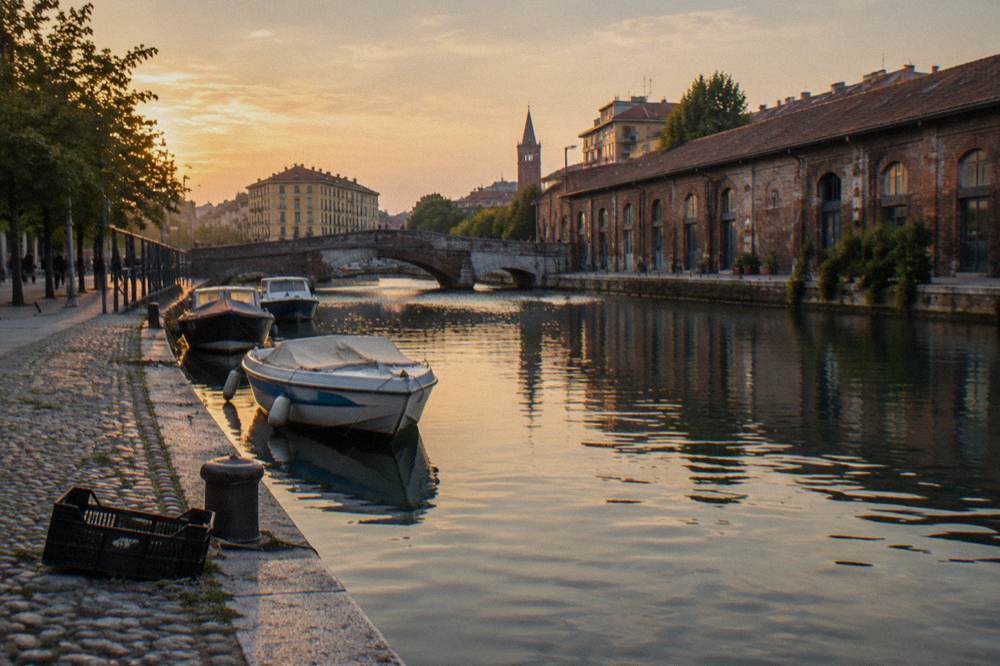
Milan is one of the few inland cities in Italy that was once a canal port, and the system is older than almost anything else in the city: the Naviglio Grande was dug in the medieval period, and the lock gates, the conche, were refined with Leonardo's involvement during the Renaissance. Before railways, marble for the Duomo arrived by barge along this canal. The lock at the Darsena end is the one to look for: when a boat passes, the gates close, the water level shifts, and a mechanism centuries old does its work while people drink aperitivo a few metres away.
The Vicolo dei Lavandai is the district's other oddity: a narrow alley off the Naviglio Grande where washerwomen once knelt at stone basins washing the city's laundry, and the covered wash-house structure is still standing, preserved as it was. The Darsena, the old harbour basin where two canals meet, was rebuilt as a public waterfront and is free to sit beside at any hour. None of this needs a ticket, a guide or a plan: the whole district is a public street.
The Navigli rewards slow walking more than any other Milan district, and there is a full guide to the Navigli canal district covering the route from the Darsena out to the wash-house alley. If you prefer company and context, the Morning and Afternoon Walk from Frog Free Walking Tour, rated 4.5 out of 5 across 273 GuruWalk reviews, is an English pay-what-you-want option that keeps its groups moving through the centre and the canals in an hour and a half.
Which Hidden Courtyards Can You Spot For Free?
The best free courtyard-spotting in Milan is around the fashion district and Brera: Palazzo Morando on Via Sant'Andrea is the anchor, since its collections are always free and its courtyard is part of the visit. Beyond it, the Galleria Vittorio Emanuele II's glass-domed crossroads and the courtyards of the Castello Sforzesco are free public spaces, visible any time their gates are open.
Courtyard-spotting is a Milan game with no ticket and no equipment: you walk the streets of the old centre looking through open gateways, and Milan's older palazzi reveal colonnades, staircases and gardens behind otherwise plain facades. Palazzo Morando is the reliable starting point because the rules are clear. Its permanent collections, covering Milan's history and the evolution of the city's fashion, are always free under the civic museums scheme, and the palazzo itself, on Via Sant'Andrea in the heart of the fashion district, is worth the visit for the building alone.
The Castello Sforzesco offers the same game at a larger scale. Its outer courtyards and grounds are free and open daily, roughly 7:00 to 19:30, and walking through the succession of courtyards from the fountain piazza through to Parco Sempione behind costs nothing. Only the museums inside the castle are paid, under the civic scheme with free first Sundays for everyone and free second Tuesdays for under-25s. The Galleria completes the set: it is a public shopping gallery, free to walk through at any hour the shops are open, and its octagonal central dome under the glass vault is one of the city's great free interiors.
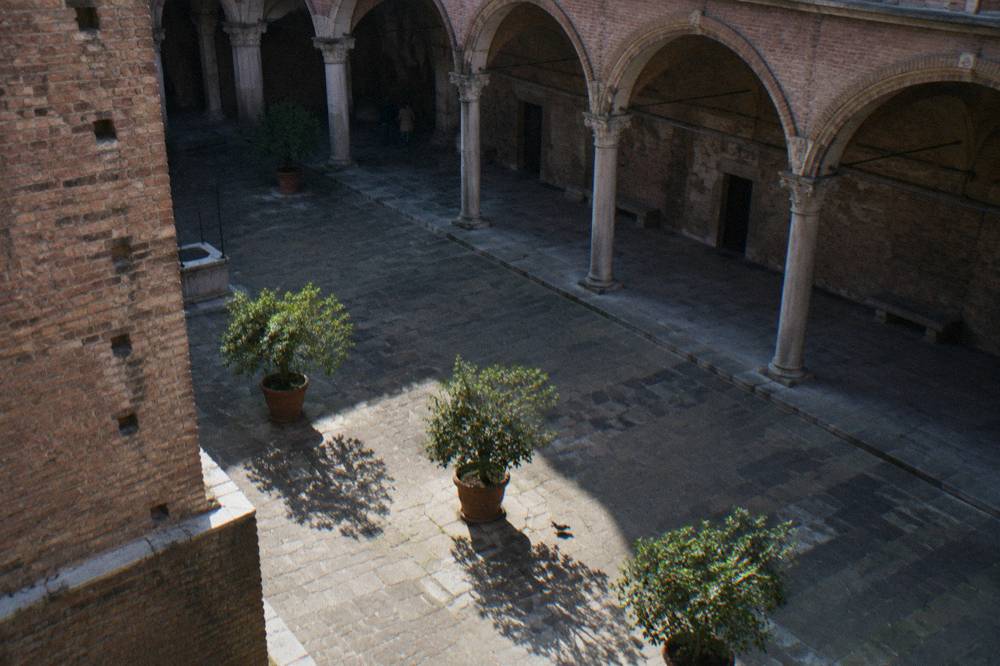
Fabrice's 1H45 Best-Tips Walk meets at Palazzo Morando itself, Via Sant'Andrea 6, which makes it a natural companion for this exact hunt: the walk is built on the small, local, easy-to-miss details of this neighbourhood, it runs in English and German, and it is pay-what-you-want on freetour.com. For the wider Brera side of the courtyard game, the free things to do in Brera guide covers the district's churches, library and botanical garden in detail.
The 2H45 Wonders Walk by CITYWALKERS, rated 4.9 out of 5 across 2,916 GuruWalk reviews, is the most-reviewed free walk in the city and covers the Duomo-and-Galleria ground where the courtyard hunt begins. It meets at Piazza del Duomo 6, runs in English and Spanish, and like every walk on this page costs only what you decide to tip at the end.
Which Free Museums And Gardens Are Off The Main List?
Milan's most overlooked free museum is Pirelli HangarBicocca, a vast former factory housing monumental contemporary art with free admission and no ticket required. Add the Orto Botanico di Brera, a free botanical garden behind the Pinacoteca, and the Biblioteca Nazionale Braidense's free reading rooms, and Milan has a genuinely free art-and-garden circuit that most visitors never hear about.
Pirelli HangarBicocca is the standout, and it is worth being blunt about how unusual it is: a major contemporary art institution, in a city where the Duomo interior and the castle museums all charge, that states plainly on its own site that admission is free. The space is a converted locomotive factory with galleries the length of a city block, built for art too large for normal museums, and booking a slot online is recommended at busy times but there is nothing to pay. The venue's own contacts page confirms the free admission policy directly.
The Brera complex gives you two more free stops in one visit. The Orto Botanico di Brera, the botanical garden behind the Pinacoteca di Brera, is free to enter, open Monday to Saturday outside holidays, with seasonal hours. The Biblioteca Nazionale Braidense, inside the same palazzo, opens its historic reading rooms free of charge; bring ID, as with most Italian state libraries. Note the boundary line here: the Pinacoteca di Brera itself is a paid state museum, roughly €15 to €20 for the full ticket, free only on the first Sunday of the month with a mandatory reservation.
| Scheme | Who runs it | Which Milan sites | When it is free |
|---|---|---|---|
| Domenica al Museo | National Ministry of Culture | Pinacoteca di Brera, Cenacolo Vinciano | First Sunday of the month, reservation still needed at the Cenacolo |
| Civic museums scheme (museicivici) | Comune di Milano | Castello Sforzesco museums, Museo del Novecento, GAM | First Sunday for everyone, second Tuesday for under-25s |
| Always-free civic sites | Comune di Milano | Palazzo Morando's permanent collections | Any opening day |
| Private museums | Each museum sets its own rules | Fondazione Prada (€15), Armani Silos (€12), Poldi Pezzoli (€15) | Only where the museum itself offers it, for example Armani Silos on the first Sunday |
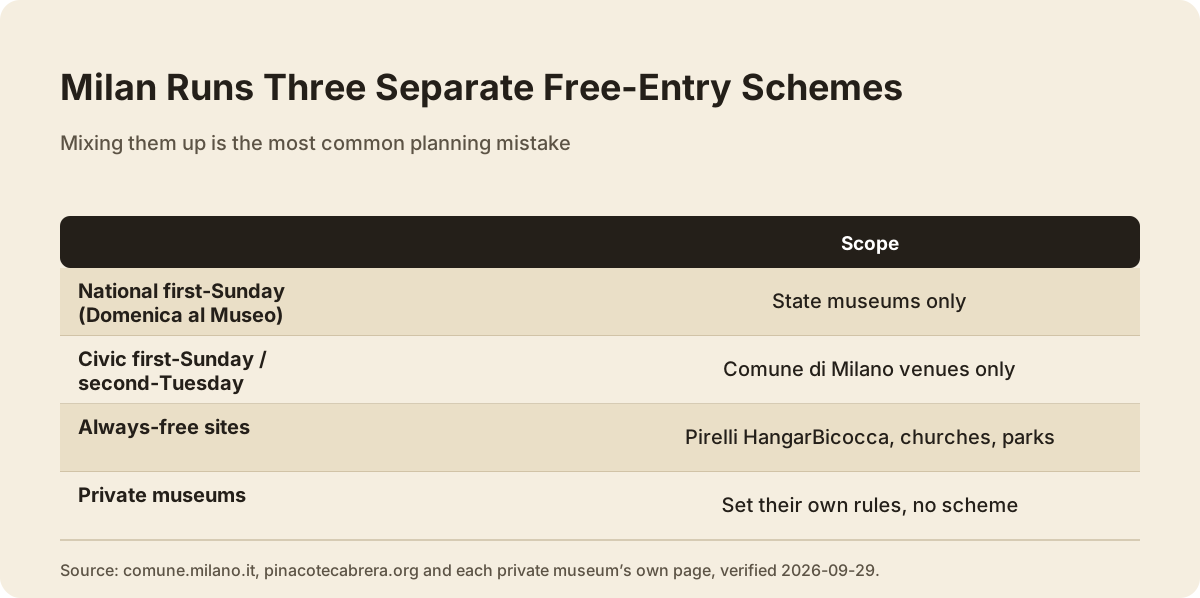
The civic museums' own ticketing pages at the Comune di Milano carry the current per-venue prices and the free-day rules, and Pirelli HangarBicocca's site states its free admission policy in its own words: see the venue's contacts page. For the civic scheme's structure and free days, the city's museum ticketing page is the primary source. The botanical garden's seasonal hours are published by the university that runs it: Orto Botanico di Brera visiting page.
What Free Views And Odd Green Spaces Does Milan Hide?
Milan's strangest free green spaces are Monte Stella, an artificial hill built from the rubble of the Second World War, and the Biblioteca degli Alberi, a park designed like a library of tree species in the Porta Nuova district. Add the Cimitero Monumentale, a cemetery that functions as an open-air sculpture museum, and the Bosco Verticale towers viewed from outside, and the city has a full day of odd, free outdoor sights.
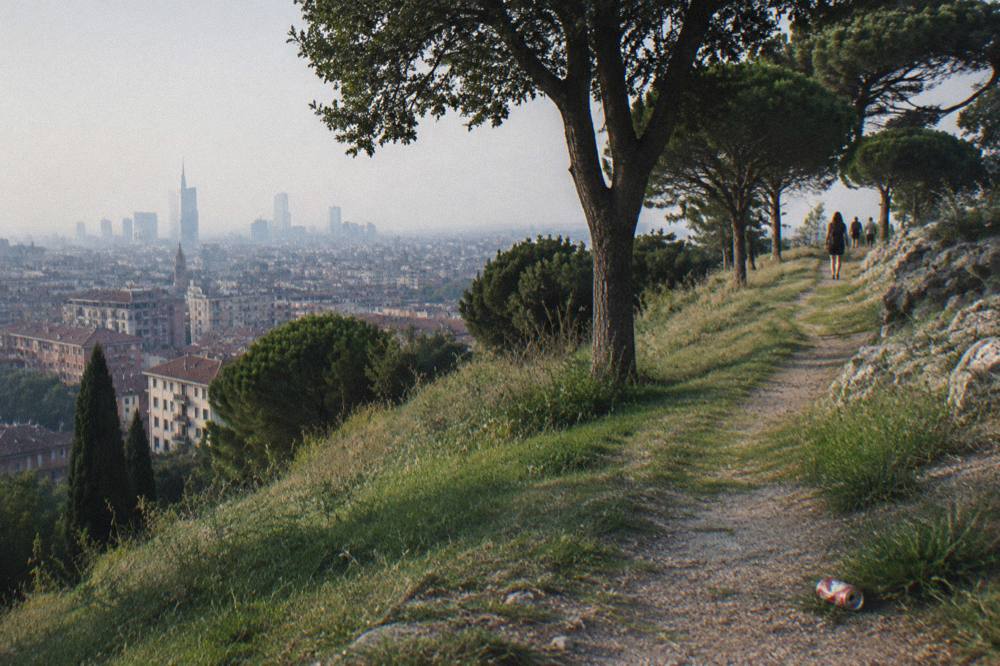
Monte Stella, locally called the Montagnetta, is the oddest park in Milan: a hill in the otherwise pancake-flat city, created by stacking millions of cubic metres of wartime rubble and covering it in grass and paths. It sits near the San Siro stadium, it is free, and the short climb gives you one of the few elevated views inside the city limits. The Bosco Verticale pair plays a different game: the towers are private residential buildings, so there is no free entry and no viewing deck, but from Piazza Gae Aulenti and the surrounding streets the forested facades are a free spectacle, and the Biblioteca degli Alberi park beside them is free public ground laid out as a grid of tree-lined paths.
The Cimitero Monumentale is the one that divides visitors, but it should not. Milan built it as a showcase for the city's great families, and the result is a vast outdoor gallery of funerary sculpture, from austere marble angels to full-scale temples commissioned by the city's industrial dynasties. Entry is free, the scale is genuinely surprising, and it is a short walk from the Porta Volta area where the Bosco Verticale district begins. Together these three make a free day route through Milan's northern half, covered further in the free one day Milan itinerary.
Which Free Walk Covers Milan's Odder Corners Best?
For Milan's odd corners specifically, Fabrice's 1H45 Best-Tips Walk on freetour.com is the best-matched free tour, rated 9.4 out of 10 across 562 freetour.com reviews and meeting at Palazzo Morando. For the historic centre's strange details in English, the Coffee Culture Highlights Walk, rated 4.91 out of 5 across 565 GuruWalk reviews, starts at Piazza dei Mercanti, one of the city's oldest and most atmospheric squares.
The coffee walk deserves a mention here precisely because of where it starts. Piazza dei Mercanti is the medieval merchant square a few steps from the Duomo, and the walk, guided by Maria Lourdes, meets at the Loggia degli Osii under a pink umbrella, a detail that matters because the square has several meeting points and the umbrella is how you actually find her. The walk itself is two hours in English, pay-what-you-want on GuruWalk, and it threads Milan's coffee culture through the historic centre's small squares, which is where the courtyard-spotting and the odd-church circuit overlap.
The Travelers' Choice Walk from Free Walking Tour Italia, rated 4.52 out of 5 across 54 GuruWalk reviews, is a smaller-group English option meeting at the Manzoni monument, and the Classic and Monumental Milan walk covers the castle end of the city in English or Spanish. Every walk on this site runs on the same principle: reserve for free, walk, and pay the guide what you think it was worth. Nobody connected to this site has taken these walks; the ratings and review counts above come from each walk's own listing on its platform.
| Walk | Platform | Rating and reviews | Duration | Language |
|---|---|---|---|---|
| 1H45 Best-Tips Walk (Fabrice) | freetour.com | 9.4 out of 10 across 562 reviews | 1 hour 45 minutes | English, German |
| Coffee Culture Highlights Walk (Maria Lourdes) | GuruWalk | 4.91 out of 5 across 565 reviews | 2 hours | English |
| Travelers' Choice Walk | GuruWalk | 4.52 out of 5 across 54 reviews | 2 hours | English |
| 2H30 Monumental Walk (Puente Tours) | GuruWalk | 4.77 out of 5 across 303 reviews | 2 hours 30 minutes | English, Spanish |
| 2H45 Wonders Walk (CITYWALKERS) | GuruWalk | 4.9 out of 5 across 2,916 reviews | 2 hours 45 minutes | English, Spanish |
Milan's odd corners are not hidden because the city hides them. They are hidden because the standard route, Duomo to Galleria to castle, is so efficient that it absorbs the whole day. Break that route once: spend an hour at the ossuary chapel and San Satiro, walk the Navigli towpaths to the wash-house alley, take the tram to HangarBicocca, and the city stops feeling like a business capital and starts feeling like the strange, layered place it actually is. The walks above are the pay-what-you-want way to have a local point those layers out, and this site, Free Things To Do In Milan, keeps the full directory of them alongside every free attraction in the city.
Common Questions About Unusual Free Things In Milan
Is San Bernardino Alle Ossa Free To Visit?
Yes. It is a working parish church and the ossuary chapel is free to enter during the church's posted opening hours. Check the church's own notices before visiting, since it closes for services and hours can vary.
Can You See Leonardo's Vineyard For Free?
The vineyard and Casa degli Atellani interior cost €10 for a full adult ticket. The building's exterior on Corso Magenta and the street itself are free to walk, and Santa Maria delle Grazie, the church next door, is free to enter as a church, separate from the paid Last Supper viewing.
Is Pirelli HangarBicocca Really Free?
Yes. The venue states on its own site that admission is free and no ticket is required. Booking a time slot online is recommended during busy periods, but there is nothing to pay.
Can You Walk The Navigli Canals For Free?
Yes, the whole Navigli district, including the Naviglio Grande towpaths, the Vicolo dei Lavandai wash-house alley and the Darsena dock, is free public space, open at all hours like any city street.
Is The Last Supper Free On The First Sunday Of The Month?
The Cenacolo Vinciano is free on the first Sunday under the national Domenica al Museo scheme, but a timed reservation is still mandatory even on the free day. On every other day it is a paid, timed-entry ticket at €15 full price.
Are The Free Walking Tours Really Free?
They run on a pay-what-you-want basis: you reserve a place at no cost, take the walk, and pay the guide what you think it was worth at the end. There is no fixed price and no minimum stated on any of the listings.